
Are Hair Transplant Scars Visible? What to Expect
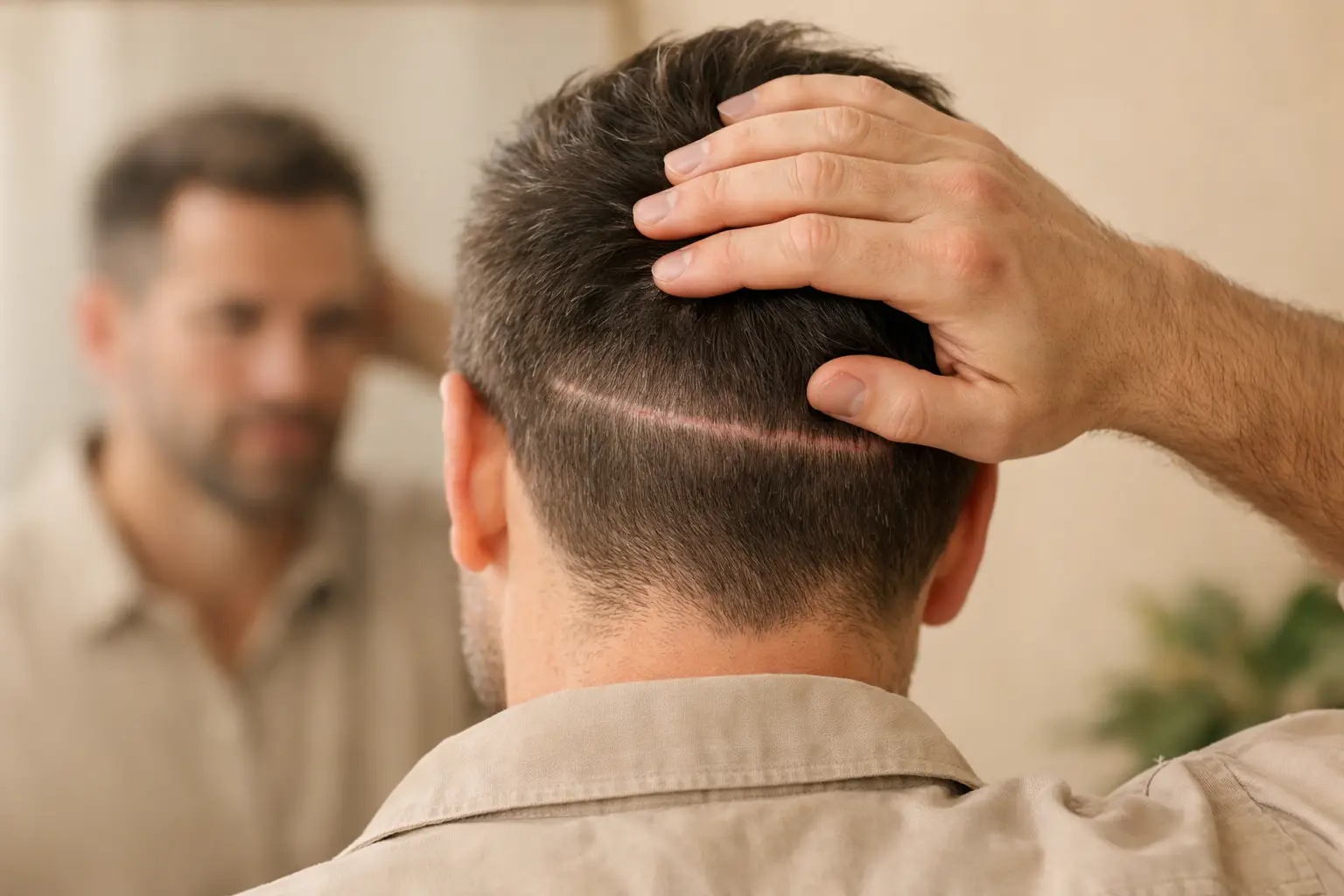
A close-cropped haircut, a day at the beach or a newly exposed hairline can make people understandably cautious about scarring. So, are hair transplant scars visible? The honest answer is that every surgical hair transplant creates some degree of scarring, but the type, placement and long-term visibility can vary significantly.
For many patients, well-healed scars are difficult to notice in everyday life, particularly when the right procedure is selected and carried out by experienced medical professionals. They are not always invisible, however. A consultation should include a clear discussion of scarring, your preferred hairstyle, skin characteristics and how much donor hair is available.
Are Hair Transplant Scars Visible After Healing?
Hair transplant scars are usually most noticeable in the early stages of recovery. The scalp may have redness, small scabs, swelling or temporary changes in skin colour while the donor and recipient areas heal. These signs are part of the normal healing process and should not be confused with the final appearance of a scar.
As healing progresses, the redness generally settles and scars mature. This can take several months, and in some cases up to a year or longer. Even then, visibility depends on factors such as the hair transplant technique used, the length and density of surrounding hair, individual healing response, skin tone and whether there has been tension or trauma to the area during recovery.
No reputable provider should promise a completely scar-free hair transplant. A more realistic goal is to minimise scarring and position it where it can be naturally concealed by your existing hair wherever possible.
How FUE and FUT Scars Differ
The two most commonly discussed surgical approaches are follicular unit extraction, known as FUE, and follicular unit transplantation, known as FUT. Their donor-area scars look different because the way grafts are collected is different.
FUE creates small dot-like scars
With FUE, individual follicular units are removed from the donor area, usually at the back and sides of the scalp. This leaves a series of tiny circular marks rather than one long scar. Once healed, these marks are often difficult to see when hair is kept at a moderate length.
FUE is frequently preferred by people who want the option of wearing their hair shorter. That said, very closely shaved hair can reveal small pale, darker or slightly textured dots, especially if a large number of grafts has been taken or the donor area is naturally sparse. Careful harvesting and an appropriate graft plan are central to preserving a natural-looking donor area.
FUT leaves a linear scar
With FUT, a narrow strip of scalp is removed from the donor area and dissected into grafts. The area is then closed with a fine linear scar, usually positioned so it sits beneath the surrounding hair.
For patients who wear their hair longer at the back and sides, a well-healed FUT scar may remain covered. However, it can be more apparent with a very short fade, shaved head or if the scar stretches during healing. FUT can still be suitable in particular circumstances, but hairstyle preferences should form part of the decision.
Neither technique is automatically the right choice for everyone. The best approach depends on your pattern of hair loss, donor density, scalp characteristics, future hair-loss risk and the number of grafts that may be required over time.
What Makes Hair Transplant Scars More Noticeable?
Scars do not heal the same way for every person. Some patients form fine, flat scars with minimal colour change, while others are more prone to raised, widened, pale or darker scars. A personal or family history of keloid or hypertrophic scarring is particularly relevant and should be raised before any procedure.
The procedure itself also matters. Taking too many grafts from one area, poor donor planning or placing grafts without regard for the natural distribution of hair can make the donor area look thinned. This is sometimes described as overharvesting. Even if the individual extraction marks are small, reduced density around them may make them easier to detect.
Aftercare plays an equally practical role. Picking at scabs, returning to strenuous exercise too early, exposing the healing scalp to strong sun or failing to follow washing instructions can interfere with recovery. Smoking can also affect wound healing. Your treating medical team should provide tailored aftercare advice based on the procedure performed and your health history.
Infection, excessive bleeding and delayed healing are uncommon but meaningful risks of any surgical procedure. Promptly reporting unusual pain, spreading redness, discharge, fever or increasing swelling gives your provider the chance to assess the area early.
Can You Reduce the Visibility of Hair Transplant Scars?
The strongest opportunity to reduce visible scarring begins before treatment. A thorough assessment should look beyond the current hairline. It should consider how your hair loss may progress, how you normally style your hair and whether you expect to wear it very short in the future.
During planning, medical professionals can discuss donor-area management, graft numbers and the likely trade-offs between FUE and FUT. For example, FUE may offer more flexibility for shorter hairstyles, while FUT may be considered in selected cases where a larger graft yield is clinically appropriate. The right recommendation should be based on your needs, not a one-size-fits-all preference.
After the procedure, patience and consistent aftercare matter. Avoid friction and pressure on the treated area, follow guidance on washing and sleep positioning, and protect the scalp from sun exposure as advised. Do not use concealers, styling products or topical treatments on healing wounds unless your treating team has confirmed they are appropriate.
Once the area has fully healed, surrounding hair growth often provides the most natural camouflage. Some patients who are concerned about an established scar may also discuss options such as scalp micropigmentation, scar revision or hair styling adjustments with appropriately qualified practitioners. These options are not necessary for everyone and should be considered only after the scar has had adequate time to mature.
Scars at the Recipient Hairline
People often focus on the donor area, but it is also reasonable to ask about scarring where grafts are placed. In a carefully performed transplant, recipient-site marks are designed to heal discreetly among the transplanted and existing hairs. Early redness and tiny crusts are expected, but they typically settle as the skin heals and the transplanted hairs move through their normal growth cycle.
A natural result relies on more than scar visibility. Hairline design, graft angle, density and the gradual transition from finer to fuller hairs all affect whether the outcome appears believable at close range. This is why medical assessment and careful procedural planning are more valuable than choosing a treatment solely on the basis of a low advertised price.
Questions to Ask Before Booking
A good consultation should leave you with a realistic picture of healing rather than vague reassurance. Ask which technique is being recommended and why, where scars are expected to sit, how short you can reasonably wear your hair afterwards and what the provider does to protect donor-area density.
It is also sensible to ask who will carry out the procedure, what clinical oversight is provided and what follow-up care is included. Hair restoration is a medical procedure, so safety, appropriate screening and clear access to aftercare should be part of the service, not an add-on.
If you have a history of abnormal scarring, scalp conditions, diabetes, immune concerns or take medicines that may affect healing, disclose this during your consultation. It may influence whether treatment is suitable or how your care plan is managed.
A visible scar is rarely the outcome people want, but it should never be treated as an awkward question. The right hair transplant plan is one that accounts for your hair loss, your lifestyle and your comfort with the realistic healing process. A considered consultation with medical professionals can help you choose a path that protects both your donor area and your confidence.