
Are Hair Transplants Medically Safe? Key Facts
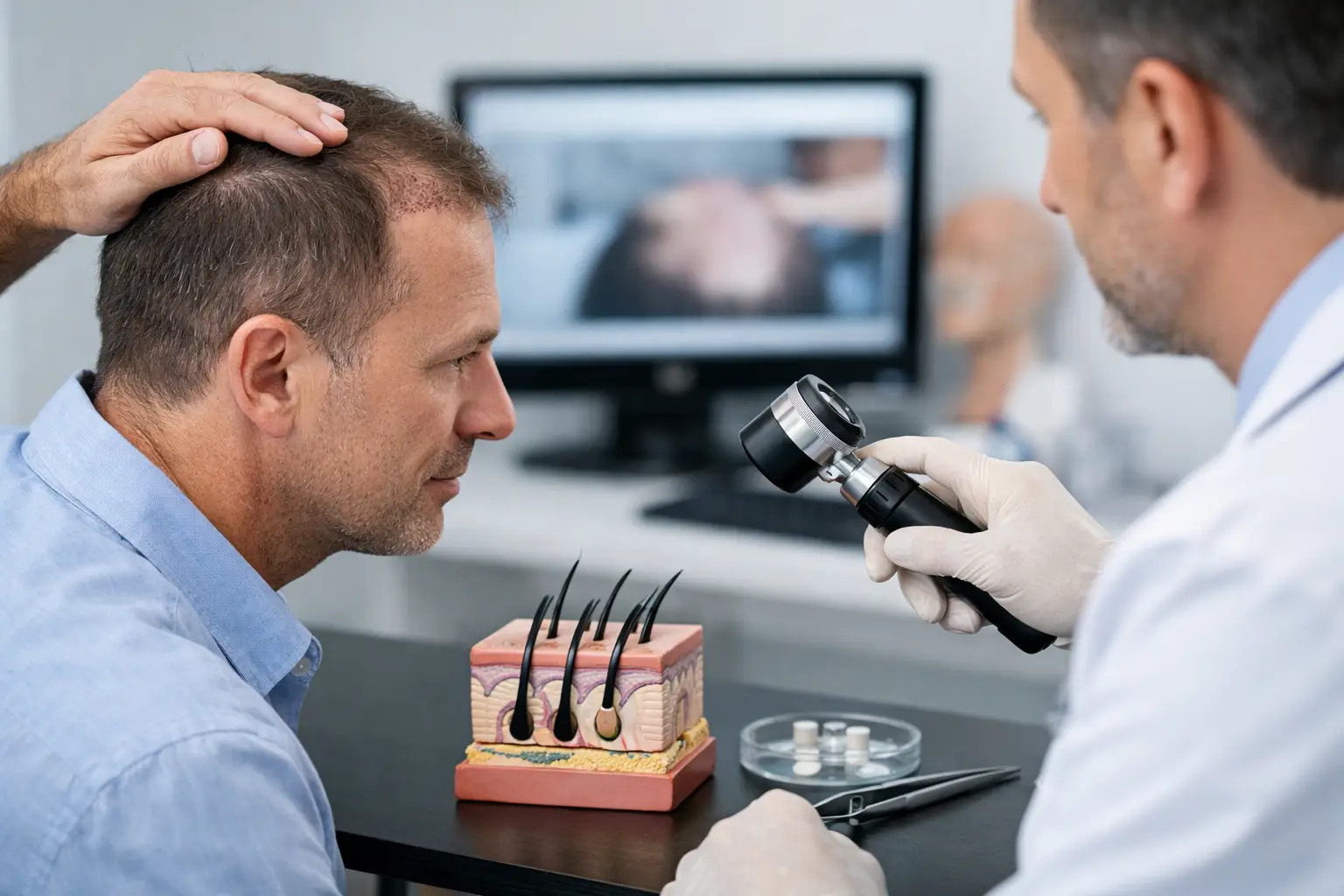
A thinning crown or receding hairline can affect confidence well before someone feels ready to talk about it. So, are hair transplants medically safe? For suitable candidates, when the procedure is planned and carried out by qualified medical professionals in an appropriate clinical setting, hair transplantation is generally considered a safe, established surgical treatment. It is still surgery, however, and it deserves the same informed decision-making as any other medical procedure.
A safe outcome is not only about the technique used on the day. It depends on your health history, the cause and pattern of your hair loss, the quality of your donor hair, realistic planning and careful aftercare. Price matters too, but it should never replace proper medical assessment and professional oversight.
Are Hair Transplants Medically Safe for Most People?
Hair transplant procedures involve moving healthy hair follicles, usually from the back or sides of the scalp, to areas affected by thinning or baldness. Because the follicles are your own tissue, there is no risk of the body rejecting them in the way it might reject a donor organ or implant.
Most procedures are performed under local anaesthetic, meaning you remain awake while the scalp is numbed. For many patients, this makes recovery more straightforward than with surgery requiring general anaesthesia. Mild swelling, tenderness, redness and temporary scabbing are common in the first days after treatment. These effects usually settle with time and appropriate care.
That said, “safe” does not mean risk-free. The level of risk varies between individuals and is influenced by medical conditions, medications, smoking, scalp health and how carefully the procedure is performed. A clinically delivered hair transplant starts with identifying whether transplantation is actually the right option for you.
The Main Medical Risks to Understand
The most common side effects are temporary and manageable, but patients should understand them before committing to treatment. Discomfort at the donor and recipient areas, swelling around the forehead, itchiness during healing and temporary shedding of existing or transplanted hairs can occur.
Infection is uncommon when sterile protocols and post-procedure instructions are followed, but it remains a surgical risk. Bleeding, delayed healing, inflammation around follicles and visible scarring can also occur. People who smoke, have poorly controlled diabetes, certain skin conditions or reduced healing capacity may need additional assessment before treatment.
Hair transplantation can also produce an unsatisfactory cosmetic result if it is poorly planned. An overly low hairline, uneven density, obvious graft placement or excessive removal from the donor area can be difficult to correct. This is why safety is broader than avoiding infection or an anaesthetic reaction. It also includes protecting the donor area and designing a result that can continue to look natural as hair loss changes over time.
Rarely, patients may experience altered sensation in parts of the scalp for a period after surgery. Serious complications are unusual, but any increasing pain, spreading redness, fever, discharge or persistent bleeding should be reviewed promptly by the treating clinical team.
Why Medical Assessment Comes First
Not all hair loss has the same cause. Pattern hair loss is common in Australian men and women, but shedding may also be related to illness, hormonal changes, nutritional deficiency, autoimmune conditions, medication, stress or scalp disease. A transplant does not treat every cause of hair loss.
A proper consultation should review your health, current medications, previous procedures, family history of hair loss and expectations. The clinician should examine the donor area, assess the stability of your hair loss and discuss whether medical management, PRP treatments, a transplant or a combination approach may be appropriate.
For example, someone with active, rapidly progressing hair loss may benefit from stabilising the condition before a transplant is considered. A person with limited donor density may not be able to achieve the coverage they have in mind in one procedure. These are not reasons to feel discouraged. They are reasons to have a plan built around what is medically sensible and achievable.
Technique Matters, But Planning Matters More
The two most recognised surgical approaches are follicular unit extraction, often called FUE, and follicular unit transplantation, often called FUT. Both can be medically appropriate when performed by experienced professionals for the right patient.
With FUE, individual follicular units are extracted from the donor area and placed into small recipient sites. It leaves many tiny dot scars rather than a linear scar, which may suit people who prefer shorter hairstyles. The trade-off is that extensive extraction can affect the appearance of donor density if it is not managed conservatively.
With FUT, a narrow strip of donor scalp is removed and dissected into grafts, leaving a linear scar that is usually concealed by surrounding hair. It can be useful for some patients requiring a larger number of grafts, but may be less suitable for those who want to keep their hair very short.
Neither option is automatically safer or better for everyone. The right choice depends on your donor characteristics, hair goals, future hair-loss pattern and medical assessment. A reputable provider explains the benefits and limitations of each approach rather than presenting one technique as a universal solution.
What Safer Clinical Care Looks Like
When comparing providers, look beyond before-and-after images and headline pricing. A hair transplant should be carried out within a structured clinical process, with clear responsibility from medical professionals from assessment through to aftercare.
Useful questions to ask include who assesses you, who performs each part of the procedure, how your medical history is reviewed and what follow-up support is available. You should also be told about expected healing, possible complications, the likely number of grafts and the chance that further treatment may be needed as natural hair loss continues.
Consent should never feel rushed. You should have the opportunity to discuss concerns, understand the costs and decide whether the expected benefit is worth the recovery period and limitations. Affordable care can make hair restoration more accessible, but transparent medical care remains essential.
At Luxe Medical Procedures, hair restoration is approached as a medical service, with treatment planning and procedures carried out by medical professionals. This focus helps patients make decisions based on clinical suitability, not pressure or cosmetic trends.
Recovery Has a Role in Safety
Following aftercare advice protects both your health and the survival of the transplanted grafts. Your treating team will provide instructions tailored to your procedure, but patients are commonly asked to avoid touching or dislodging grafts, keep the scalp clean as directed and avoid strenuous exercise for an initial period.
You may also need to avoid swimming, direct sun exposure, alcohol or smoking for a specified time. These restrictions are temporary, but they support healing and reduce unnecessary risk. Arrange time away from demanding social or work commitments if you would prefer privacy while visible redness and scabbing settle.
Hair growth takes patience. Transplanted hairs often shed in the early weeks before regrowth begins. Noticeable new growth may take several months, and final maturation can take up to 12 months or longer. Early shedding does not automatically mean the procedure has failed, but your clinical team should remain available to answer questions throughout recovery.
When a Hair Transplant May Not Be the Best First Step
Some people are not ideal candidates straight away. This can include patients with insufficient donor hair, unstable or very diffuse hair loss, untreated scalp conditions or expectations that cannot realistically be met with the available grafts. Younger patients may also need especially careful planning because their future pattern of hair loss is less predictable.
In these situations, PRP treatments or other clinician-recommended approaches may be considered as part of a broader hair-restoration plan. PRP uses a concentration of platelets prepared from your own blood and may be discussed for suitable patients experiencing thinning. It is not a replacement for surgery where significant coverage is needed, and results vary, but it can be a useful option in the right clinical context.
The most reassuring answer to safety concerns is not a blanket promise. It is a thorough consultation, honest discussion of risks and a treatment plan that respects your health, donor supply and long-term goals. If you are considering hair restoration, choose a provider that gives you clear medical guidance and enough time to decide with confidence.