
What Is the Average Cost of PRP Hair Treatment?
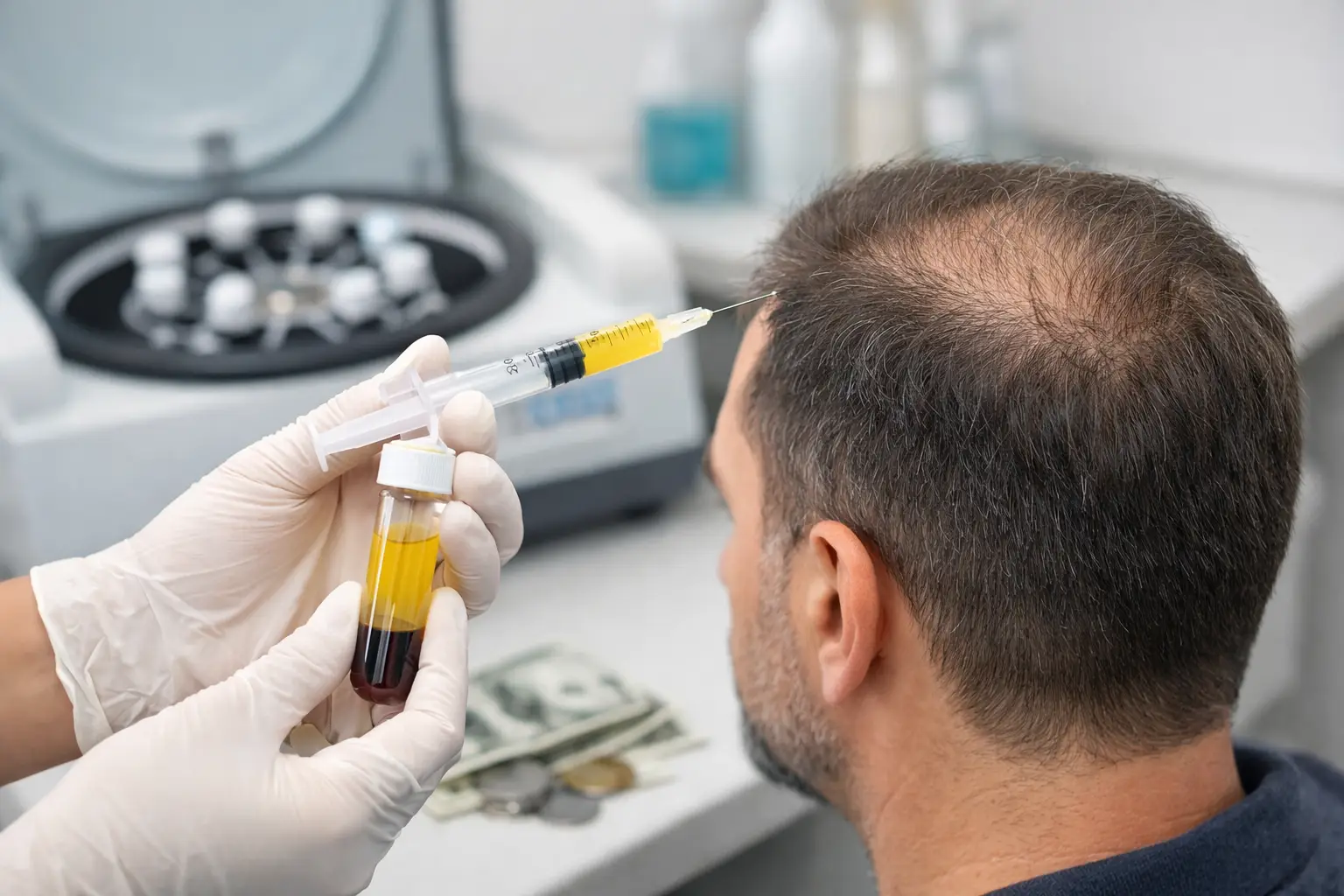
For Australians considering treatment for thinning hair, one of the first questions is: what is the average cost of PRP hair treatment? While prices differ between clinics and treatment plans, most people can expect to pay for a course of sessions rather than a single appointment. Understanding what is included in the fee helps you compare options with more confidence.
PRP, or platelet-rich plasma, treatment uses a concentrated portion of your own blood, prepared and administered to the scalp by a qualified practitioner. It is a medical procedure, not a salon service, and the quality of clinical assessment and treatment delivery should sit alongside price when making a decision.
What is the average cost of PRP hair treatment in Australia?
In Australia, PRP hair treatment commonly costs around $400 to $900 per session. A typical initial plan may involve three sessions, usually spaced several weeks apart, bringing the initial treatment cost to approximately $1,200 to $2,700.
Some clinics charge more where treatment is carried out by a doctor, includes advanced preparation systems, or is combined with a detailed hair-loss assessment and follow-up care. Others offer package pricing for an initial course, which can reduce the per-session cost compared with booking appointments individually.
There is no single price that suits every patient. The right plan depends on the pattern and stage of hair loss, the area being treated, your medical history and whether PRP is being used on its own or alongside another hair-restoration approach.
A realistic way to budget
For many patients, it is useful to separate the cost into two stages. The first is the initial treatment course, often three sessions. The second is maintenance, which may be recommended every few months or once or twice a year depending on your response and your clinician's advice.
That means the first-year cost can be higher than the ongoing cost. Ask a provider to explain both figures before you begin. A quoted price for one session may sound affordable but does not always reflect the full commitment needed to assess results and maintain a treatment plan.
What affects the price of PRP for hair loss?
The cost of PRP treatment is influenced by more than the amount of blood collected. Clinical care requires consultation, safe blood handling, equipment, preparation of the platelet-rich plasma and administration by an appropriately trained medical professional.
The practitioner administering the treatment can affect the fee. Care carried out within a medical setting may cost more than a heavily discounted offer, but it provides professional oversight, suitability assessment and a clearer pathway if you have questions or concerns during treatment.
Location also plays a part. Clinics in major metropolitan areas may have different operating costs from those in regional locations. However, price differences should not be the only basis for choosing a provider. Convenience, privacy, continuity of care and the experience of the clinical team all matter when you are committing to a course of appointments.
The treatment area can also influence cost. Early thinning across a smaller area may require a different approach from more extensive diffuse thinning or a receding hairline. A practitioner should assess your scalp and hair-loss history rather than use a one-size-fits-all plan.
Finally, some treatment plans combine PRP with medical management for hair loss or hair transplant surgery. These options have separate costs and should be discussed clearly. PRP may be considered as part of a broader plan, particularly where the aim is to support existing hair or complement surgical restoration, but it is not a replacement for every treatment option.
What should be included in a PRP hair treatment quote?
A transparent quote should make it easy to see what you are paying for. Before booking, ask whether the price includes the initial consultation, the PRP treatment itself, consumables, reviews and any follow-up appointments. If a package is offered, confirm how many sessions it covers and whether there is an expiry period.
It is also worth asking who will carry out the procedure. PRP treatments should be delivered in an appropriate clinical environment by medical professionals who can assess whether the treatment is suitable for you. A proper consultation should cover your health history, medications, type of hair loss and realistic treatment expectations.
Be cautious with prices that are far below the usual market range if the provider is unclear about these details. Low cost does not automatically mean poor care, just as a higher price does not guarantee a better outcome. The key question is whether the clinic explains its process, clinical oversight and treatment plan openly.
Questions to ask before committing
You do not need to become an expert in PRP to ask practical questions. Find out how many sessions are recommended, when review appointments occur and what maintenance may cost. Ask whether the quoted treatment is appropriate for your type of hair loss, rather than assuming PRP is the best option for everyone.
You can also ask what results are reasonable to expect and when they may become noticeable. Hair growth follows a slow cycle, so PRP is not an instant solution. A provider should avoid promising a guaranteed result and should explain that responses vary from person to person.
Is PRP worth the cost for hair thinning?
Whether PRP represents good value depends on your goals, diagnosis and willingness to follow a treatment schedule. For people with early-stage thinning, it may be considered as a non-surgical option that uses their own blood components and can be administered in a clinical setting. For others, especially those with significant hair loss or areas where follicles are no longer active, a hair transplant or another medical approach may be more suitable.
The most useful comparison is not simply PRP versus the cheapest available option. Consider the likely number of appointments, the ongoing commitment, professional supervision and whether the plan addresses the cause of your hair loss. Pattern hair loss, stress-related shedding, nutritional factors, hormonal changes and some medical conditions can look similar at first glance but may require different management.
A consultation can help clarify whether PRP is a sensible investment before you purchase a package. It also gives you a chance to discuss alternatives honestly. If a treatment is unlikely to meet your goals, a credible provider should say so.
PRP costs compared with hair transplant costs
PRP is generally less expensive upfront than a hair transplant because it is non-surgical and completed over several shorter appointments. Hair transplant pricing is usually based on the extent of the procedure and the number of grafts required, making the initial cost substantially higher than a PRP course.
That said, the two treatments answer different needs. PRP aims to support existing hair in appropriate candidates, while a hair transplant relocates healthy follicles to areas of thinning or loss. Some patients may explore both, but only after a medical assessment of their hair-loss pattern, donor area and treatment objectives.
Affordability matters, particularly when hair restoration has long felt out of reach for many Australians. It should never mean skipping clinical standards. Choosing a medically delivered treatment can give you clearer information about costs, suitability and the realistic role PRP may play in your hair-restoration plan.
If hair thinning is affecting your confidence, start with a consultation that gives you a full price breakdown and a clinically appropriate recommendation. The best next step is not necessarily the lowest advertised session fee, but a treatment plan you understand, can afford and feel comfortable following.