
Who Are the Best Candidates for Hair Transplants?
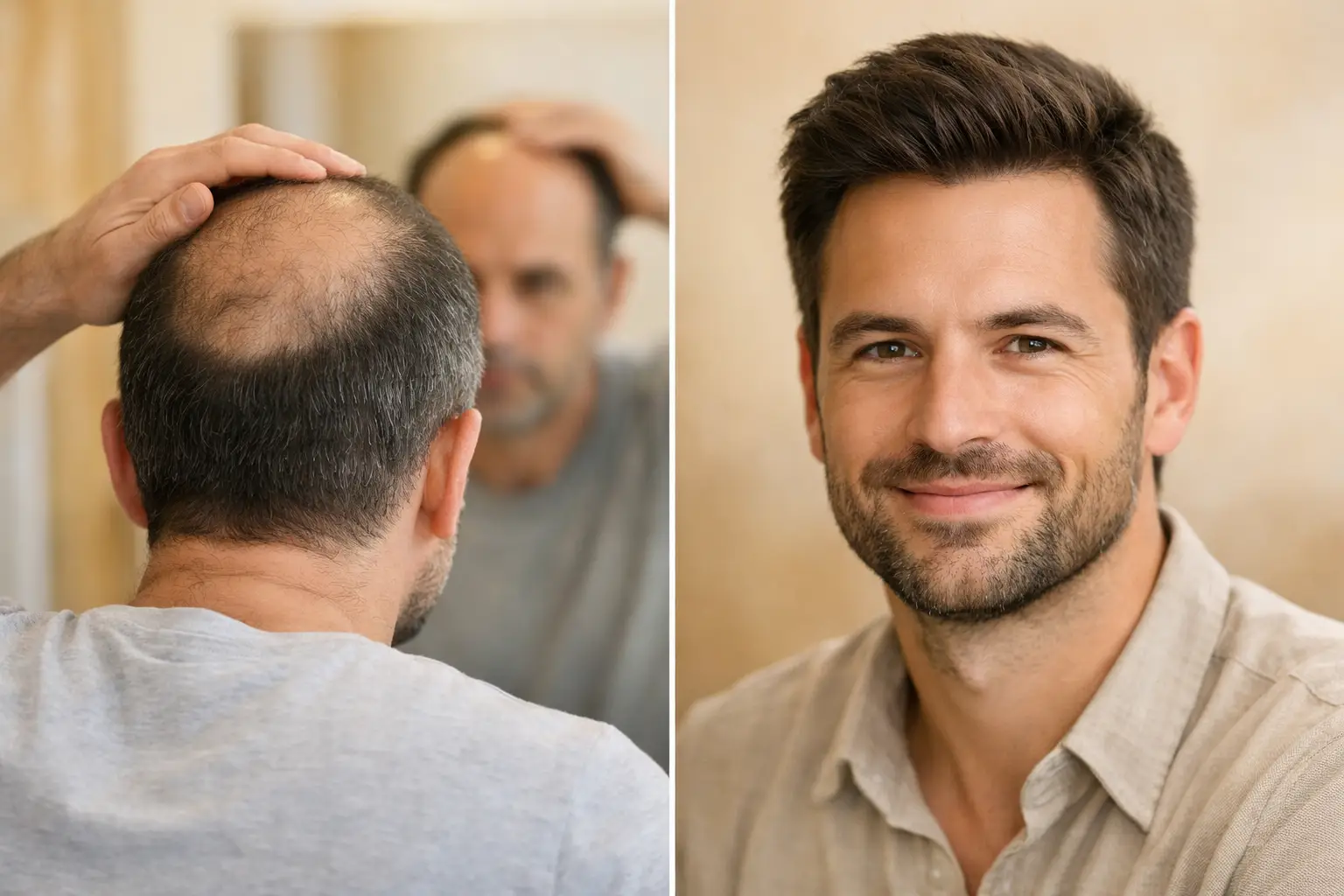
A receding hairline or thinning crown can feel deeply personal, particularly when styling changes and over-the-counter products no longer make a meaningful difference. The best candidates for hair transplants are usually people with established hair loss, a healthy donor area and realistic expectations about what surgical restoration can achieve. However, suitability is never determined by a single photo or an online checklist. It requires a clinical assessment carried out by medical professionals.
Hair transplantation can provide natural-looking, lasting improvement for the right person, but it is not designed to suit every cause or stage of hair loss. Understanding the factors that shape eligibility can help you make a confident, informed decision before committing to a procedure.
What makes someone a good hair transplant candidate?
A hair transplant redistributes your own healthy hair follicles from a donor area, usually the back and sides of the scalp, to areas affected by thinning or loss. Because the procedure relies on those available follicles, the quantity, quality and stability of donor hair are central to the assessment.
Most suitable patients have pattern hair loss, including male pattern hair loss and female pattern hair loss. This may appear as a receding hairline, thinning through the temples or crown, a widening part, or reduced density across particular areas of the scalp. Pattern hair loss is generally progressive, so a clinician will consider not only your current hairline or density but also how your hair loss may develop over time.
A good candidate also has a clear goal that can be achieved with the hair available. For example, someone seeking to soften a receding hairline or add coverage to a thinning crown may be suitable where the donor supply supports that plan. A person looking to recreate the very dense hairline they had as a teenager may need a more measured approach. Surgical planning is about using a finite donor resource wisely, with results that continue to look appropriate as you age.
Hair loss should be assessed before it is treated
Not all shedding is pattern hair loss. Temporary shedding can occur after illness, major stress, rapid weight changes, hormonal changes or some medications. Scalp inflammation, nutritional issues and certain medical conditions may also contribute to thinning. In these cases, a transplant may not address the underlying cause and may need to wait until the cause has been properly investigated or managed.
This is why a medical consultation matters. A clinician can review your hair-loss pattern, medical history, medications, scalp health and family history, then explain whether hair transplantation, PRP treatments, medical management or a combination of approaches is most appropriate.
The best candidates for hair transplants have adequate donor hair
The donor area is not simply a source of extra hair. It is a limited supply that must be protected. During an assessment, medical professionals consider donor density, hair calibre, scalp flexibility where relevant, and the likely stability of hair in the donor zone. Thicker hair can often create stronger visual coverage than very fine hair, although people with fine hair can still be suitable candidates.
The contrast between your hair and scalp can also influence the appearance of density. Dark hair against a light scalp, for instance, can make thinning more visible than hair and scalp with similar colouring. Curl, wave and the direction of growth are considered too. These details help shape a treatment plan that looks balanced rather than overpromised.
Limited donor density does not automatically rule out treatment. It may mean prioritising one area, such as the frontal hairline, rather than attempting to cover every area of thinning at once. An ethical consultation should explain these trade-offs plainly, including whether a non-surgical option may offer better value for your situation.
Age and stability can affect the right timing
There is no single ideal age for a hair transplant. Adults in their twenties, thirties, forties and beyond may be suitable. The more relevant question is whether the pattern of loss is sufficiently understood to plan conservatively.
For younger adults with early or rapidly changing hair loss, proceeding too quickly can create problems later. If transplanted hair is placed in a low, dense hairline while surrounding native hair continues to thin, the result may eventually look disconnected. In some cases, clinicians may recommend monitoring the pattern, commencing medical treatment where appropriate, or considering PRP treatments before deciding on surgery.
For mature patients, age alone is not a barrier. Many have stable loss patterns and well-defined goals, making them strong candidates. General health, donor quality and expectations remain more important than a number on a birthday cake.
General health and scalp health matter
Hair transplantation is a medical procedure, so a thorough health review is part of responsible care. You should disclose medications, allergies, past surgery, smoking or vaping, bleeding conditions, diabetes, autoimmune conditions and any history of poor wound healing. This information helps the treating team consider safety, recovery and whether the procedure should be modified or postponed.
A healthy scalp is also important. Active infection, severe dermatitis, scarring or uncontrolled inflammatory scalp conditions may need treatment before transplantation is considered. People with scarring forms of hair loss require especially careful medical assessment, as transplant suitability can vary significantly depending on whether the condition is active or stable.
Following pre-procedure and aftercare instructions is another practical part of candidacy. Recovery involves protecting the grafts, managing swelling or discomfort as directed, avoiding certain activities for a period and attending follow-up care. Patients who can realistically accommodate this process are better placed for a smooth experience.
Realistic expectations are essential
A successful hair transplant should look natural, suit your facial features and make thoughtful use of the available donor hair. It is not usually an instant transformation. Transplanted hairs commonly shed before new growth begins, and visible progress develops gradually over several months. Final maturation can take up to 12 months or longer, depending on the individual and treatment area.
Density also needs to be discussed honestly. A transplant can create the appearance of fuller coverage, but it cannot reproduce the density of an untouched scalp across a large area when donor hair is limited. Some people may choose staged procedures over time, while others may be happiest focusing on the area that matters most to them.
The strongest candidates understand that a hair transplant addresses follicles in selected areas, not the future behaviour of all existing hair. Continuing hair loss can still occur in non-transplanted hair. Your clinician may discuss strategies to support existing hair and protect the overall result.
Can women be candidates for hair transplants?
Yes, women can be suitable candidates, though the assessment is often more detailed. Female hair thinning can be diffuse, meaning density is reduced throughout the scalp, including the donor area. When donor hair is also thinning, there may not be enough stable follicles available for transplantation.
Women with a stable donor area and more localised loss, such as traction-related loss around the hairline, a scar, or a defined pattern of thinning, may be suitable. A clinician will first consider possible causes such as hormonal changes, iron deficiency, thyroid conditions, recent illness or styling-related traction. Treating the cause, where possible, is an important step before surgical planning.
When a hair transplant may not be the first option
There are circumstances where delaying or avoiding a transplant is the safer decision. Very early, unpredictable loss, active scalp disease, insufficient donor hair and untreated medical causes of shedding may make surgery unsuitable at that time. This is not a failure or a dead end. It simply means the best treatment pathway may begin elsewhere.
PRP treatments may be considered for suitable patients experiencing thinning or early hair loss, often as part of a broader clinician-led plan. These treatments use a concentration of platelets from your own blood and are administered in a clinical setting. They are not a replacement for a transplant in every case, but may be useful where the goal is to support existing hair rather than redistribute follicles.
What to expect from a clinical consultation
A quality consultation should leave you with more than a price estimate. It should provide a clear explanation of your hair-loss pattern, donor capacity, recommended treatment approach and likely limitations. You should feel comfortable asking about the procedure, recovery, expected timeline, potential risks and the qualifications of the medical professionals involved.
At Luxe Medical Procedures, hair restoration is approached as a clinical service, with treatment recommendations based on individual suitability rather than a one-size-fits-all promise. For patients in Newcastle, Brisbane or Perth, an assessment can help clarify whether a transplant, PRP treatment or another approach is the sensible next step.
The right time to explore hair restoration is when you are ready for clear answers, not when hair loss has reached an arbitrary point. A considered medical consultation can turn concern about thinning hair into a practical plan that respects your health, budget and long-term goals.