
Can I Get a Hair Transplant for Beard Growth?
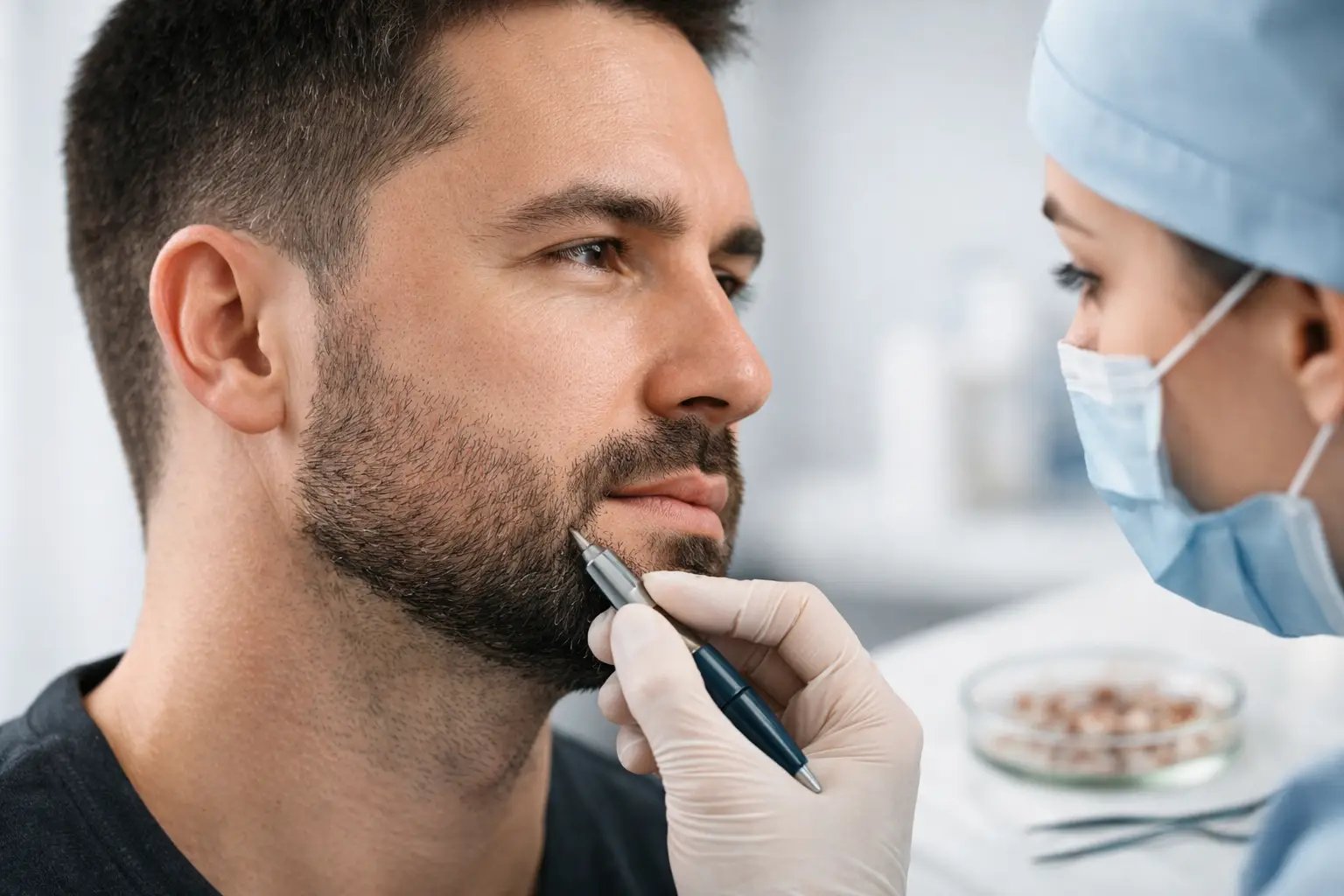
A patchy beard can be frustrating when it does not match the rest of your appearance or the style you want to wear. If you are asking, “can I get a hair transplant for beard” growth, the short answer is yes. A beard transplant can add density to sparse areas, fill in scars or uneven growth patterns, and help create a more defined beard or moustache.
This is a medical procedure, not a cosmetic shortcut. The best results depend on having an adequate donor hair supply, realistic expectations and a treatment plan carried out by appropriately qualified medical professionals.
Can I get a hair transplant for beard growth?
A beard transplant involves moving healthy hair follicles, usually from the scalp, into areas of the face where hair is thin or absent. Once the transplanted follicles establish a blood supply and begin growing, they can produce hair on an ongoing basis.
The procedure can be considered for people who have naturally sparse facial hair, gaps in the beard, patchiness caused by a scar, or beard loss following injury or surgery. It may also suit people who want to reshape their beard line, build a fuller moustache or create more connection between the moustache and beard.
Not every case calls for surgery. Some people have early or temporary hair changes that need medical assessment first. A consultation is the appropriate place to discuss your health history, facial hair goals, donor area and whether a transplant is likely to offer a worthwhile outcome.
How a beard transplant works
Most modern beard transplants use follicular unit extraction, often called FUE. With this approach, individual follicular units are carefully removed from a donor area, commonly the back or sides of the scalp where hair tends to be more resistant to thinning.
The recipient area is then prepared with very small incisions. This part requires precision. Each follicle needs to be placed at an angle and direction that complements natural beard growth. Facial hair does not grow in one uniform direction: the cheeks, jaw, chin and moustache each have their own pattern. Poor placement can make a transplant look unnatural, even when the follicles grow well.
A medical professional will generally design the treatment around your facial structure, existing beard density and preferred grooming style. A person seeking subtle filling through the cheeks needs a different approach from someone wanting a dense full beard. The number of grafts required can vary considerably for this reason.
Local anaesthetic is normally used, so you are awake during the procedure but the donor and treatment areas are numbed. Treatment time depends on the scale of the transplant and the number of follicles being placed.
Who may be suitable for a beard transplant?
Suitable candidates typically have healthy donor hair and a clear understanding of what a transplant can achieve. The donor hair should be dense enough to provide follicles without creating a visibly thin area at the back or sides of the scalp.
Age is only one factor. Younger adults can be suitable, but a clinician may discuss whether your hair loss pattern is still changing before recommending treatment. If you are experiencing progressive scalp hair thinning, preserving donor hair for future scalp restoration may also need to be part of the conversation.
Your overall health matters too. Conditions that affect wound healing, active skin infections, uncontrolled medical conditions and some medications can affect suitability or require additional planning. People with certain inflammatory or autoimmune causes of hair loss may need specialist assessment before proceeding, as transplant survival can be less predictable when the underlying condition is active.
A consultation should also explore why the beard is sparse. Genetics are common, but hormonal factors, skin conditions, past trauma and previous procedures can all play a role. Identifying the cause supports safer decision-making and helps set realistic expectations.
What results can you expect?
A beard transplant is designed to create natural-looking facial hair coverage, but results take time. In the first weeks, small scabs around the implanted hairs are expected as the skin heals. The transplanted hairs often shed after the procedure. This can be concerning, but it is a normal part of the growth cycle and does not necessarily mean the follicles have failed.
New growth commonly begins over the following months. The hairs then gradually thicken and mature, with final density and appearance often taking 12 months or longer to assess. Growth can be uneven at first, particularly while surrounding native facial hair follows its own cycle.
Because donor follicles usually come from the scalp, the transplanted beard hairs may initially behave more like scalp hair. They may grow longer or more quickly than your natural beard hair and usually need regular trimming. Over time, many people find that the hairs blend well when they are properly positioned and groomed.
Density is another important consideration. A single procedure can make a meaningful difference, but it may not reproduce the density of a naturally very thick beard. In some cases, a second session may be discussed after the first transplant has fully grown and settled.
Recovery and aftercare
Downtime is usually manageable, although the face can look noticeably red or swollen for several days. Tiny crusts may form around the implanted follicles, and it is important not to rub, pick or shave the area too early. Your treating team will provide tailored instructions on cleansing, sleeping position, exercise, sun exposure and when you can return to shaving.
Most people can resume quiet daily activities reasonably soon, but strenuous exercise, swimming and contact sports may need to be avoided for a short period. It is also sensible to plan around social or work commitments, particularly if you prefer not to have temporary redness or scabbing visible.
The donor area needs care as well. With FUE, the extraction points are small and generally heal as tiny marks that are difficult to see once surrounding hair grows. However, scarring and changes in sensation are possible with any surgical procedure.
Risks and trade-offs to understand
Beard transplantation is generally considered a well-established hair-restoration procedure when performed by experienced medical professionals, but no procedure is risk-free. Potential issues include swelling, bruising, infection, bleeding, temporary numbness, folliculitis and visible scarring. There is also a chance that some grafts will not survive or that growth may be less dense than expected.
The aesthetic risks deserve equal attention. An overly sharp beard line, incorrect hair angles or an unsuitable density can look artificial. This is why planning should not be rushed and why the procedure should be treated as a clinical decision rather than simply a grooming purchase.
Cost is another practical consideration. Beard transplant pricing is generally influenced by the number of grafts, the complexity of the design, the procedure method and the clinical team involved. A lower advertised price is not always a like-for-like comparison if it excludes medical oversight, medications, aftercare or follow-up appointments.
Is PRP an alternative to a beard transplant?
Platelet-rich plasma, or PRP, uses concentrated components from your own blood and is administered through a series of injections. It may be discussed as part of a broader hair-restoration plan in selected cases, particularly where there are existing but weak hairs that may benefit from clinical support.
However, PRP does not create new follicles in an area where follicles are absent. For a scarred area or a naturally bare section of the beard, a transplant may be the more direct way to add hair-bearing follicles. Your clinician can explain whether PRP, transplantation or no treatment is the most appropriate pathway for your circumstances.
Choosing the right clinical provider
A beard transplant should be carried out with proper medical oversight, clear discussion of risks and a personalised treatment design. Ask who will assess you, who performs each stage of the procedure, how donor hair is selected and what aftercare is included. You should also be shown realistic expectations rather than being promised a particular density or result.
At Luxe Medical Procedures, hair restoration is approached as a clinically administered treatment, with affordability considered alongside professional care. The right plan is one that respects both your appearance goals and the long-term value of your donor hair.
A fuller beard may be achievable, but the most worthwhile first step is a considered consultation. It gives you space to ask practical questions, understand the trade-offs and decide whether surgery is right for you before committing to treatment.