
Can PRP Reduce Shedding? A Clear Clinical View
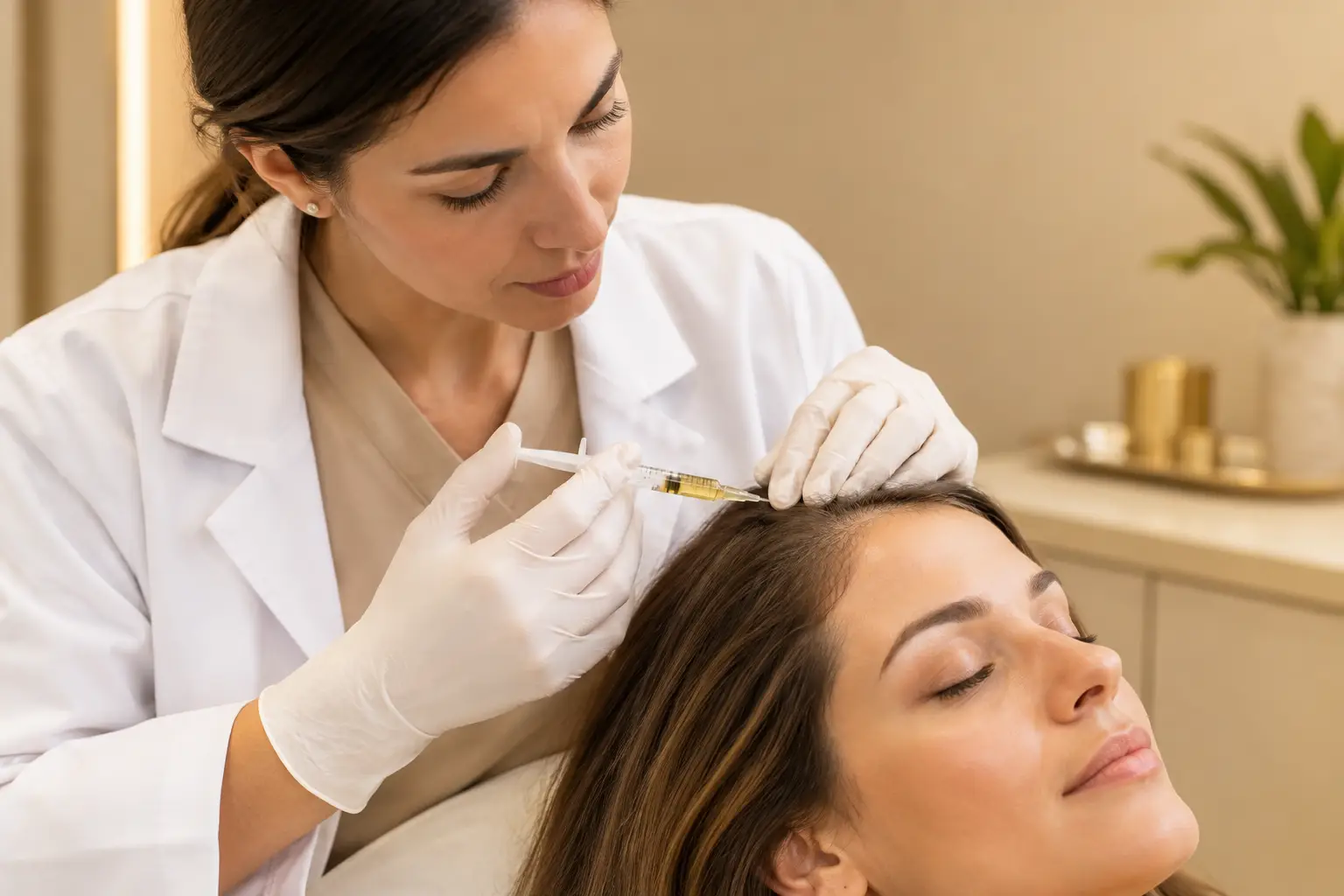
A sudden increase in hair on the shower floor or pillow can feel alarming, particularly when your hair already appears finer around the part, temples or crown. So, can PRP reduce shedding? For some people with pattern hair loss, platelet-rich plasma treatments may help support weaker follicles and reduce progressive thinning over time. It is not an instant fix, however, and it is not the right response to every cause of shedding.
PRP is a clinically administered treatment that uses a concentrated portion of your own blood, containing platelets and growth factors. When injected into targeted areas of the scalp by a qualified medical professional, it is intended to create a healthier environment for hair follicles. The goal is usually to maintain existing hair, improve hair calibre and encourage better density where follicles are still active.
Can PRP reduce shedding from hair loss?
PRP may reduce shedding when hair loss is linked to androgenetic alopecia, also known as male or female pattern hair loss. In this condition, genetically susceptible follicles gradually shrink. Hairs spend less time in the growth phase, regrow finer and shorter, and eventually become less visible. Supporting follicle function early can be more useful than waiting until an area is completely bare.
Research into PRP for pattern hair loss is encouraging, with many patients experiencing improvement in hair density, thickness or shedding after a course of treatment. Results are variable because PRP preparation methods, treatment schedules, the severity of hair loss and individual biology all differ. PRP should be viewed as a management treatment, not a guaranteed cure or a substitute for an accurate diagnosis.
Some patients notice less hair shedding first. Others do not see a clear change in daily shedding but notice that their hair looks fuller or is easier to style after several months. These are different but equally relevant measures of progress.
Why PRP may help active follicles
Platelets carry signalling proteins involved in tissue repair and cell activity. In scalp treatment, these growth factors may support blood supply around follicles, reduce inflammation in some cases and encourage follicles to remain in the active growth phase for longer. The treatment is especially focused on follicles that are miniaturising rather than follicles that have stopped producing hair altogether.
That distinction matters. PRP cannot reliably create new follicles in a smooth, long-bare area of scalp. Where hair loss is advanced, a hair transplant may be a more appropriate way to restore coverage, while PRP can sometimes be considered to support surrounding native hair.
When shedding needs a different answer
Not every form of shedding is pattern hair loss. A noticeable, diffuse shed can occur after illness, surgery, major stress, rapid weight loss, childbirth, iron deficiency, thyroid changes or certain medications. This type of shedding is often called telogen effluvium. It can be distressing, but treating the trigger is usually the priority.
PRP may be considered in selected cases, but it should not be the first assumption when the cause has not been established. Starting treatment without understanding why hair is shedding can delay appropriate care. A medical assessment can help distinguish gradual follicle miniaturisation from a short-term shedding event, scalp disease or another health concern.
Seek timely medical advice if shedding is sudden, patchy, associated with scalp pain, scaling or redness, or accompanied by changes in energy, weight or general health. These signs warrant a proper clinical review rather than relying on cosmetic products or self-diagnosis.
What a PRP treatment course usually involves
PRP treatment begins with a small blood draw. The sample is processed to separate and concentrate the platelet-rich portion, then carefully injected into areas of thinning on the scalp. Because it uses your own blood, the risk of an allergic reaction is low, though the procedure still needs to be carried out with appropriate clinical protocols.
Most treatment plans involve an initial series of sessions, commonly spaced several weeks apart, followed by maintenance sessions based on your response and hair-loss pattern. Your practitioner will recommend a schedule suited to your presentation rather than treating PRP as a one-off appointment.
The procedure can involve brief discomfort, tenderness, swelling or small bruises at injection sites. These effects are generally temporary. As with any procedure involving injections, there are also risks such as infection, bleeding and headache. A trained medical professional should discuss your health history, medicines and suitability beforehand.
How long before you can judge whether PRP is working?
Hair growth moves slowly, so PRP requires patience. It is usually too early to judge a result after one session or within a few weeks. Many people assess changes from around three to six months, with ongoing improvement possible over a longer treatment period.
Consistency matters because hairs naturally cycle through growth, rest and shedding phases. Clinical photographs taken in the same lighting and position can be more reliable than day-to-day mirror checks. Your practitioner may also assess changes in density, hair shaft thickness and the pattern of loss at follow-up appointments.
It is reasonable to expect a gradual outcome, not an overnight transformation. If you are losing a high volume of hair each day due to an untreated underlying issue, PRP alone is unlikely to deliver the result you want.
PRP alongside other hair-restoration options
For suitable patients, PRP can form part of a broader plan. Depending on the diagnosis, this may include prescribed medical treatment, nutritional investigation where indicated, scalp care or a hair transplant. Combining approaches is not automatically better, but a tailored plan can address both the cause of ongoing loss and the visible areas of reduced density.
Hair transplants are designed to redistribute permanent donor follicles into thinning or balding areas. They do not stop the progression of native hair loss, which is why some transplant patients also discuss PRP or medical management with their clinician. The right combination depends on donor supply, the stability of hair loss, future expectations and budget.
For patients considering PRP, affordability should never mean compromising on assessment or professional oversight. A lower price is only meaningful when the treatment is appropriately prepared, administered by medical professionals and recommended for a genuine clinical reason.
Who is most likely to be a suitable candidate?
PRP is often most relevant for adults with early to moderate thinning who still have active hair follicles. It may suit men with a receding hairline or crown thinning and women with widening through the part line, provided the underlying cause has been assessed. People who want a non-surgical option or are looking to support existing hair before considering transplant surgery may also explore it.
Suitability can be affected by certain blood disorders, active scalp infections, some medications and health conditions that influence healing or platelet function. Pregnancy, breastfeeding and recent illness may also change the timing of treatment. A consultation is where these details should be considered properly.
At Luxe Medical Procedures, PRP treatments and hair-restoration options are considered through a medically guided consultation, so the recommendation is based on your pattern of loss rather than a one-size-fits-all package.
If shedding is making you avoid photos, change your hairstyle or worry about what comes next, arranging an assessment early gives you more options. The most useful next step is not chasing a quick promise, but finding out what your follicles and scalp actually need.