
Can PRP Thicken Existing Hair? What to Expect
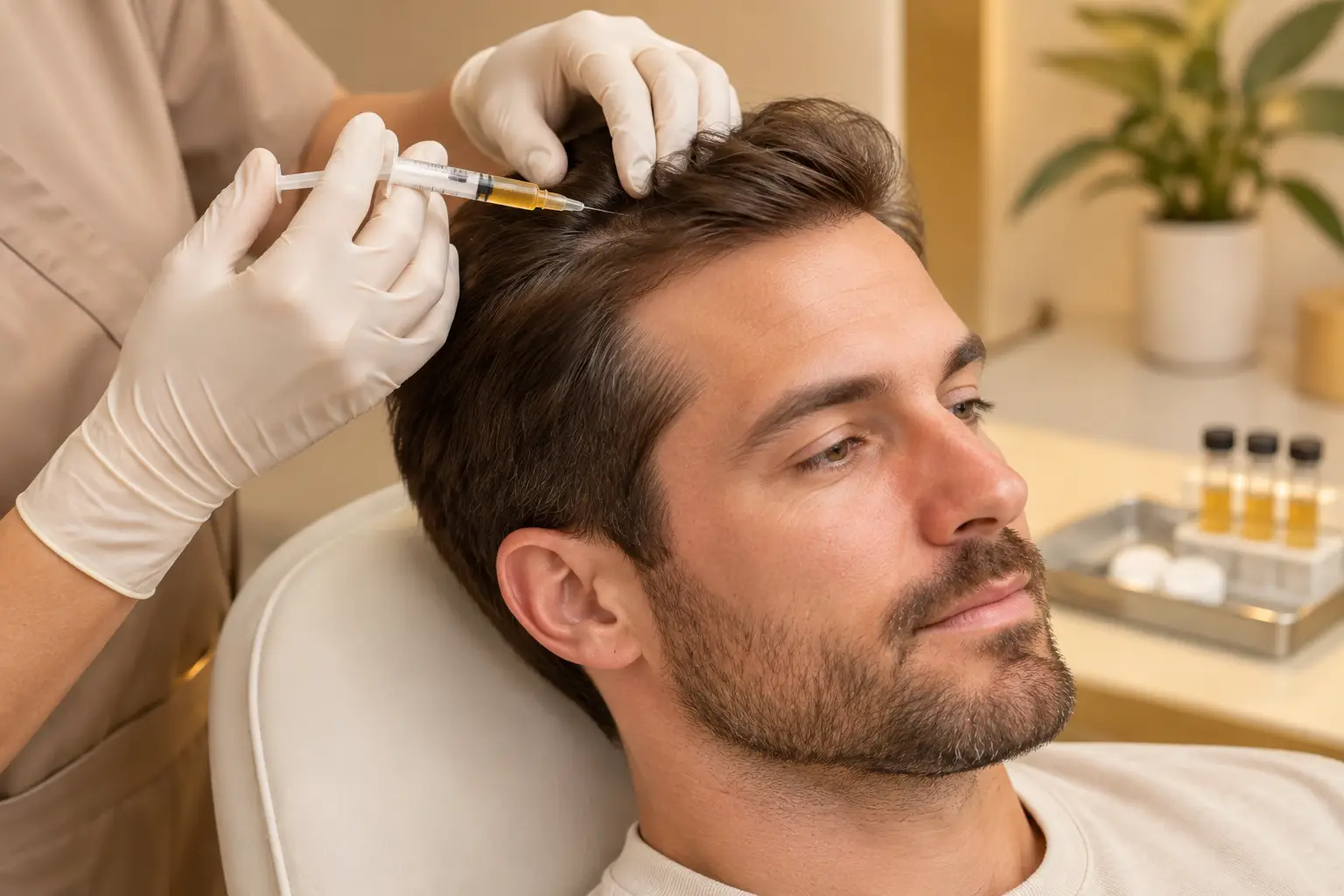
A widening part, a softer hairline or more scalp visible under bathroom lighting can make hair thinning feel suddenly difficult to ignore. So, can PRP thicken existing hair? For some people with active but weakened hair follicles, PRP treatments may help improve hair shaft thickness, density and overall coverage over time. Results vary, however, and the right starting point is a medical assessment of why your hair is thinning.
Can PRP thicken existing hair?
PRP, or platelet-rich plasma, is made from a small sample of your own blood. After processing, the platelet-rich portion is carefully injected into areas of the scalp affected by thinning. Platelets contain growth factors that may support the environment around existing hair follicles.
The key word is existing. PRP does not transplant new follicles or create follicles where none remain. Its role is to support viable follicles that may be producing finer, shorter or slower-growing hairs. When those follicles respond, the hair can appear thicker because individual strands have greater diameter and the scalp has better coverage.
This is why PRP is often considered for early to moderate pattern hair loss, diffuse thinning and areas where hairs are still present but becoming finer. It can also be considered alongside other medically appropriate hair-loss management options, or as part of a broader plan before or after hair restoration procedures.
For a smooth, completely bald area where follicles have been inactive for a long time, PRP is less likely to produce a meaningful cosmetic change. A hair transplant may be a more suitable option where there is sufficient donor hair and the person is an appropriate candidate.
Why existing hair can become finer
Hair loss is not always a matter of hairs simply falling out. With androgenetic alopecia, commonly known as male or female pattern hair loss, follicles can gradually miniaturise. Each new hair-growth cycle produces a finer strand, and the growing phase can become shorter. Over time, this creates reduced density even before an area looks bald.
That distinction matters when considering PRP. A follicle that is still active may have capacity to produce a stronger hair fibre. The aim is not an instant change or a completely new hairline. It is usually to preserve and improve the hair you have, particularly in areas of early thinning.
Not all thinning has the same cause. Recent illness, substantial stress, rapid weight change, iron deficiency, thyroid conditions, hormonal changes, certain medications and scalp inflammation can all affect shedding and density. Treating the underlying driver may be as important as, or more important than, pursuing PRP. A medical professional can help distinguish pattern hair loss from other causes and recommend an appropriate pathway.
What results from PRP may look like
When PRP works well, the change is often gradual rather than dramatic. Some people notice less shedding first. Over subsequent months, existing hairs may look healthier, feel thicker or provide better coverage when styled. Photographs taken in consistent lighting and from the same angles are often more useful than trying to judge progress from day to day.
Clinical research on PRP for hair loss has shown promising results for some patients, including improvements in hair density and hair calibre. However, treatment methods differ between clinics, including how the blood is processed, the concentration of platelets used, injection technique and treatment intervals. This means outcomes cannot be guaranteed, and published results do not predict the exact response for an individual.
Your baseline level of hair loss also influences what is realistic. Someone with early diffuse thinning may be seeking to maintain density and improve thickness. Someone with advanced recession may need to consider whether PRP alone can meet their cosmetic goal. Honest expectations are part of safe, worthwhile treatment planning.
Timing and maintenance
Hair growth follows a slow cycle, so PRP is not a quick fix. A course of treatments is commonly recommended initially, followed by maintenance sessions where clinically appropriate. Your practitioner will advise on timing based on the pattern and extent of your hair loss, your medical history and how your scalp responds.
It may take several months to assess whether the treatment is providing a worthwhile benefit. Continuing sessions without a clear plan or realistic goal can become costly and frustrating. A good consultation should cover likely benefits, limitations, treatment frequency and the alternatives available to you.
Who may be a suitable candidate?
PRP may suit adults who have thinning hair but still have active follicles in the treatment area. It is commonly explored by men with early crown or hairline thinning and women experiencing diffuse thinning through the part line or top of the scalp.
Suitability is individual. A practitioner will consider the cause and duration of hair loss, scalp health, medications, medical conditions and treatment goals. They may also discuss whether PRP could be used alongside medical therapies or whether surgical hair restoration is more appropriate for the result you want.
PRP may need to be delayed or avoided in some circumstances, such as active scalp infection, certain bleeding or platelet disorders, or situations where medications affect clotting. Pregnancy, breastfeeding and complex medical histories should also be discussed directly with a qualified clinician. This is one reason hair PRP should be carried out by medical professionals, rather than treated as a standard cosmetic service.
What happens during a PRP treatment?
The appointment begins with collecting a small blood sample, similar to a routine blood test. The sample is placed in a centrifuge to separate the platelet-rich plasma. The prepared PRP is then injected into targeted areas of the scalp using fine needles.
The treatment can involve temporary discomfort, especially in sensitive parts of the scalp. Depending on the clinical approach, numbing measures may be discussed. Minor redness, tenderness, swelling, pinpoint bleeding or a mild headache can occur afterwards, but these effects are generally short-lived. Your practitioner will provide personalised aftercare advice and explain when to contact the clinic if you have concerns.
Because PRP uses your own blood, the risk of an allergic reaction to the injected plasma is low. That does not remove the need for proper clinical hygiene, careful screening and an experienced provider. Safe injection practice and professional oversight remain essential.
PRP versus a hair transplant
PRP and hair transplants address different stages and goals of hair loss. PRP is intended to support existing follicles. A hair transplant redistributes healthy follicles from a donor area, usually at the back or sides of the scalp, into areas of thinning or loss.
For a person whose hair is becoming finer but who still has good coverage, PRP may be a sensible non-surgical option to consider. For someone with a significantly receded hairline or established bald patches, a transplant may offer a more visible density change. In some cases, both approaches can have a role: PRP may support existing native hair, while transplantation addresses areas where follicle loss is more advanced.
Cost should be discussed openly as part of this decision. The cheapest option is not necessarily the most effective if it does not match the cause or stage of hair loss. Equally, surgical treatment is not always necessary when non-surgical care may help preserve the hair that remains.
Making a confident decision about PRP
Before committing to treatment, ask what diagnosis is being treated, what degree of improvement is realistic and how progress will be measured. You should understand the likely number of sessions, maintenance requirements, possible side effects and the full expected cost. Clear answers make it easier to decide whether PRP aligns with your goals and budget.
At Luxe Medical Procedures, PRP treatments and hair restoration options are approached as medical procedures, with treatment recommendations guided by professional assessment. The most useful next step is not to chase a promise of instant regrowth, but to have your scalp and hair loss pattern assessed so you can choose care that gives your existing hair the best possible chance.