
How to Choose a Hair Transplant Clinic Safely
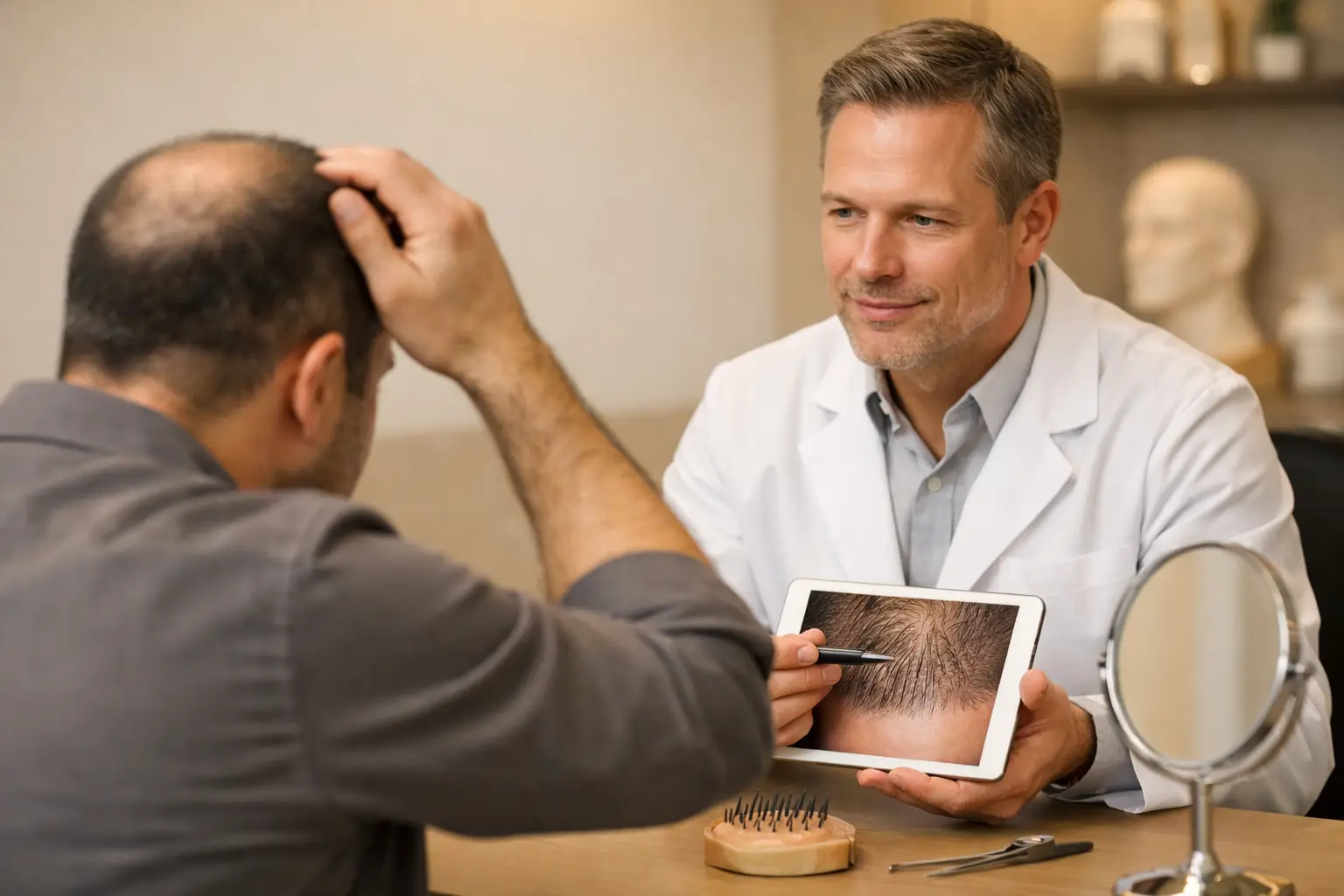
A hair transplant is a medical procedure with a visible, long-term outcome. When you choose a hair transplant clinic, you are not simply choosing a price or a before-and-after gallery. You are choosing the standard of assessment, who carries out the procedure, how your donor hair is protected and the support you receive while healing.
For Australians dealing with a receding hairline, thinning through the crown or reduced density, the right clinic should make the process clearer, not more pressured. A good consultation recognises that hair loss can affect confidence while still giving you realistic information about what treatment may achieve.
Start with medical assessment, not a sales offer
Hair loss has different causes. Pattern hair loss is common, but changes in density can also relate to scalp conditions, illness, nutritional factors, hormonal changes, medication or traction from certain hairstyles. A clinic should assess your individual pattern of loss, the quality and availability of donor hair, your scalp and your broader medical history before recommending a procedure.
This assessment matters because a transplant moves existing follicles from one area to another. It does not create an unlimited supply of hair. Donor hair, usually taken from the back and sides of the scalp, must be planned carefully to avoid overharvesting and to leave room for the possibility of future loss.
Be cautious if a provider offers a fixed package, a large graft number or a guaranteed result before properly assessing you. The most suitable approach may be a transplant, PRP treatments, medical management, a combination of options or a decision to wait and monitor progression. Suitability is not a sales target.
Know who is responsible for your care
One of the most useful questions you can ask is straightforward: who will assess me, design my hairline, perform each stage of the procedure and be available if I have concerns afterwards?
Hair restoration involves clinical judgement at every point. Hairline design needs to suit your age, facial proportions, existing hair and likely pattern of future loss. Graft extraction and placement require careful handling. Anaesthetic, infection prevention and post-procedure review also need appropriate medical oversight.
Ask the clinic to explain the role of each person in the treatment room in plain language. You should understand whether a medical professional is directly involved in the consultation and procedure, and how clinical decisions are made on the day. Clear answers are reassuring. Vague descriptions of a “team” without individual responsibilities are not.
At Luxe Medical Procedures, hair restoration is approached as a medical service, with treatments carried out by medical professionals. That clinical focus is particularly valuable for patients who want an affordable pathway without treating a surgical decision as a cosmetic impulse purchase.
Look for a personalised hairline plan
A natural-looking transplant is rarely about creating the lowest possible hairline or fitting the highest possible number of grafts into one session. A responsible plan considers the density you can realistically achieve, how the transplanted area will blend with existing hair and whether your appearance will still look appropriate if hair loss progresses.
Ask to see relevant results, not only dramatic transformations. If you are seeking crown coverage, view crown cases. If your concern is a receding hairline, ask about hairline cases with a similar pattern and hair type. Images should be consistent in lighting, angle, hair length and styling wherever possible. A single close-up photo can be impressive, but it does not tell you how the overall result looks or how the donor area healed.
Compare procedure options without chasing jargon
Many clinics offer follicular unit extraction, commonly called FUE. In this technique, individual follicular units are extracted from the donor area and implanted into thinning areas. The technique may suit many patients, but it is not automatically right for everyone or every hair-loss pattern.
The more useful conversation is about why a particular approach has been recommended for you. Your clinician should explain the likely number of grafts, the area being treated, the expected density, donor-area considerations and the recovery period. They should also explain what a graft means, as a graft can contain more than one hair. Comparing two clinics only by graft price can be misleading if their plans, inclusions and treatment standards differ.
PRP treatments may also be discussed for some patients experiencing thinning hair. PRP uses a concentration prepared from your own blood and is administered as a clinical treatment. It is not a replacement for a transplant where follicles are no longer present, and outcomes vary between individuals. It may be considered as part of a broader plan depending on your hair-loss stage and clinical suitability.
Ask for transparent costs and inclusions
Affordability matters, especially when hair transplantation can seem financially out of reach. However, the lowest advertised price is not always the lowest total cost. A meaningful quote should explain what is included before, during and after your procedure.
Clarify whether the quoted figure covers your consultation, procedure, anaesthetic, medications if required, post-procedure care products, follow-up appointments and any recommended PRP treatment. Ask whether the price is based on a confirmed graft estimate and what happens if the treatment plan changes on the day.
You should also understand payment timing and whether finance options, if offered, suit your circumstances. A clinic can be accessible and competitively priced while still being transparent about the clinical care behind the procedure. Pressure to pay a deposit immediately, countdown offers or unclear exclusions deserve closer scrutiny.
Pay attention to aftercare before you book
The procedure day is only one part of your treatment. In the first days and weeks, you may need to manage swelling, tenderness, washing instructions, sleeping positions, exercise restrictions and protection of the implanted grafts. You should know how to contact the clinic if you are worried about pain, bleeding, infection or unexpected changes.
Ask how follow-up is organised and whether the clinic provides written aftercare instructions. Find out who reviews your progress and when you can expect normal shedding of transplanted hairs. Early shedding can be part of the usual growth cycle, while visible new growth takes time. A responsible provider will discuss this timeline before treatment so you are not left concerned by normal post-procedure changes.
For patients travelling to a clinic in Newcastle, Brisbane or Perth, practical planning is also worthwhile. Ask how long you should remain nearby after your appointment, when it is safe to travel and whether your follow-up can be arranged around your location. Convenience should never replace access to appropriate aftercare.
Questions that reveal a clinic's standard of care
A consultation should leave you with enough information to make a considered decision. Alongside your treatment recommendation and quote, ask about the clinic's approach to donor management, infection control, pain relief and complication support. Ask what result is realistic for your degree of hair loss and what limitations apply.
It is also reasonable to ask what happens if your hair loss continues. A clinic that plans for the future may recommend preserving donor supply, treating a smaller area first or considering non-surgical support alongside transplantation. That may feel less exciting than a promise of instant density, but it is often the more responsible conversation.
Take time after the consultation to review your options. Compare the clarity of the plan, not just the price. You should feel respected, informed and able to decline treatment without pressure.
Choosing a hair transplant clinic with confidence
The best clinic for you is not necessarily the closest, cheapest or most heavily advertised. It is the one that can clearly explain your suitability, put qualified medical care at the centre of treatment and provide a plan that respects both your current appearance and your future hair-loss pattern.
Hair restoration is personal, and there is no benefit in rushing it. Choose a provider that answers your questions directly, offers realistic expectations and makes professional care feel accessible from the first consultation onwards.