
Is a DHI Transplant Right for Your Hair Loss?
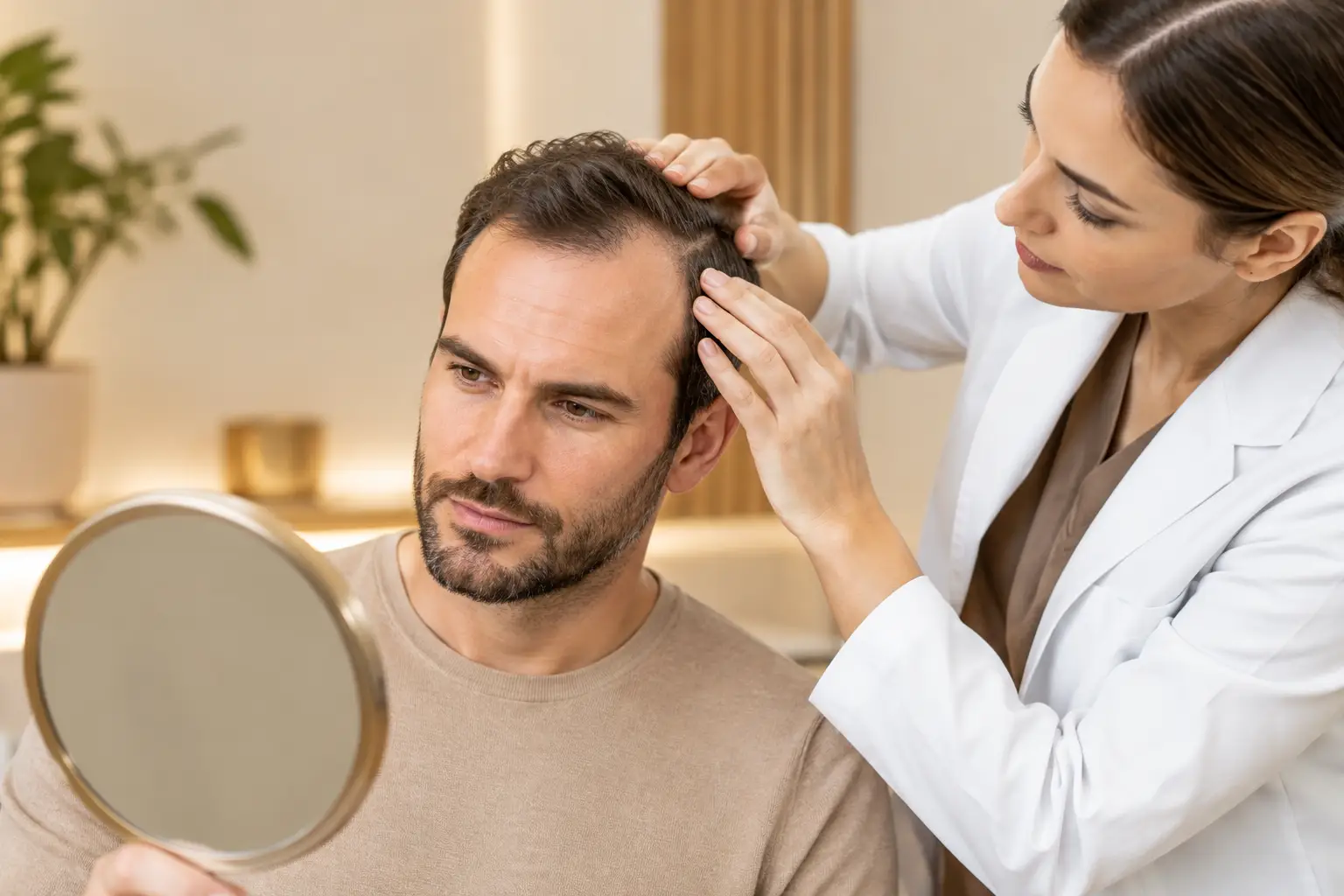
A DHI transplant can be appealing when thinning hair or a receding hairline has begun to affect how you feel in photos, at work or in everyday life. It is a surgical hair-restoration option that uses your own follicles, with the procedure carried out by medical professionals and planned around the pattern of your hair loss, donor supply and longer-term goals.
The name sounds highly technical, but the decision should be practical. The right procedure is not simply the one with the newest terminology. It is the one that can safely achieve a natural-looking improvement while protecting the healthy donor hair you may need in the future.
What is a DHI transplant?
DHI stands for Direct Hair Implantation. In a DHI hair transplant, follicles are usually removed individually from the donor area, commonly at the back and sides of the scalp where hair is more resistant to pattern hair loss. The follicles are then implanted into the thinning or bald area using a specialised implantation device.
The device allows the practitioner to place follicles one at a time. It can assist with controlling the angle, direction and depth of placement, which all matter when rebuilding a hairline or adding density through the frontal scalp.
DHI is often discussed alongside follicular unit extraction, or FUE. In practice, the two terms can overlap. FUE generally describes the method used to extract individual follicular units from the donor area, while DHI refers more specifically to the implantation stage. Clinics may use different terminology, so it is worth asking exactly how follicles will be extracted and implanted rather than choosing solely on a procedure label.
How the procedure is planned and performed
A clinically delivered hair transplant begins well before the treatment day. A consultation should assess the cause and pattern of hair loss, the quality and density of the donor area, scalp health, medical history and medications. Not every type of hair loss is best treated with surgery. Sudden shedding, inflammatory scalp conditions and some medical causes of thinning may need investigation or treatment first.
If transplantation is suitable, the treatment plan considers where grafts will make the greatest visual difference. For some people, that may mean restoring a softened or receding hairline. For others, it may mean improving density in the frontal or mid-scalp area. Crown coverage can require a significant number of grafts, so it may need to be balanced carefully against available donor hair.
On the day, local anaesthetic is typically used to keep the scalp comfortable. Individual grafts are collected from the donor area, prepared and implanted into the recipient area. The duration varies according to the number of grafts, hair characteristics and treatment plan. Some procedures can take most of a day.
The aim is not simply to place the maximum number of grafts possible. Thoughtful placement is what helps the result suit your face, age and expected future hair loss. A very low hairline may look appealing in the short term, for example, but it can be difficult to maintain if further thinning occurs.
Potential advantages of DHI implantation
The potential benefit of DHI implantation lies in precise graft placement. When experienced medical professionals plan and perform the procedure, individual follicles can be positioned to follow the natural growth pattern of your existing hair. This is particularly relevant around the hairline, temples and areas where density transitions from stronger to thinner hair.
Because follicles are implanted individually, DHI may also be suitable for selected smaller areas, such as a hairline refinement or targeted density work. However, suitability is not determined by the treatment name alone. Hair calibre, curl pattern, scalp contrast, donor density and the amount of existing hair all influence the visual outcome.
It is also helpful to be realistic about what a transplant can and cannot do. A hair transplant redistributes existing follicles. It does not create an unlimited new supply of donor hair or stop underlying pattern hair loss from progressing. Some patients may benefit from medical hair-loss management or PRP treatments as part of a broader plan, depending on their individual circumstances and clinical advice.
Who may be a suitable candidate?
DHI may suit adults with stable or reasonably predictable pattern hair loss who have sufficient healthy donor hair. Men with a receding hairline and women with localised thinning can both be considered, although female hair loss is often more diffuse and requires particularly careful assessment.
Age is only one part of the picture. A younger person with rapidly progressing hair loss may need a conservative plan that preserves donor follicles for the future. Someone with extensive hair loss may also need to prioritise the areas that will frame the face rather than expect full density across every part of the scalp.
During a consultation, clear photographs, an examination of the donor area and an honest discussion about expectations are essential. The most appropriate recommendation may be a transplant, PRP treatment, medical management, a staged approach or no procedure at all. Good clinical advice should make room for that answer.
Recovery and the timeline for results
After a DHI transplant, small scabs and redness are common in the recipient area, while the donor area can feel tender for a short period. Your medical team will provide specific aftercare guidance, including how to wash your hair, protect the grafts and manage exercise, headwear and sun exposure during early healing.
Most people can return to light daily activities relatively quickly, but visible healing takes time and individual recovery varies. It is usually sensible to plan around any major event where you would prefer not to have redness or scabbing visible.
The transplanted hairs often shed in the weeks after the procedure. This can be alarming, but it is a commonly expected stage of the growth cycle. The follicles remain beneath the skin and new growth generally begins gradually over subsequent months. Noticeable change often takes several months, with results continuing to mature over 12 months or longer.
Patience matters. Hair grows slowly, and a natural outcome is usually built through gradual growth rather than an immediate transformation.
Safety, quality and questions worth asking
Hair transplantation is a medical procedure, not a beauty treatment. While complications are uncommon when care is appropriately planned and delivered, risks can include swelling, bleeding, infection, temporary shock loss of existing hair, poor graft growth, scarring and an unnatural-looking result. Your individual risks depend on your health, scalp condition, smoking status, aftercare and the procedure itself.
Before proceeding, ask who will assess you, who will perform each stage of the procedure and what medical support is available if concerns arise. You should also ask how the clinic determines graft numbers, how it protects the donor area and whether the proposed hairline is designed with future loss in mind.
Cost is another valid question, but quotes should be compared carefully. The number of grafts, complexity of the case, clinical team, location and level of follow-up can all affect pricing. A lower headline cost does not necessarily reflect the same procedure scope or professional oversight. Equally, a higher price does not guarantee a better outcome. Transparency about what is included is more useful than a single figure alone.
Making a confident decision about DHI hair restoration
A DHI transplant may be a worthwhile option if you have suitable donor hair, realistic expectations and a plan that respects the long-term nature of hair loss. The best outcomes are based on careful assessment, conservative design and professionally managed treatment, not pressure to book quickly.
For patients in Newcastle, Brisbane or Perth, Luxe Medical Procedures offers a clinically focused pathway to hair transplants and PRP treatments, with professional oversight and affordability kept central to the conversation. A personalised consultation can help clarify whether DHI implantation fits your hair-restoration goals and, just as importantly, whether another approach may serve you better.