
Diffuse Hair Thinning: Causes and Treatment Options
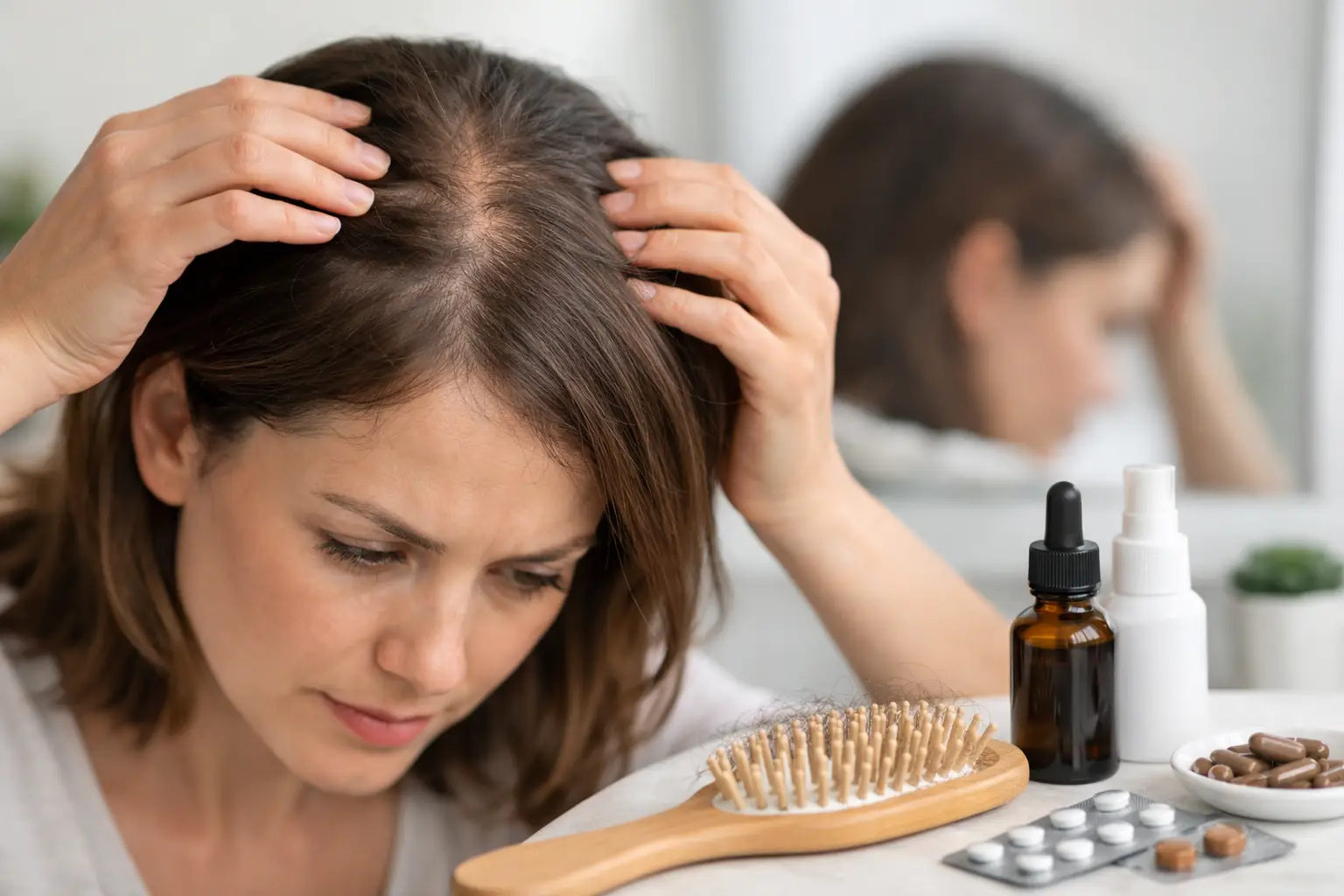
Seeing more hair in the shower drain, on your pillow or caught in your brush can be unsettling, particularly when there is no obvious bald patch. Diffuse hair thinning describes a reduction in hair density across a broad area of the scalp rather than hair loss limited to one defined spot. It can affect women and men at different ages, and the right response depends on what is driving the change.
For some people, thinning is temporary and settles once the underlying trigger has passed. For others, it is part of a progressive pattern of hair loss that benefits from early medical assessment and a considered treatment plan. The key is not to guess based on social media advice or a single photograph. A qualified clinician can examine the pattern, discuss your health history and help determine which options are realistic for your hair and goals.
What diffuse hair thinning can look like
Diffuse thinning often develops gradually. You may notice that your ponytail feels smaller, your part looks wider, or that more scalp is visible under overhead lighting. Hair may still cover the entire scalp, but it no longer provides the density it once did.
In men, diffuse loss can occur alongside a receding hairline or thinning through the crown. In women, it is commonly noticed through the central part and across the top of the scalp while the frontal hairline remains relatively intact. These patterns are not rules, however. The distribution, rate of shedding and condition of the scalp all matter when assessing what may be happening.
It is also worth separating hair shedding from hair breakage. Shedding means hairs are leaving the follicle, often with a small pale bulb at one end. Breakage leaves shorter, uneven strands and may relate to heat styling, colouring, tight hairstyles or fragile hair shafts. Both can make hair appear less full, but their management is different.
Common causes of diffuse hair thinning
A broad reduction in density does not have one universal cause. Several factors can overlap, which is why an individual consultation is more useful than treating every case as the same.
Pattern hair loss
Androgenetic alopecia, commonly called pattern hair loss, is one of the most frequent causes of progressive thinning. It has a genetic component and involves gradual miniaturisation of susceptible follicles. The hairs produced become finer and shorter over time, creating reduced coverage rather than sudden complete loss.
Pattern hair loss can affect both men and women. In men it may be more noticeable at the temples, hairline and crown. In women it may present as widening through the part or reduced volume over the top of the head. Earlier assessment can be valuable because treatment aims to support existing follicles before density has reduced substantially.
Telogen effluvium and temporary shedding
Telogen effluvium is a form of increased shedding that may occur after a physical or emotional stressor. Illness, surgery, significant weight change, childbirth, a severe infection, nutritional deficiency, major stress or changes in medication can all affect the normal hair growth cycle.
The shedding may become apparent several months after the trigger, which can make the connection difficult to recognise. In many cases, growth can improve once the trigger is addressed. However, persistent shedding deserves medical review, particularly if it is accompanied by fatigue, changes in weight, scalp symptoms or other health concerns.
Health, hormonal and nutritional factors
Thyroid conditions, iron deficiency and other nutritional issues can contribute to hair shedding in some people. Hormonal changes around pregnancy, menopause or conditions that affect hormone balance may also influence hair density. Restrictive dieting can be another factor when protein, iron or other nutrients are not adequately supported.
This does not mean supplements are the answer for everyone. Taking high-dose products without identifying a deficiency may be unhelpful and, in some cases, inappropriate. A GP or relevant medical professional can advise whether blood tests or further investigation are suitable.
Scalp conditions and hair practices
Inflammation, psoriasis, dermatitis, fungal infection or other scalp conditions can affect the scalp environment and should be assessed if there is itching, redness, scaling, pain or tenderness. Repeated traction from tightly pulled styles, extensions or certain grooming practices can also place strain on follicles over time.
A healthy scalp routine can support comfort and reduce unnecessary breakage, but it cannot reverse every cause of thinning. Cosmetic shampoos may improve how hair feels or looks temporarily, yet they should not replace clinical assessment when density is continuing to decline.
When to seek medical advice
Book an assessment if your hair loss is sudden, rapidly worsening, patchy, painful or associated with scalp changes. The same applies if you have noticed ongoing shedding for several months, have recently started a new medication, or are experiencing symptoms that may point to an underlying health issue.
A clinical consultation should cover the timing of the loss, family history, recent health events, medicines, diet, styling practices and your expectations. Examination of the scalp and hair pattern helps distinguish between likely causes. Where appropriate, a clinician may recommend that you speak with your GP, arrange investigations or address an active scalp condition before considering procedural treatment.
This step protects both your health and your treatment outcome. Hair restoration is most effective when the plan matches the diagnosis, not when a procedure is selected simply because it is popular.
Treatment options for diffuse hair thinning
Treatment is individual. Some patients need to manage a medical trigger first, while others may be suitable for treatments designed to support thinning hair or restore areas with stable loss. A medical professional can explain expected benefits, limitations, costs and recovery requirements before you decide.
PRP treatments
Platelet-rich plasma, or PRP, uses a concentrated component of your own blood that is prepared and administered into targeted scalp areas by a trained medical professional. PRP treatments are often considered for people with early to moderate thinning who still have active follicles in the treatment area.
PRP is not a guaranteed cure and results vary between individuals. It generally involves a course of treatments rather than a single appointment, with maintenance potentially recommended depending on your response and the cause of your hair loss. It may be used as part of a broader plan for suitable patients, particularly where the aim is to support existing hair rather than replace lost follicles.
Hair transplant procedures
A hair transplant redistributes healthy follicles from a donor area, usually at the back or sides of the scalp, to areas with reduced density. It can be an effective option for appropriately selected people with stable pattern hair loss and a sufficient donor supply.
Diffuse thinning requires careful planning because transplanting into an area that still contains vulnerable native hair can be complex. The goal is not simply to place the maximum number of grafts. A clinically considered design accounts for donor preservation, future hair loss, natural density and the likelihood that existing hair may continue to thin.
A transplant may not be the first step if shedding is active, the cause is unclear or the donor area is also significantly affected. This is why a consultation with medical professionals is essential before committing to surgery. A responsible provider will discuss whether a transplant is suitable now, may be suitable later, or is unlikely to offer the outcome you want.
Supporting your treatment plan
For some people, clinician-recommended medical therapies may also form part of a plan to slow pattern hair loss and help protect existing hair. Suitability depends on factors such as sex, medical history, pregnancy plans, medications and potential side effects. These options require an informed discussion with a qualified practitioner.
Lifestyle changes can support general hair health where they address a genuine trigger, such as inadequate nutrition or scalp irritation. They should be viewed as supportive care, not a substitute for evidence-based treatment when progressive follicle miniaturisation is present.
Choosing a hair restoration provider
Hair loss can affect confidence, which can make quick promises and low prices appealing. Cost matters, particularly when hair restoration has long felt out of reach for many Australians, but it should be considered alongside clinical standards and long-term planning.
Ask who will assess you, who will carry out each part of the procedure and what medical oversight is provided. You should also understand the recommended number of sessions or grafts, the likely timeline for visible change, potential risks and what ongoing care may be required. Clear answers help you compare treatment options on more than headline price.
At Luxe Medical Procedures, hair transplants and PRP treatments are carried out with medical-professional oversight, with treatment recommendations based on individual assessment rather than a one-size-fits-all approach.
If thinning has changed the way you feel about your appearance, you do not need to wait until the loss feels severe to seek advice. A professional assessment can give you clarity, rule out concerns that need medical attention and help you make a calm, informed decision about the next step.