
Does PRP Improve Hair Density? What to Expect
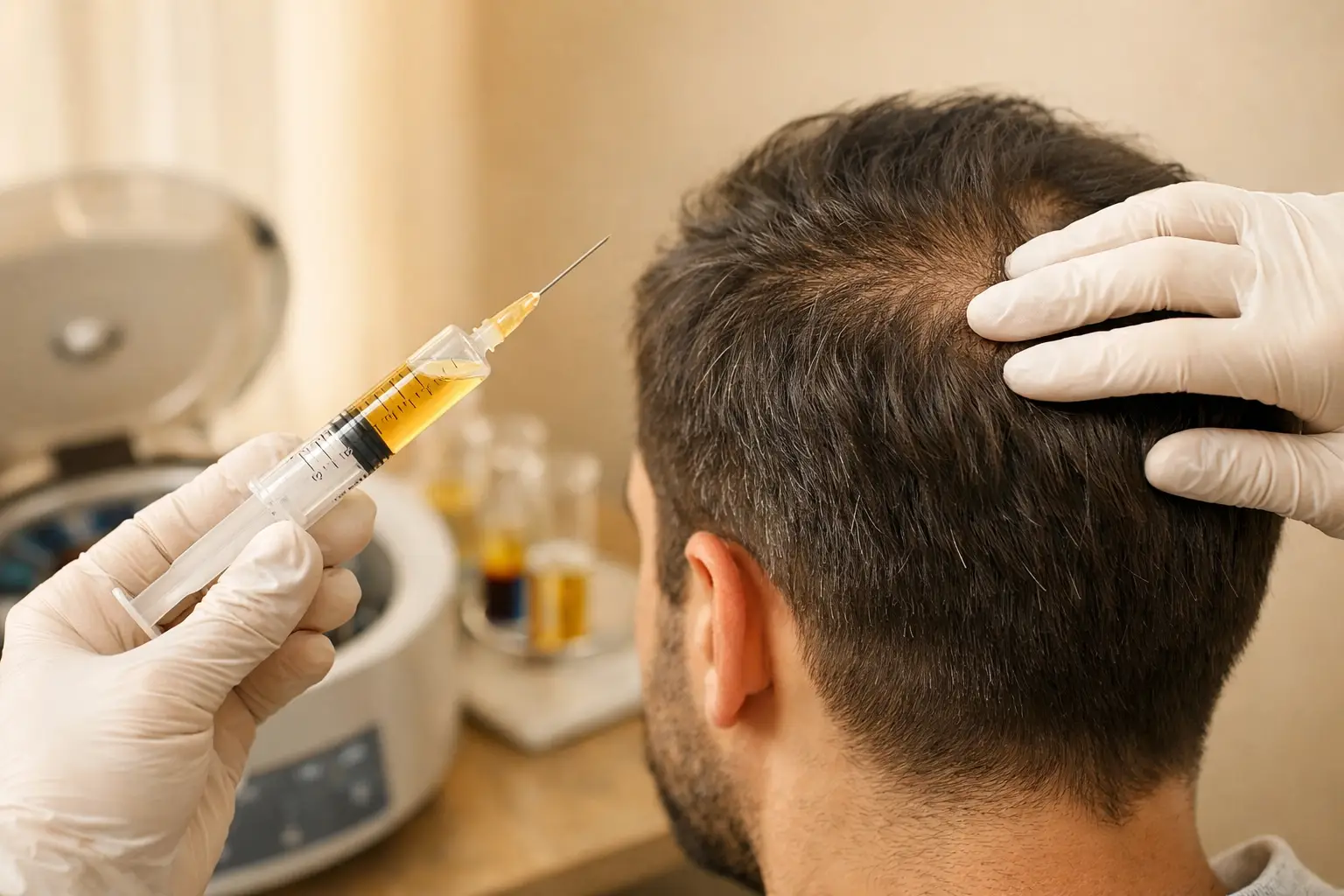
Hair thinning rarely changes overnight, but its effect on confidence can build quickly. So, does PRP improve hair density? For some people with early to moderate thinning, platelet-rich plasma treatment may help support stronger, thicker-looking hair and slow further shedding. Results vary, however, and PRP is not a guaranteed replacement for lost hair or a solution for every type of hair loss.
A proper medical assessment is the starting point. Hair density can decline for many reasons, including genetic pattern hair loss, hormonal changes, nutritional deficiencies, stress, illness, medication and inflammatory scalp conditions. Identifying the cause helps determine whether PRP is likely to be worthwhile and whether another treatment, such as a hair transplant or medical therapy, should be considered.
How PRP treatment works for thinning hair
PRP stands for platelet-rich plasma. The treatment uses a small sample of your own blood, which is processed to concentrate platelets and plasma. Platelets contain growth factors involved in normal tissue repair and cellular signalling.
During a PRP hair treatment, the concentrated plasma is injected into areas of the scalp affected by thinning. The aim is to support the activity of existing hair follicles, particularly follicles that are becoming finer and producing shorter, weaker hairs. PRP does not create new follicles. Instead, it is intended to improve the environment around follicles that are still present and potentially responsive.
This distinction matters. A person with fine, thinning hairs across the crown may have a different response from someone with a long-standing, smooth bald area where follicles are no longer active. In the second situation, a hair transplant may be the more appropriate pathway if the person has suitable donor hair.
PRP sessions should be carried out by trained medical professionals who can assess the scalp, use appropriate injection technique and discuss the limits of treatment clearly. It is a medical procedure, not a cosmetic add-on, and the standard of clinical care matters.
Does PRP improve hair density in clinical practice?
Research into PRP for androgenetic alopecia, also known as pattern hair loss, has shown encouraging results in many patients. Studies have reported improvements in hair count, hair shaft thickness and overall hair density after a course of treatment. Yet the evidence is not identical across every study because PRP preparation methods, treatment schedules, injection techniques and patient groups differ.
In practical terms, PRP may improve visible density when thinning follicles are still viable. Some patients notice less shedding first, followed by hair that appears fuller over time. Others see a modest change that is most noticeable in photographs, under bright overhead light or when styling their hair. A smaller group may see little to no improvement.
Your starting point has a major influence on the outcome. PRP is often most useful for people who are noticing early diffuse thinning, widening of the part line, reduced density at the crown or gradual recession with fine hairs still visible in the area. It may also be used to support ongoing hair-health plans after a hair transplant, although treatment timing should always be determined by the treating clinician.
PRP is less likely to produce meaningful density where hair loss is advanced, scarring is present or the underlying condition has not been addressed. For example, sudden shedding caused by iron deficiency, thyroid changes or a recent illness needs medical investigation rather than an assumption that PRP alone will solve the problem.
What results can you realistically expect?
The best way to approach PRP is as a gradual treatment that may improve the quality and performance of existing follicles. It is not an instant fix, and it cannot reliably restore a youthful hairline where follicles have been absent for years.
Most treatment plans involve an initial series of sessions, often spaced several weeks apart, followed by maintenance appointments if you respond well. Your clinician will recommend a schedule based on your pattern of thinning, scalp condition and treatment goals. Because hair grows in cycles, changes are usually assessed over months rather than days.
Many people begin looking for early changes around three to six months after commencing treatment. More meaningful assessment may take six to 12 months. Consistent photos taken in the same lighting and from the same angles are far more useful than relying on day-to-day mirror checks, which can be affected by hair length, styling and lighting.
A positive outcome might mean reduced shedding, thicker individual hairs, better coverage through the crown or less visibility of the scalp. It may not mean a dramatically lower hairline or complete coverage of a bald patch. Clear expectations protect patients from spending on treatment that does not match their stage of hair loss.
Who may be a suitable candidate for PRP?
Suitability depends on your medical history and the reason for your thinning. Adults with early pattern hair loss are commonly assessed for PRP, including men with crown thinning or a receding hairline and women experiencing diffuse reduction in density.
Before treatment, a medical professional should discuss the pattern and duration of hair loss, medications, relevant health conditions, recent illness and any scalp symptoms. Itching, scaling, pain, sudden patchy loss or rapid shedding can indicate conditions that need diagnosis before PRP is considered.
PRP may not be suitable for everyone. Blood or platelet disorders, certain anticoagulant medicines, active infection, some autoimmune conditions and pregnancy or breastfeeding can affect whether treatment is appropriate. The right decision is individual, which is why a clinical consultation is more valuable than choosing treatment based on before-and-after images alone.
PRP, medical therapy and hair transplants
PRP is often one part of a broader hair-restoration plan rather than a stand-alone answer. Depending on the diagnosis, a clinician may discuss evidence-based medical options to reduce progression of pattern hair loss alongside PRP. These treatments have their own benefits, risks and suitability considerations, so they require personalised medical advice.
For people with established hairline recession or areas where follicles are no longer producing hair, a hair transplant may offer a more direct way to restore density. During a transplant, healthy follicles are moved from a donor area to thinning or bald areas. PRP cannot perform the same role because it does not relocate or generate follicles.
That does not make one treatment universally better than another. PRP can suit patients who want a non-surgical option for early thinning, while a transplant may suit those seeking restoration in more advanced areas. In some cases, combining clinically appropriate treatments offers the most practical long-term approach.
Safety, discomfort and choosing a provider
Because PRP uses your own blood, the risk of allergic reaction to the plasma itself is low. Still, injections can cause temporary tenderness, redness, swelling, pinpoint bleeding or bruising at the treatment sites. Some people experience a mild headache or scalp sensitivity for a short period afterwards.
Serious complications are uncommon when the procedure is performed in an appropriate clinical setting, but no injection treatment is risk-free. Sterile technique, informed consent, a review of your medical history and clear aftercare guidance should be standard. Avoid providers who promise guaranteed regrowth, treat every cause of hair loss as the same or cannot explain who will administer the procedure.
Cost also deserves an open conversation. Affordable care should not mean compromised clinical oversight or rushed assessment. Ask what is included in the proposed plan, how many sessions may be recommended, whether maintenance is likely and how progress will be reviewed. This makes it easier to compare the genuine value of treatment rather than focusing only on the price of a single appointment.
Making a confident next step
If your hair is becoming finer, your scalp is more visible or your part line is widening, acting earlier can give you more options. A consultation with medical professionals can clarify whether PRP may support your existing follicles, whether another cause needs investigation or whether a hair transplant is more suitable for your goals.
Luxe Medical Procedures provides clinically administered PRP treatments and hair-restoration options for Australians seeking credible, accessible care. The most useful next step is not to chase a promise of instant regrowth, but to get an honest assessment and a plan that fits the stage of your hair loss.