
Does PRP Work for Hair Loss? What to Expect
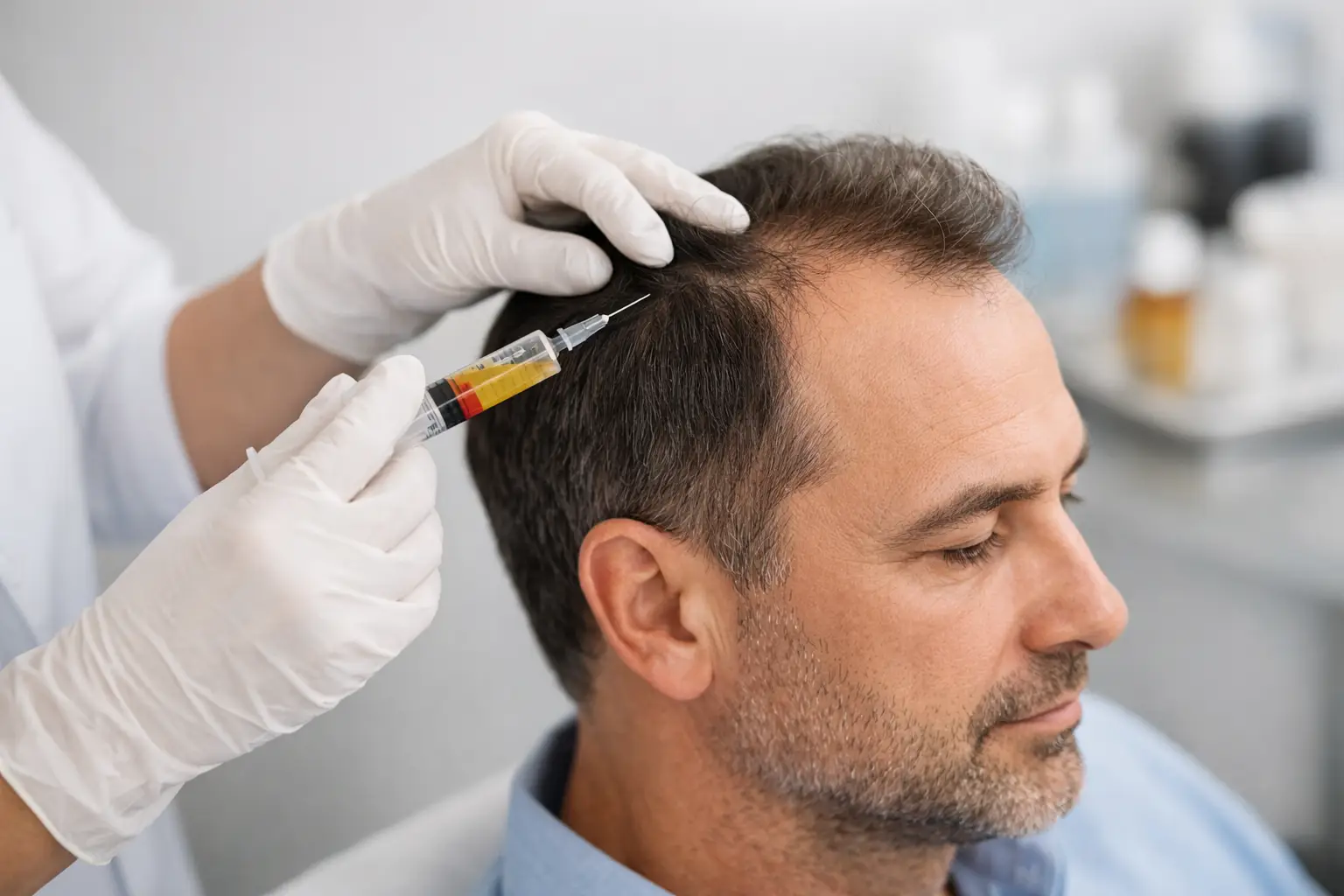
When more scalp is showing through your hair, it is understandable to want an answer that is clear rather than promotional. Does PRP work for hair loss? For some people, platelet-rich plasma treatment can support thicker-looking, stronger hair and slow further thinning. It is not a guaranteed cure, however, and the quality of results depends on the type and stage of hair loss, your general health, and how consistently treatment is carried out.
PRP is best approached as a clinically delivered option within a wider hair-restoration plan. A proper assessment matters because hair shedding can have several causes, and the right treatment for one person may not be appropriate for another.
What is PRP treatment for hair loss?
Platelet-rich plasma, usually called PRP, uses a concentrated portion of your own blood. A small blood sample is collected and processed to separate plasma with a higher concentration of platelets. This platelet-rich plasma is then injected into areas of the scalp affected by thinning or reduced density.
Platelets contain growth factors that are involved in tissue repair and cell signalling. In hair-restoration treatment, PRP is used with the aim of supporting the hair follicle environment, encouraging follicles to remain in their active growth phase for longer, and potentially improving the calibre of existing hairs.
It is not a hair transplant. PRP does not move follicles from one part of the scalp to another, and it cannot create a full new hairline where follicles are no longer viable. Instead, it is generally used to support thinning hair that is still present, particularly where follicles have become finer over time.
Does PRP work for hair loss?
The most accurate answer is that PRP can work for suitable candidates, but results are variable. Clinical research has found that PRP may improve hair density and hair thickness in people with androgenetic alopecia, commonly known as male or female pattern hair loss. This is the gradual, genetically influenced thinning that often appears as a receding hairline, thinning through the crown, or a widening part.
Research is still developing, and PRP protocols are not identical between clinics. The concentration of platelets, preparation method, injection technique, number of sessions and maintenance schedule can all differ. That makes it difficult to promise a uniform outcome or give every patient the same expected result.
For many patients, the practical goal is not dramatic overnight regrowth. It is often reduced shedding, improved hair quality, fuller coverage in thinning areas, or preserving existing hair for longer. Those changes can still be meaningful, especially when treatment begins before hair loss has progressed significantly.
PRP tends to be most helpful when follicles are still active
PRP may be worth considering for people with early to moderate pattern hair loss, diffuse thinning, or reduced density around the crown and part line. It can also be considered as part of a plan to support native hair before or after a hair transplant, where clinically appropriate.
It is less likely to produce a visible benefit in completely smooth areas of longstanding baldness. Once follicles are no longer producing hair, PRP cannot reliably replace them. In these cases, a hair transplant may be the more suitable pathway for restoring coverage, provided there is adequate donor hair and you are medically suitable for the procedure.
A medical consultation helps distinguish pattern hair loss from other concerns. Sudden shedding, patchy hair loss, scalp inflammation, hormonal changes, nutritional deficiencies, illness and some medications can all affect hair growth. Treating the underlying cause is essential, rather than assuming every form of hair loss will respond to PRP.
What results can you realistically expect?
Hair growth moves slowly. Even when PRP is effective, most people will not notice a meaningful difference after a single session. A course of treatments is usually recommended initially, followed by maintenance appointments based on the individual treatment plan.
Some patients first notice less hair shedding or that their hair feels stronger and easier to style. Visible changes in thickness or density may take several months because new growth needs time to emerge and mature. Photographs taken under consistent lighting and with the same hair length are often more useful than checking the mirror day to day.
Results also need maintenance. Pattern hair loss is progressive, so a positive response to PRP does not mean the underlying tendency to thin has disappeared. Ongoing treatment may be recommended to maintain the benefit achieved. Your medical practitioner can discuss the likely schedule, expected costs and whether another treatment option should be considered alongside PRP.
Why professional delivery matters
PRP uses your own blood, but it is still a medical procedure. Appropriate assessment, sterile preparation and careful scalp injection technique are central to patient safety and treatment quality.
Treatment carried out by medical professionals also allows for a more informed discussion about suitability. A practitioner can review your hair-loss pattern, medical history, current medicines, scalp condition and treatment goals before recommending a plan. This is particularly valuable if you have a bleeding disorder, platelet condition, active scalp infection, uncontrolled medical condition, or are taking medicines that may affect bleeding or platelet function.
Most people tolerate PRP well. Common short-term effects can include tenderness, redness, swelling, pinpoint bleeding, bruising or a headache after scalp injections. These effects generally settle within a short period. More significant complications are uncommon when appropriate clinical processes are followed, but no procedure is entirely risk-free.
PRP alone or as part of a broader plan?
PRP is not always an either-or decision. For suitable patients, it may be combined with evidence-based medical management, depending on factors such as sex, age, medical history and pregnancy planning. It can also be used to complement a hair-transplant strategy by supporting existing thinning hair around transplanted grafts.
The best plan depends on what you are trying to achieve. If your priority is stabilising early thinning, PRP may be a practical non-surgical option. If you want to restore a recessed hairline or cover an area where hair has been absent for years, a transplant assessment may be more relevant. If your shedding began suddenly, the first step may be investigating the cause rather than beginning cosmetic treatment.
At Luxe Medical Procedures, PRP treatments and hair-restoration options are assessed with the same focus: clinically appropriate care, clear expectations and access to treatment delivered by medical professionals.
Questions to ask before booking PRP
Before deciding on PRP, ask what type of hair loss you have and how the diagnosis was reached. You should also understand how many initial sessions are advised, when results are likely to be reviewed, whether maintenance is expected, and what alternatives may better suit your goals.
It is reasonable to ask who will carry out the procedure and what happens if you do not see the anticipated response. A reputable provider should explain that results cannot be guaranteed and should not pressure you into treatment before discussing suitability.
Is PRP painful?
Scalp injections can be uncomfortable, particularly in sensitive areas such as the frontal hairline. Clinics may use techniques to improve comfort, and the procedure is generally relatively quick. Any soreness afterwards is usually temporary.
Can PRP stop hair loss permanently?
No. PRP may help improve hair quality and support follicles, but it does not permanently switch off genetic pattern hair loss. Maintenance and a longer-term management plan are often needed.
How do I know whether I am a good candidate?
The clearest answer comes from an individual medical assessment. People with active but thinning hair are often more likely to benefit than those with extensive longstanding baldness, but suitability involves more than the appearance of the scalp alone.
Choosing PRP is not about chasing a miracle result. It is about finding a medically appropriate way to support the hair you still have, with realistic expectations and a plan that respects both your confidence and your budget.