
Failed Hair Transplant Correction Example Explained
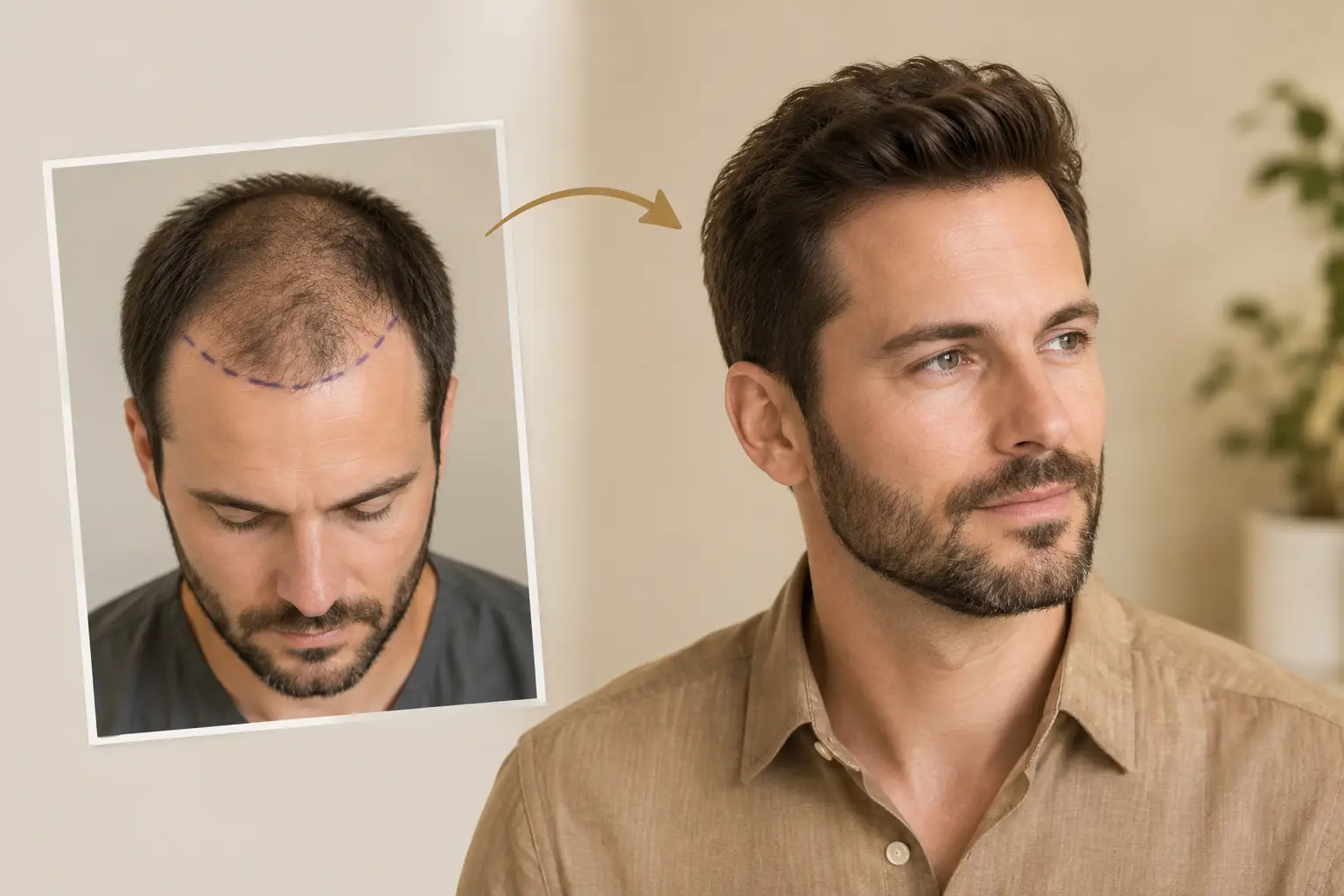
A failed hair transplant correction example is rarely about simply adding more grafts. A person may be unhappy because the hairline looks too straight, transplanted hair has grown sparsely, donor-area scarring is visible, or the result no longer suits their age and facial features. Correcting these concerns begins with a careful medical assessment of the scalp, existing grafts and the amount of donor hair still available.
For Australians considering a repair procedure, the key point is that a disappointing transplant does not automatically mean there is no solution. It does mean the next decision should be made conservatively, with realistic planning and treatment carried out by medical professionals.
What a failed hair transplant can look like
A transplant may be described as unsuccessful for clinical, cosmetic or personal reasons. Some procedures heal normally and grow hair, yet still create a result that feels unnatural. Others may have limited growth because graft survival was poor, the recipient area had reduced blood supply, or ongoing hair loss was not adequately considered in the original plan.
Common concerns include an overly low or sharply defined hairline, grafts placed in visible rows, plugs that appear too large, patchy density, uneven temple points, and scars in the donor area. In some cases, the issue is not the transplanted hair itself. Native hair around it may continue to thin, leaving an isolated band of transplanted growth that no longer blends with the surrounding scalp.
Correction is therefore highly individual. The safest approach for someone with visible plug grafts will not necessarily suit a person with low density or a depleted donor area.
A failed hair transplant correction example
Consider a hypothetical patient who had a hair transplant several years earlier to restore a receding hairline. The grafts grew, but the hairline was placed too low and too uniformly across the forehead. As the patient aged and their natural hair continued to thin behind the transplanted area, the result became more noticeable. The front looked dense in places, while the mid-scalp looked sparse.
At a correction consultation, a medical practitioner would first assess scalp health, hair calibre, the direction of the existing grafts, current pattern hair loss and donor capacity. They would also discuss medications, medical history, expectations and whether the patient has experienced ongoing shedding.
A staged plan may be recommended. It could involve selectively removing a small number of poorly positioned grafts, then redistributing suitable follicles to soften the hairline or improve the transition into the thinning area. Fine single-hair grafts may be used at the leading edge to create a less abrupt appearance, while additional grafts can be placed behind it only if the donor supply allows.
The aim is not necessarily to recreate the hairline the patient had at 18. It is to produce a natural-looking, age-appropriate result that is more likely to remain balanced if future hair loss occurs. If donor hair is limited, the medical team may advise a more modest density target or discuss non-surgical support rather than over-harvesting the donor area.
Why medical assessment matters before a repair
A repair transplant can be more complex than a first procedure. Existing scar tissue may affect graft placement and blood supply. Previous harvesting methods can alter the donor area. The scalp may also have inflammation, scarring or an underlying condition that needs attention before further surgery is considered.
A clinically led consultation should establish what happened, rather than assuming the prior procedure was poorly performed. Limited growth can result from several factors, including the extent of hair loss, healing, graft handling, infection, smoking, medical conditions or insufficient time for maturation. Transplanted hair commonly takes many months to grow and mature, so assessing a result too early can lead to unnecessary intervention.
It is also essential to identify whether hair loss is still active. Hair transplantation redistributes follicles but does not stop pattern hair loss in untreated areas. A patient may benefit from a medical management plan or PRP treatments to support existing hair, depending on their suitability and clinician advice. This can help a correction strategy look more cohesive over time.
The main correction options
The most appropriate option depends on the specific concern and the available donor supply. For low density, carefully planned additional grafting may improve coverage. Where the hairline is too low, harsh or plug-like, selected graft removal and reimplantation may create a softer shape. Some patients may be suitable for scar revision or graft placement into a scar to reduce its visibility.
There are situations where further transplantation is not the best first step. If the donor area is significantly depleted, adding more grafts may create a new cosmetic problem at the back or sides of the scalp. A doctor may instead recommend waiting, treating active hair loss, improving scalp health, considering PRP treatments, or discussing camouflage options while a long-term plan is developed.
No ethical provider should promise a perfect correction. Density is constrained by donor hair, existing scarring and the contrast between the hair and scalp. A good plan is one that protects the patient’s remaining options, not one that uses every available graft in a single session.
Questions to ask before choosing a correction provider
Patients often feel understandably hesitant after a poor experience. A clear consultation can restore confidence by addressing the practical details. Ask who will assess you, who will perform the clinical parts of the procedure, and what training and oversight are involved. You should also ask how donor capacity will be measured and how future hair loss will be accounted for in the design.
It is reasonable to request a straightforward explanation of the proposed technique, the expected recovery period, potential risks and whether the correction is likely to require more than one stage. Before-and-after images can be useful when they show cases similar to your concern, but they should not be treated as a guarantee of your individual result.
Cost matters too, particularly when a person has already paid for an unsatisfactory procedure. Affordable care should still include proper medical assessment, clear consent and aftercare. The lowest advertised price may not reflect the planning and clinical expertise required for a complicated repair.
Setting realistic expectations for growth and recovery
Hair transplant correction takes patience. Initial healing may occur within weeks, but shedding of transplanted hairs can happen before new growth begins. Noticeable growth is often gradual, with the final appearance continuing to develop over many months. A correction involving scarred tissue or graft removal may have a different recovery pathway from a straightforward transplant.
The goal should be improvement that looks believable in everyday life, not an artificially dense or overly youthful hairline. Photos, bright overhead lighting and wet hair can make density appear different from how it looks socially, so a practitioner should discuss outcomes in practical terms.
For patients in Newcastle, Brisbane or Perth seeking advice after an unsatisfactory transplant, a consultation with medical professionals can clarify whether revision surgery, PRP treatments or a conservative monitoring plan is appropriate. A careful second opinion may be the most valuable first step: it gives you a clearer understanding of your scalp, your remaining donor hair and the options that genuinely support a more natural result.