
Finasteride Versus Hair Transplant: Which Works?
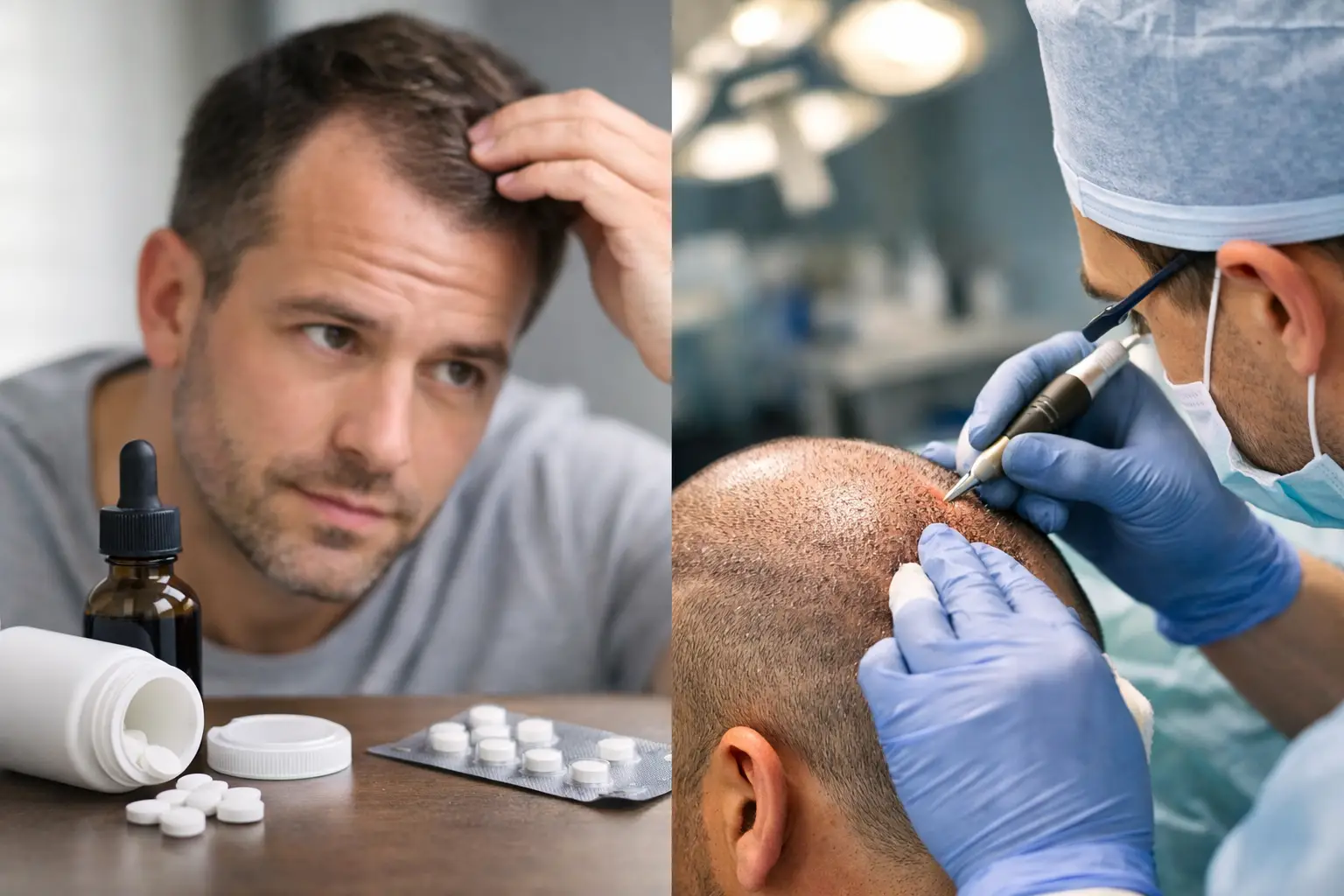
A receding hairline can create an urgent desire for a permanent-looking answer. Yet the best option is rarely decided by photographs alone. When comparing finasteride versus hair transplant, the key question is whether you need to slow active hair loss, restore areas that have already thinned, or address both concerns through a medically guided plan.
Finasteride and hair transplantation work in very different ways. One is a prescription medication intended to help manage pattern hair loss over time. The other is a procedure that redistributes your own healthy hair follicles to areas with lower density. Understanding that distinction can help you make a decision based on your hair-loss pattern, expectations, budget and long-term needs.
Finasteride versus hair transplant: the core difference
Finasteride is most commonly prescribed for male pattern hair loss. It works by reducing levels of dihydrotestosterone (DHT), a hormone that can contribute to the gradual miniaturisation of genetically susceptible hair follicles. For some men, this can slow further loss and may improve the appearance of thinning hair, particularly around the crown and mid-scalp.
A hair transplant does not change the hormonal drivers of hair loss. Instead, it moves healthy follicles, usually from the back and sides of the scalp, into thinning or bald areas. Once transplanted follicles establish and grow, they can provide long-lasting coverage because they are generally resistant to DHT.
Put simply, finasteride is designed to preserve vulnerable existing hair, while a transplant is designed to restore hair where density has already been lost. This is why the two approaches are not always direct alternatives.
When finasteride may be the appropriate first step
For men in the earlier stages of pattern hair loss, finasteride may be considered before surgery. If thinning is recent, diffuse or still progressing, stabilising the loss can be more valuable than immediately adding transplanted hair to an area that may continue to recede.
Results take patience. Hair shedding and growth occur in cycles, and it may take several months before a change is noticeable. Ongoing use is usually required to maintain any benefit. If treatment is stopped, hair loss will usually resume in the following months.
Finasteride is a prescription medicine and should only be considered following a consultation with an appropriately qualified clinician. Side effects are possible, including sexual and mood-related side effects, although individual experiences vary. A medical professional can discuss your health history, the potential benefits and risks, and whether this treatment is suitable for you.
Finasteride is not recommended for women. Just like men, women experiencing hair thinning need an individual assessment, as causes may include female pattern hair loss, hormonal changes, nutritional issues, thyroid conditions, stress or other medical factors.
When a hair transplant may offer more value
A hair transplant may suit people with established recession, a stable thinning pattern or visible areas where medication alone is unlikely to create enough coverage. It can be particularly useful for rebuilding a hairline, filling temples, improving density through the frontal scalp or restoring a defined area of loss.
The quality of your donor hair matters. A clinician needs to assess whether there is enough healthy donor density to achieve a natural result without overharvesting the donor area. Hair characteristics also affect planning: curl, calibre, colour contrast and scalp-to-hair contrast can all influence how much visual coverage can be achieved.
A well-planned procedure is not simply about implanting the maximum number of grafts. It is about placing follicles at an appropriate angle, direction and density while preserving enough donor supply for the future. This is especially important for younger patients or anyone with ongoing hair loss.
After a transplant, the newly placed hairs often shed before regrowth begins. This is a normal part of the process. Early growth may appear within a few months, while fuller maturation commonly takes 12 months or longer. The timeline can feel slow, but a realistic consultation should prepare you for each stage.
Why combining treatments is often considered
For suitable male candidates, finasteride and a hair transplant can be complementary. Medication may help retain existing non-transplanted hair, while the procedure restores areas with more significant loss. Protecting native hair can also make the overall result appear more consistent over the years.
This does not mean every transplant patient needs finasteride, or that every finasteride user needs surgery. Some people are pleased with the stabilisation achieved through medication. Others cannot take, do not tolerate or prefer not to use finasteride, and may explore a transplant or other clinically appropriate options instead.
Platelet-rich plasma, or PRP, may also be discussed as part of a broader hair-restoration plan. PRP treatments use a concentration of your own platelets and are carried out by medical professionals. They may be considered for certain forms of thinning, often alongside other strategies rather than as a replacement for a carefully planned transplant where substantial restoration is needed.
Cost: upfront procedure versus ongoing treatment
Cost is a practical part of the decision. Finasteride usually has a lower initial cost, but it is an ongoing treatment. Over years of prescriptions and reviews, the total investment can add up. A hair transplant involves a higher upfront cost because it is a medical procedure requiring clinical planning, skilled graft extraction and placement, and aftercare.
With transplantation, ask what is included in the quoted treatment plan, how graft numbers are determined, who carries out each part of the procedure, and what follow-up care is available. A procedure performed under appropriate medical oversight is an investment in both safety and a natural-looking outcome.
Affordability should not mean compromising on assessment or practitioner experience. A clinic should be open about likely costs, limitations and whether surgery is genuinely appropriate before you commit.
The decision depends on your hair-loss pattern
There is no single answer to whether finasteride or a hair transplant is better. A person with early crown thinning and strong donor hair may have different priorities from someone with a deeply receded hairline that has been stable for years. Age, family history, the rate of progression, medical history and personal comfort with medication all matter.
A good clinical assessment looks beyond the area you want to cover today. It considers how your hair loss may develop, the capacity of your donor area and what is realistic with one procedure or a staged plan. It should also distinguish pattern hair loss from sudden or patchy shedding that may need further medical investigation before any cosmetic procedure is considered.
Questions worth asking at your consultation
Ask whether your hair loss appears stable, whether you are a suitable donor candidate and what result can reasonably be expected from your available grafts. It is also sensible to ask about recovery time, potential risks, the role of medication after surgery and how the plan would change if your hair loss progresses.
Clear answers matter more than promises of instant density. Hair restoration is personal, but it should never feel mysterious or pressured.
Choosing a clinically guided pathway
Finasteride can be a useful option for managing male pattern hair loss, while a hair transplant can restore hair in areas where follicles have already been lost. For many people, the right pathway starts with an honest assessment rather than a predetermined treatment.
At Luxe Medical Procedures, hair-restoration options are approached as medical treatments, with procedures carried out by medical professionals and plans tailored to individual suitability. The most helpful next step is a consultation that gives you a clear view of your hair-loss pattern, treatment choices and realistic path towards greater confidence.