
FUE versus FUT transplantation compared
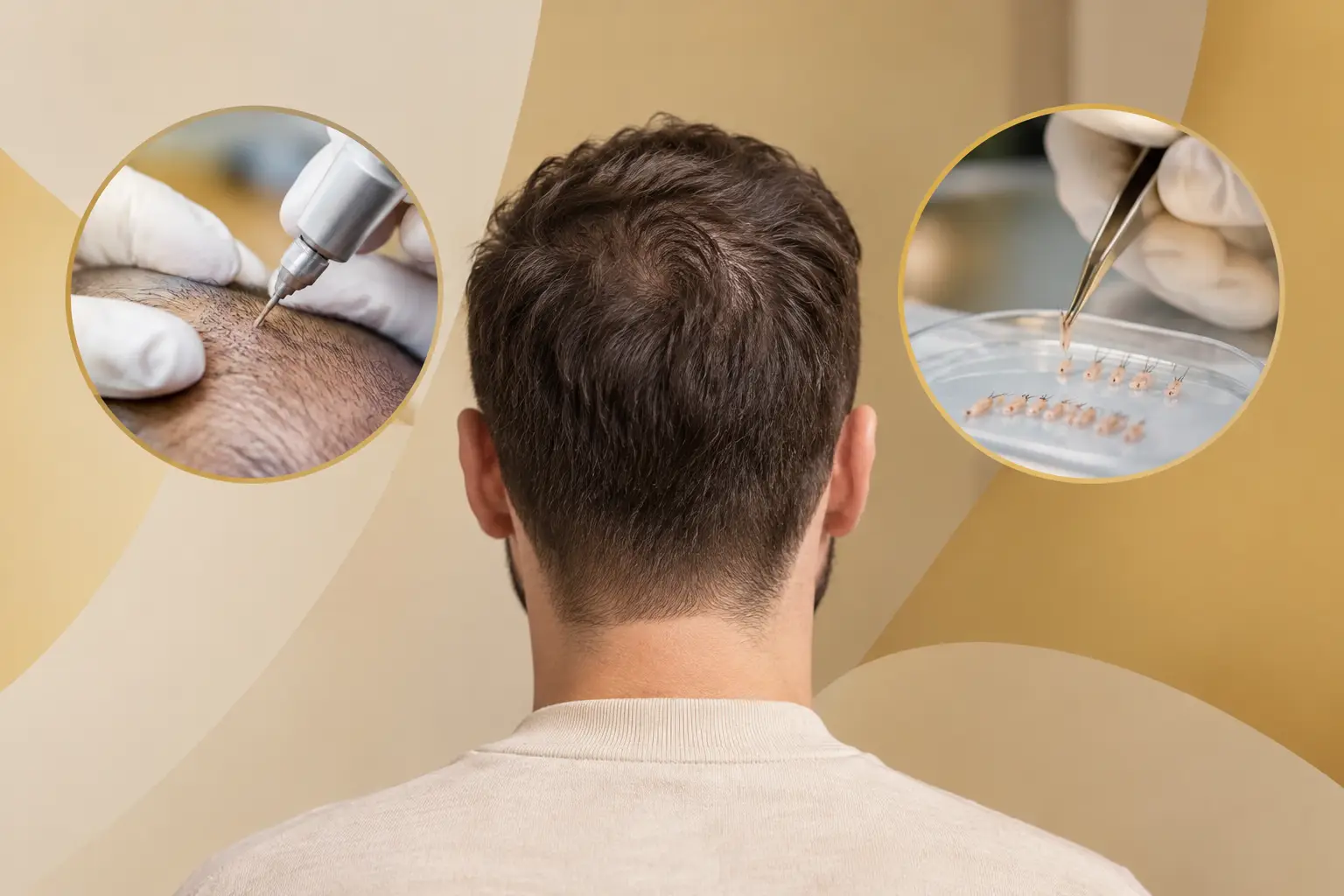
A hair transplant is not a one-size-fits-all procedure. The decision between FUE versus FUT transplantation can affect the appearance of your donor area, the number of grafts available, recovery planning and the overall approach to restoring your hairline or density. Both techniques relocate your own healthy hair follicles, but they collect those follicles differently.
For Australians considering surgical hair restoration, the right choice usually comes down to your pattern of hair loss, donor-hair quality, hairstyle preferences, treatment goals and medical assessment. A consultation with a qualified medical professional is the appropriate place to make that decision.
What FUE and FUT hair transplants have in common
Both follicular unit extraction (FUE) and follicular unit transplantation (FUT) use permanent hairs from the donor area, usually around the back and sides of the scalp. These follicles are then prepared and placed into areas affected by thinning, recession or reduced density.
A follicular unit may contain one to several hairs. The placement of these grafts matters as much as the method used to remove them. Hair direction, angle, distribution and hairline design all influence whether the finished result looks natural.
Neither procedure creates new hair follicles or stops future hair loss in untreated areas. A considered treatment plan accounts for your likely pattern of ongoing hair loss, existing hair density and the need to protect a finite donor supply. In some cases, a clinician may also discuss medical hair-loss management or PRP treatments as part of a broader plan.
FUE versus FUT transplantation: the key difference
The main difference is how follicles are harvested from the donor area.
FUE: individual follicle extraction
In FUE, individual follicular units are removed one at a time using a small punch instrument. The donor area is usually trimmed short so the medical team can access and extract follicles efficiently. The grafts are then placed into tiny recipient sites in the thinning area.
Because follicles are extracted individually, FUE leaves many small, dot-like scars rather than one linear scar. Once healed, these marks are often less noticeable with short hairstyles, although they are not invisible. Scarring varies between individuals and depends on factors such as skin type, healing, extraction spacing and the number of grafts taken.
FUE is often attractive for people who prefer to wear their hair short at the back and sides, want to avoid a linear donor scar, or require a smaller-to-moderate number of grafts. It can also be appropriate when a staged approach is being considered.
The trade-off is that FUE can be more time-consuming, particularly for a large session. Removing too many grafts or taking them too close together may make the donor area appear thinner, which is why conservative planning and skilled extraction are central to good outcomes.
FUT: strip harvesting
FUT, sometimes called strip surgery, involves removing a narrow strip of scalp from the donor area. The incision is then closed, and the strip is carefully dissected under magnification into individual follicular units for transplantation.
The technique leaves a linear scar in the donor area. With good healing and appropriate closure, it may be concealed by surrounding hair. However, it can be visible if you wear the back of your hair very short or shave your head. People with a history of widened scars, poor wound healing or a strong preference for close-cropped styles may find this a significant consideration.
One advantage of FUT is that it may provide a high graft yield in a single session while preserving the surrounding donor area from widespread individual extractions. For people with more advanced hair loss who need substantial coverage, this can be useful. It is not automatically the better choice for a large transplant, but it is worth discussing when graft numbers are a priority.
Scarring, recovery and everyday comfort
Every surgical hair transplant creates some scarring. The meaningful question is not whether scars exist, but what form they take, where they sit and how they are likely to suit your hairstyle and healing profile.
FUE produces dispersed, small circular scars. FUT produces a line across part of the donor area. Neither option guarantees an invisible scar. A medical professional should examine your scalp laxity, hair characteristics and donor density before advising which scar pattern may be more suitable.
Recovery requirements also differ. FUE commonly involves tenderness, small scabs and temporary redness across a broader donor area. With FUT, people may experience tightness or discomfort along the incision while it heals. Your clinician will provide individual aftercare advice, including washing, sleeping position, exercise restrictions and when to return for review.
Most people need to plan for a period where the recipient area is visibly healing. The transplanted hairs often shed in the weeks after surgery, which is a normal part of the growth cycle. New growth generally begins gradually after several months, while a more mature result can take 12 months or longer. Patience is part of both FUE and FUT transplantation.
Which procedure may suit your hair-loss goals?
FUE may be worth considering if your priority is avoiding a linear scar, you usually keep your hair short, or your transplant plan involves a relatively modest graft number. It may also suit people who prefer the idea of individual extraction and understand the need to protect donor density carefully.
FUT may be worth considering if you have a larger area to address, require a higher number of grafts in one procedure, or do not intend to wear the donor area very short. It can be a practical option where donor management and graft yield are more important than avoiding a linear scar.
For some people, the best long-term plan may involve both methods at different stages. This is not necessary for everyone, and it should never be treated as a default recommendation. Your available donor hair, degree of hair loss, family history and future expectations should guide the conversation.
Women experiencing diffuse thinning need particularly careful assessment. Not all thinning patterns are suitable for hair transplantation, especially where donor density is also reduced. Identifying the cause of hair loss before surgery helps prevent unrealistic expectations and supports a safer treatment choice.
Cost: look beyond the headline figure
Cost is understandably a major factor for many patients. FUE can cost more per graft because individual extraction can require more time and technical work. FUT may be more cost-effective for a larger graft session, but the total price depends on the treatment plan rather than the procedure name alone.
A low advertised price does not tell you enough about the standard of care. Ask what is included in the quoted treatment: consultation, medical oversight, graft range, procedure-day care, medication or aftercare guidance, and follow-up appointments. It is also reasonable to ask who performs each stage of the procedure and what happens if you have concerns during recovery.
Affordable treatment should still be clinically led. Hair transplantation is a medical procedure, not a product purchase, and proper assessment helps avoid spending money on a technique that does not match your donor capacity or long-term goals.
Questions to raise at your consultation
A useful consultation should give you a clear explanation of why FUE, FUT or no surgery is being recommended. Ask how many grafts may be appropriate, how your donor area will be protected, what scar you can expect, and whether ongoing hair loss could affect the result.
You should also discuss your preferred haircut, work and exercise schedule, medical history, current medications and any previous scalp procedures. Bringing photos of your hair from several years ago can help show the rate and pattern of change.
At Luxe Medical Procedures, hair-restoration options are assessed with medical-professional oversight, so recommendations can be based on your individual scalp, donor hair and treatment objectives rather than a standard package.
The best transplant technique is the one that respects the limits of your donor hair while giving you a realistic path towards improved coverage. Take the time to understand the scar, recovery and graft trade-offs before choosing a procedure, then make the decision with a qualified medical professional who can assess you in person.