
Gender Affirming Hair Transplant Options
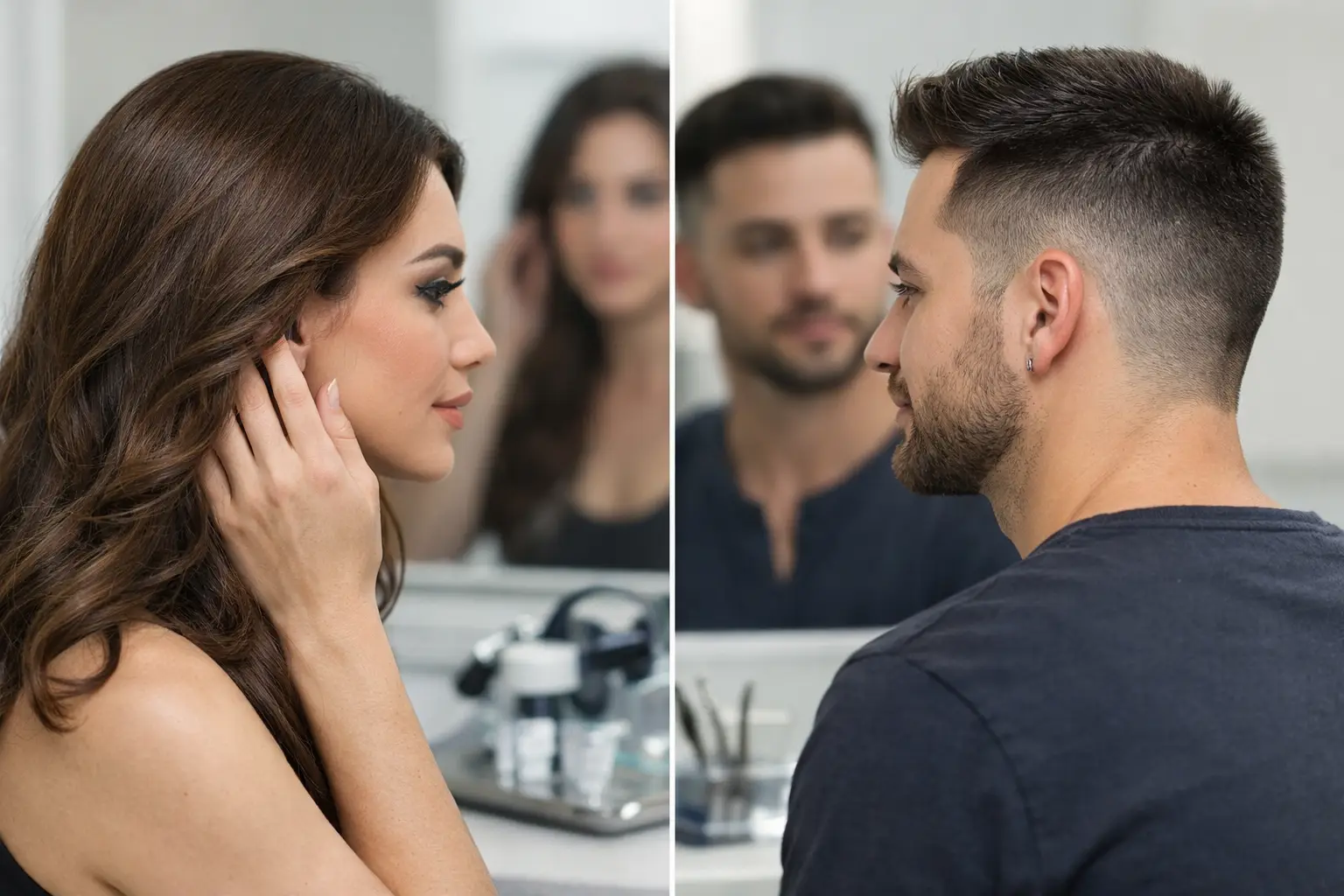
A hairline can carry more meaning than a simple cosmetic feature. Its height, shape, density and temple position may affect how a person is read by others and how they feel when they look in the mirror. A gender affirming hair transplant can be a practical option for people who want their hairline or hair density to better reflect their identity, expression and personal goals.
For some people, the priority is softening a receding hairline or restoring density through the frontal scalp. For others, it may be creating a more angular hairline, rebuilding temples, or addressing thinning that has occurred alongside pattern hair loss. The right plan is individual. It should be developed through a considered medical consultation, with safety, donor supply and long-term hair health at the centre of the decision.
What a gender affirming hair transplant can address
Hair transplantation moves healthy follicles, usually from the back and sides of the scalp, into areas with thinning or limited density. Once established, these follicles can continue to grow hair in their new location. The procedure can be used to reshape the frontal hairline, strengthen temple points, add density behind the hairline or restore coverage in selected thinning areas.
In gender affirmation, hairline design is often the defining part of the treatment. A traditionally feminine hairline may sit lower with a softer, rounder contour and reduced temple recession. A traditionally masculine hairline may be more angular, with a considered degree of temporal recession. These are broad reference points, not rules. Many patients, including non-binary people, want a result that sits outside conventional masculine or feminine patterns.
A good outcome should look balanced from every angle rather than simply low, straight or dense. Hair direction, the transition from single hairs at the front to greater density behind it, facial proportions and future hair loss all influence the design. This is why hairline planning should never be treated as a one-size-fits-all request.
Is a gender affirming hair transplant right for you?
Suitability depends on more than the area you would like to change. A medical professional will assess the quality and density of your donor hair, the stability of any current hair loss, your scalp health and your medical history. They should also discuss what is realistically achievable in one procedure and whether staged treatment may provide a better long-term result.
Donor hair is limited. While it can often be redistributed effectively, every graft used at the hairline is a graft that cannot be used elsewhere later. A very low or dense hairline may look appealing in the short term, but it may not be sustainable if surrounding hair continues to thin. Conservative planning can protect the option for future restoration while still creating a meaningful change now.
Age and the cause of hair loss also matter. If pattern hair loss is active, a transplant alone may not prevent further thinning in untreated areas. Depending on your circumstances, a clinician may discuss medical management, PRP treatments or a period of monitoring before surgery. These options are not appropriate for everyone, and any recommendation should be based on your health history and goals.
Hormone therapy may influence hair growth and hair loss patterns for some people, but its effect varies considerably. It does not replace an assessment of donor supply or guarantee a particular transplant result. If you are taking prescribed medication or hormone therapy, share this during consultation so your treatment plan can be coordinated appropriately.
The consultation should be affirming and clinically detailed
A consultation is where personal priorities meet medical planning. You should be able to explain the outcome you are hoping for in straightforward terms, whether that means a softer hairline, fuller temples, more scalp coverage or a less visibly receding shape. Bringing photos can help communicate preferred styles, although the final design must still account for your own facial structure and available donor hair.
The clinician should examine both the recipient area and donor area, talk through likely graft requirements and explain the procedure technique they recommend. They should also be clear about limitations. Not every reference photo is achievable on every scalp, and a responsible provider will explain why rather than promise an unrealistic density or hairline position.
This conversation should also cover your privacy, recovery schedule and support needs. Some patients prefer to plan treatment around work, study, travel or social commitments. Others may want to take a low-profile approach while the recipient area heals. Clear expectations make the process more manageable.
Procedure choices and hairline design
Follicular unit extraction, often called FUE, is a commonly used method in which individual follicular units are removed from the donor area and placed into small recipient sites. It does not involve removing a linear strip of scalp, though the donor area still requires careful management and healing. Other surgical approaches may be discussed where suitable.
The technique matters, but it is only one part of the result. For gender-affirming hairline work, the placement of grafts is particularly important. Fine, single-hair grafts are generally used at the leading edge to avoid a harsh or plug-like appearance. The density is then built gradually behind the hairline, with attention to natural variation and the way hair will sit once styled.
A lower hairline requires more grafts than many people expect. Building a softer frontal contour, filling temple recession and improving density can be completed together in some cases, but not always. When donor supply is limited, prioritising the visible frontal zone may produce the strongest improvement. It depends on the pattern of thinning and the result that will make the greatest difference to you.
Recovery and the timeline for results
Hair transplant recovery takes patience. In the first days after treatment, there may be redness, minor swelling, scabbing and tenderness in the treated areas. Your medical team will provide aftercare instructions covering washing, sleeping position, exercise, sun exposure and when to return to normal routines.
The transplanted hairs commonly shed in the weeks after surgery. This is an expected phase and does not mean the follicles have failed. New growth often begins gradually after several months, with the hairline becoming more visible over time. Final maturation can take 12 months or longer, particularly where density and texture need time to develop.
Existing hair may still require ongoing care. If you have progressive pattern hair loss, the area behind a newly transplanted hairline can continue to change. A long-term plan may include monitoring, clinically appropriate hair-loss treatment or PRP treatments where recommended. The aim is not only a pleasing early result, but a result that continues to look considered as your hair changes.
Choosing a provider in Australia
Cost can be a genuine barrier to hair restoration, but the lowest advertised price should not be the only deciding factor. Hair transplantation is a medical procedure. The quality of consultation, clinical oversight, graft handling, infection-control processes, aftercare and the experience of the practitioners all matter.
Ask who will assess you, who will carry out each stage of the procedure and how the clinic approaches natural hairline design. You should receive clear information about expected graft numbers, what is included in the quoted cost, recovery requirements and the possibility that further treatment may be needed later. Transparent discussions are especially valuable when a procedure has personal significance.
At Luxe Medical Procedures, hair transplants and PRP treatments are carried out by medical professionals, with a focus on making clinically delivered hair-restoration options more accessible for Australian patients. The best starting point is a private consultation that respects your goals while giving you a realistic, medically informed plan.
The most helpful next step is to focus on the change that would feel most meaningful to you, rather than trying to fit a standard hairline template. With careful donor planning and qualified clinical care, a hair restoration plan can be built around a result that feels natural, sustainable and genuinely your own.