
Hair Transplant Recovery Timeline Guide: 12 Weeks
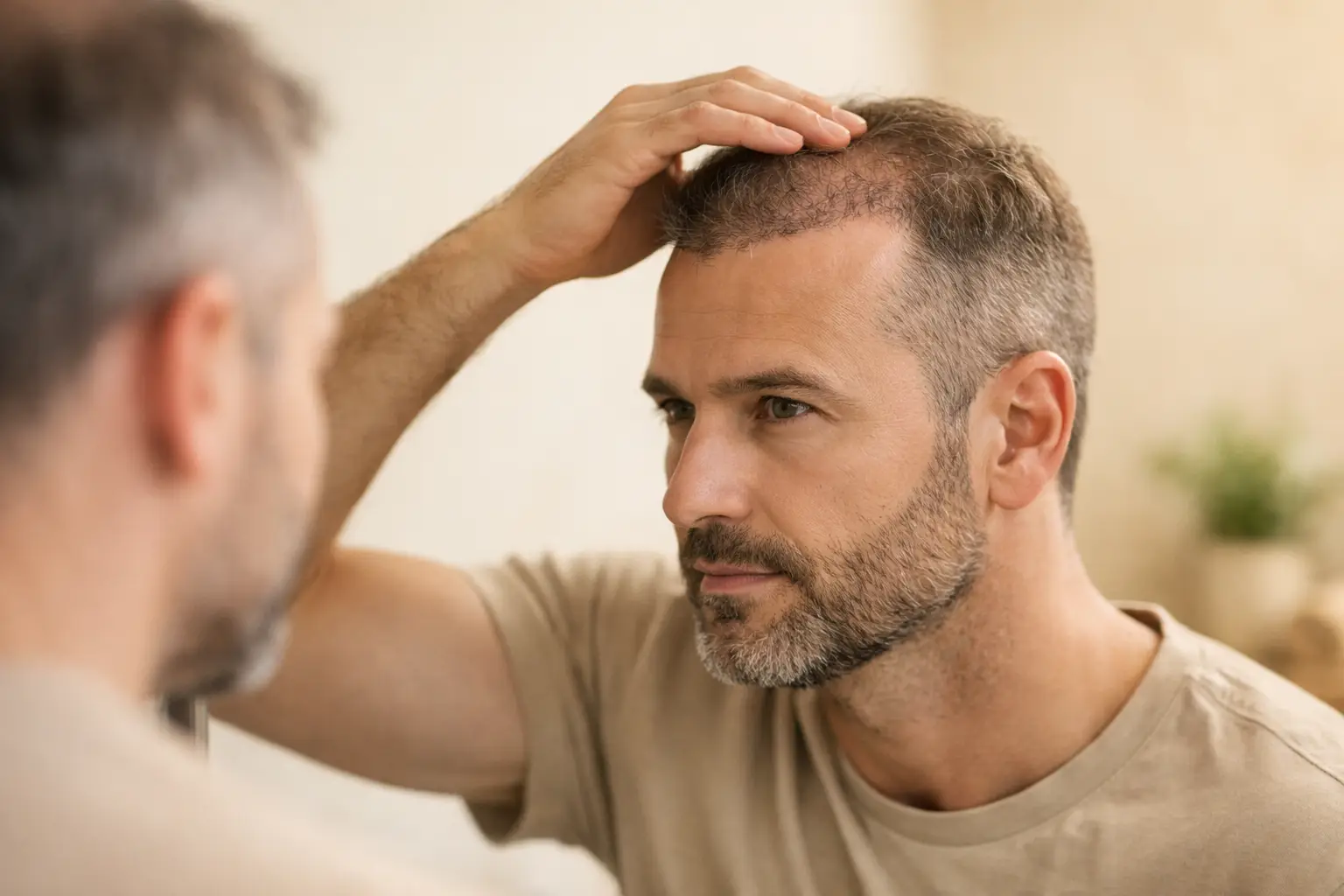
The first few days after a hair transplant can feel more noticeable than the procedure itself. Small scabs, temporary swelling and the need to protect the newly placed grafts are all normal parts of healing. This hair transplant recovery timeline guide explains what most patients can expect, from procedure day through to the point where new growth becomes visible.
Recovery is individual. The exact timeline depends on the procedure used, the size of the treatment area, your general health and how closely you follow your medical professional’s aftercare instructions. A hair transplant is a medical procedure, so personalised guidance from the clinician who carried it out should always take priority over general advice.
Days 0-3: Protecting the grafts
Immediately after the procedure, the recipient area may look red and feel tender. Tiny scabs will begin to form around each implanted graft, while the donor area - often at the back or sides of the scalp - may feel tight, numb or mildly sore.
The newly transplanted follicles are particularly vulnerable during this period. Avoid touching, rubbing or scratching the treatment area. Your clinician will advise when and how to use any prescribed medication, saline spray or aftercare products. Sleeping with your head elevated for the first few nights can help reduce swelling.
Many people return home on the day of their procedure, but it is wise to keep the next few days quiet. Avoid strenuous activity, bending for extended periods, alcohol and smoking, as these can interfere with comfort and healing. Do not wear a tight cap, helmet or anything that could catch on the grafts unless your medical professional has specifically approved it.
Days 4-7: Scabbing and early healing
By the end of the first week, small crusts are usually more apparent. This can look concerning, especially around the hairline, but it is a normal healing response. The aim is not to remove scabs quickly. Let them soften and lift naturally according to your clinician’s washing instructions.
Most patients are given a gentle washing routine after the procedure. This commonly involves avoiding direct, high-pressure water on the scalp and using a mild shampoo in a careful way. Follow the instructions you have been given rather than relying on a standard hair-washing routine.
Swelling, if it occurs, often settles during this week. Some people experience swelling across the forehead or around the eyes, particularly after larger sessions. Contact your clinic promptly if swelling is severe, worsening or accompanied by significant pain, heat, discharge or fever.
Weeks 2-4: The shedding phase
This is the stage that catches many patients off guard. The transplanted hairs often shed between two and four weeks after a procedure. It can seem as though the transplant has been lost, but in most cases the implanted follicle remains under the skin while the visible hair shaft falls away.
This process is commonly called shock loss or shedding. It is a recognised part of the hair growth cycle, not a sign that the treatment has failed. Existing surrounding hair can also appear temporarily thinner in some patients, particularly where hair was already fine or miniaturising.
By around 10 to 14 days, the visible scabs should generally have cleared with appropriate washing and aftercare. The recipient area may still look pink, and the donor area can take longer to settle if a larger number of follicles were extracted. Many people feel comfortable returning to office-based work within a week, although the decision often comes down to personal comfort and the visibility of healing.
When can you exercise again?
Light walking is usually manageable early in recovery, but higher-intensity exercise should wait until your clinician has cleared it. Sweat, increased blood pressure and friction can irritate healing skin. Gym sessions, running, swimming, contact sports and heavy lifting are often restricted during the first one to two weeks, sometimes longer depending on the procedure and your healing progress.
Swimming deserves extra caution. Pools, the ocean and spas may expose the scalp to bacteria, chemicals or prolonged soaking before the skin has fully settled. Ask your treating professional for a clear return-to-exercise plan rather than guessing based on how you feel.
Months 1-3: The quiet period
After shedding, the scalp can look much like it did before treatment. This is often the most challenging part of the recovery process because the procedure is no longer visibly fresh, yet meaningful new growth has not started.
Under the surface, however, the transplanted follicles are adjusting and moving through their normal growth cycle. Some patients notice early fine hairs towards the end of the third month, while others see little change at this point. Both can be within a normal range.
Continue any agreed hair-loss management plan during this period. Depending on your assessment, this may include clinically guided treatments such as PRP treatments or other options recommended by your medical professional. A transplant redistributes healthy follicles, but it does not automatically stop ongoing thinning in untreated areas. Protecting existing hair can be an important part of maintaining a balanced, natural-looking result.
Months 4-6: Early new growth
For many patients, the first clear signs of progress appear between months four and six. New hairs may initially be soft, fine and lighter in colour than expected. They often grow at different speeds and directions before gradually becoming stronger and more consistent.
The hairline may look uneven at first, and density can be patchy while more follicles enter the active growth phase. This is expected. Judging the final outcome too early can create unnecessary anxiety, particularly when one side appears to be developing faster than the other.
You can usually return to normal grooming habits during this stage, but take a measured approach to colouring, bleaching or using strong chemical treatments. Your clinician can advise when your scalp has healed sufficiently and whether a particular product is suitable.
Months 6-9: Noticeable coverage and density
At six months, many people can see a genuine cosmetic change. The transplanted hair is often longer, thicker and easier to style, although it may not yet reflect the final density. Results at this point vary widely according to hair calibre, the number of grafts placed, the degree of pre-existing hair loss and whether treatment involved the hairline, crown or both.
Crown procedures in particular can take longer to look full because of the natural direction of growth and the larger area involved. Patience is part of the process. Hair transplants are designed around biological growth cycles, not instant results.
Months 9-12: Assessing the developing result
Most patients see the majority of their result between nine and 12 months. The transplanted hairs should be more mature, with improved texture and coverage. Some areas, especially the crown, may continue refining beyond 12 months and can take up to 18 months to reach their fullest appearance.
Your follow-up review is the right time to discuss progress, future hair-loss prevention and whether any further treatment is likely to be beneficial. Not everyone needs additional procedures, but realistic planning matters when hair loss is progressive or the available donor hair needs to be used carefully.
Signs you should contact your clinic
Mild redness, tenderness, scabbing and temporary shedding are expected. However, do not wait for a routine appointment if you develop increasing pain, spreading redness, persistent bleeding, pus or other discharge, fever, or a reaction to medication. Contact the medical team that carried out your procedure for advice.
It is also worth getting in touch if you are unsure about washing, sleeping, returning to work or resuming exercise. Clear aftercare is part of safe treatment, not an inconvenience.
A successful recovery is less about doing everything perfectly and more about protecting the grafts, following qualified advice and allowing your body the time it needs. With clinically administered care and realistic expectations, the gradual changes across the coming months can lead to a natural, confidence-building result.