
Hair Transplant Versus Scalp Micropigmentation
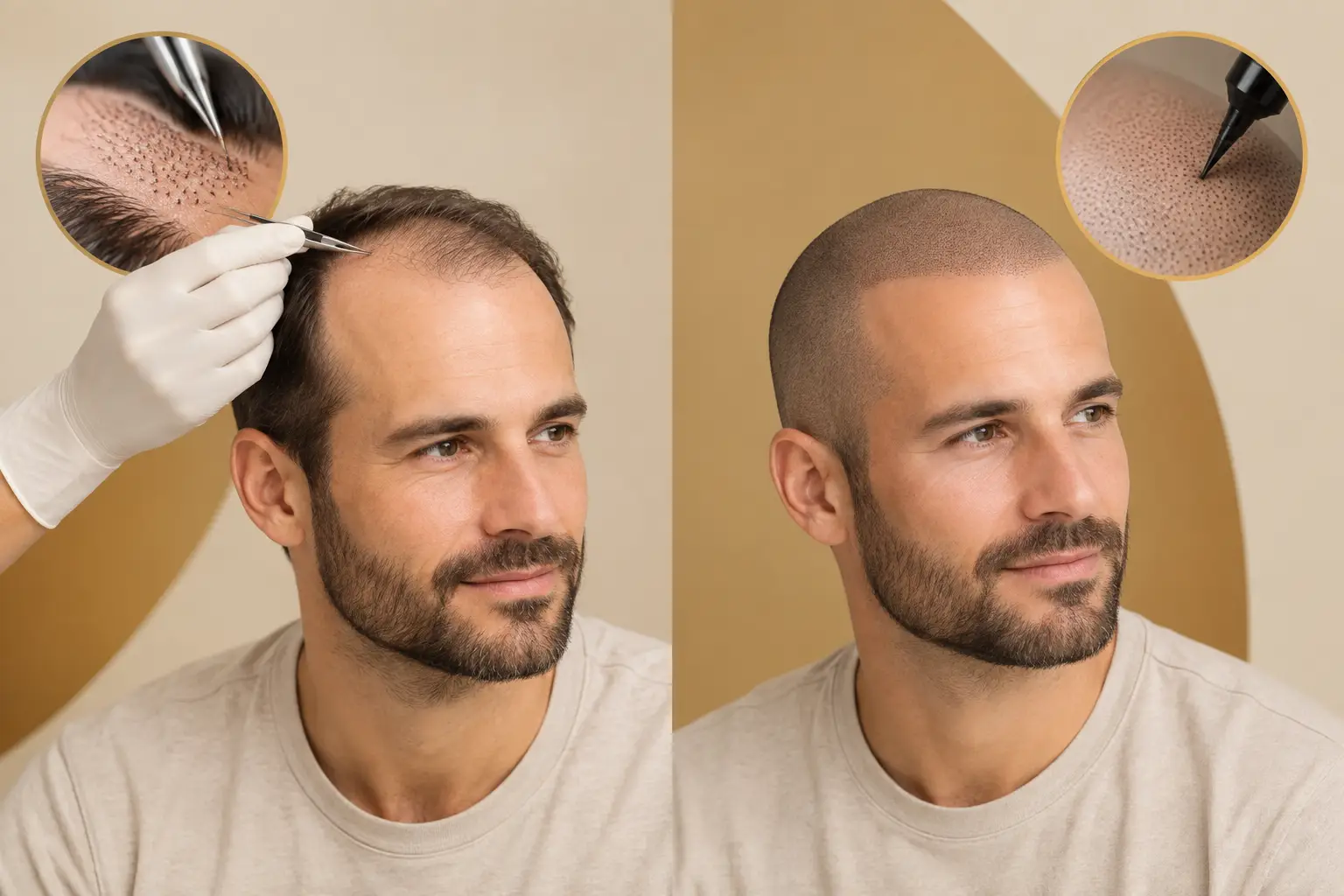
A receding hairline, widening part or visibly thin crown can affect how you feel in photographs, at work and in everyday social situations. When comparing hair transplant versus scalp micropigmentation, the key question is not which treatment is universally better. It is which option matches your pattern of hair loss, available donor hair, preferred look, budget and willingness to undergo a medical procedure.
A hair transplant redistributes your own growing hair into thinning areas. Scalp micropigmentation, often called SMP, uses carefully placed pigment to create the visual effect of closely shaved follicles or greater density between existing hairs. Both can improve the appearance of hair loss, but they work in very different ways.
Hair transplant versus scalp micropigmentation: the core difference
A hair transplant is a surgical hair-restoration procedure carried out by medical professionals. Healthy follicles are taken from a donor area, usually the back and sides of the scalp, then implanted into areas affected by thinning or balding. Once the transplanted follicles establish and grow, the result is real hair that can be cut, styled and washed as usual.
Scalp micropigmentation does not move or regrow hair. It is a form of cosmetic tattooing that places tiny deposits of pigment in the scalp to reduce contrast between the scalp and hair. On a closely shaved head, it can create the look of a fuller hairline and uniform stubble. For people with diffuse thinning who keep some length, it may make the scalp appear less visible.
This distinction matters. A transplant aims to restore growing hair where there is enough suitable donor supply. SMP changes the visual impression of density, but it does not alter the number of hairs on the scalp.
When a hair transplant may be the stronger option
Hair transplantation may suit people seeking a long-term, natural-hair solution for stable pattern hair loss. It is often considered for a receding hairline, thinning temples, a bald crown or areas of reduced density where donor hair is adequate.
The appeal is straightforward: successful transplanted follicles continue to grow. That provides more styling flexibility than SMP, particularly for people who want to wear their hair longer. A carefully planned transplant can also be designed around the direction, angle and distribution of your existing hair, helping the result blend naturally as it grows.
However, a hair transplant is not an instant fix. After the procedure, transplanted hairs commonly shed before new growth begins. Visible growth develops gradually over several months, with the final outcome taking longer. Recovery also requires care with the treated scalp, including following the clinical aftercare instructions provided by your practitioner.
Suitability depends on more than the size of the thinning area. Your donor density, hair characteristics, scalp health, age, family history and likely future pattern of hair loss all need consideration. A hairline designed too low or too densely for someone whose hair loss is still progressing may not look appropriate later. This is why a proper consultation and medically guided treatment plan are central to a responsible result.
When scalp micropigmentation may make sense
SMP can be a practical choice for people who prefer a short, shaved style and want the appearance of a stronger hairline or more even coverage without surgery. It can also appeal to those with limited donor hair, people who are not ready for a transplant, or those looking for a lower-commitment way to improve the appearance of thinning.
Treatment is typically completed over multiple sessions, allowing the practitioner to build colour and density gradually. Compared with transplantation, there is no follicle extraction or implantation, and downtime is generally lighter. Results are visible much sooner once the sessions are complete.
There are trade-offs. SMP works best when expectations match the treatment. It can look highly convincing at close-shaved length, but it cannot provide the movement, texture or styling options of growing hair. If you grow your hair longer, the pigment remains a visual backdrop rather than additional hair density.
Pigment can also fade over time, so maintenance sessions may be needed. The quality of the work is especially important around the hairline. A harsh, overly dark or poorly positioned hairline can look unnatural, while a softer, age-appropriate design is more likely to remain believable over time.
Comparing results, recovery and ongoing commitment
The most noticeable difference is the type of result. A transplant can produce growing hair, while SMP produces the illusion of hair. Neither should be assessed only by before-and-after images. Consider how you want to wear your hair in five years, not simply how you want it to look next month.
Hair transplants involve a medical procedure and a longer result timeline. There may be temporary redness, scabbing and swelling, and the scalp needs careful aftercare during the early healing period. You will also need patience while the follicles settle and begin their growth cycle.
SMP has a faster cosmetic timeline, but it still requires proper planning and aftercare. Sun exposure, individual skin characteristics and the quality of pigment placement can influence how results age. It is not a substitute for a medical assessment when hair loss is sudden, patchy or accompanied by scalp irritation.
Ongoing hair loss is another essential consideration. A transplant moves follicles into thinning areas, but it does not automatically stop non-transplanted hair from becoming finer over time. Depending on the cause and pattern of hair loss, a clinician may discuss options such as PRP treatments as part of a broader hair-restoration plan. SMP can camouflage progression to an extent, but changes in hairline shape or density may eventually require adjustment.
Cost: look beyond the initial price
Affordability matters, especially when hair restoration is often perceived as out of reach. Comparing only the upfront cost can be misleading.
A hair transplant is usually a higher initial investment because it involves a clinical procedure, medical oversight, the treatment team and individual planning. The cost is influenced by the number of grafts needed, the extent of hair loss and the approach recommended for your situation. Its value lies in the potential for long-term growing hair, provided you are a suitable candidate and have realistic expectations.
SMP may cost less initially for some people, particularly where broad coverage is required. Yet maintenance sessions can form part of the longer-term expense. It is also worth considering the cost of choosing an inexperienced provider. Correction work for an unnatural pigment result can be more difficult, time-consuming and costly than getting the design right from the outset.
Ask for transparent information about what is included in the proposed treatment plan, expected follow-up and likely future requirements. A credible provider should explain the limitations as clearly as the benefits.
Can hair transplant and SMP be used together?
Yes, in selected cases. Combining a transplant with SMP can help create an impression of greater density, particularly where donor supply is limited or where a person wants more visual fullness without pursuing a very high graft count.
For example, transplanted hair may rebuild a frontal hairline while SMP is used to reduce scalp show-through behind it. The order, timing and suitability of combined treatment should be individually assessed. The goal is not to pursue the maximum number of procedures, but to create a result that is balanced, realistic and sustainable.
Questions to ask before choosing a treatment
Before committing, ask whether your hair loss pattern appears stable, whether your donor area can support a transplant, and what result is realistic for your age and hair characteristics. You should also ask who will carry out the procedure, what clinical oversight is involved and what aftercare is provided.
For SMP, ask to see healed results rather than only fresh treatment images. Discuss the proposed hairline shape, pigment tone, expected fading and whether future touch-ups are likely. For hair transplantation, ask how graft numbers are planned, how future loss will be considered and what the expected timeline is for visible growth.
At Luxe Medical Procedures, hair restoration is approached as a medical decision rather than a beauty trend. A consultation can help clarify whether hair transplantation, PRP treatment, a non-surgical option or a combination of approaches is appropriate for your needs.
The right choice should leave you feeling informed rather than pressured. Start with a realistic assessment of your hair loss and a conversation with qualified medical professionals, then choose the path that fits both the result you want and the life you plan to live with it.