
How Follicular Unit Extraction Works for Hair Loss
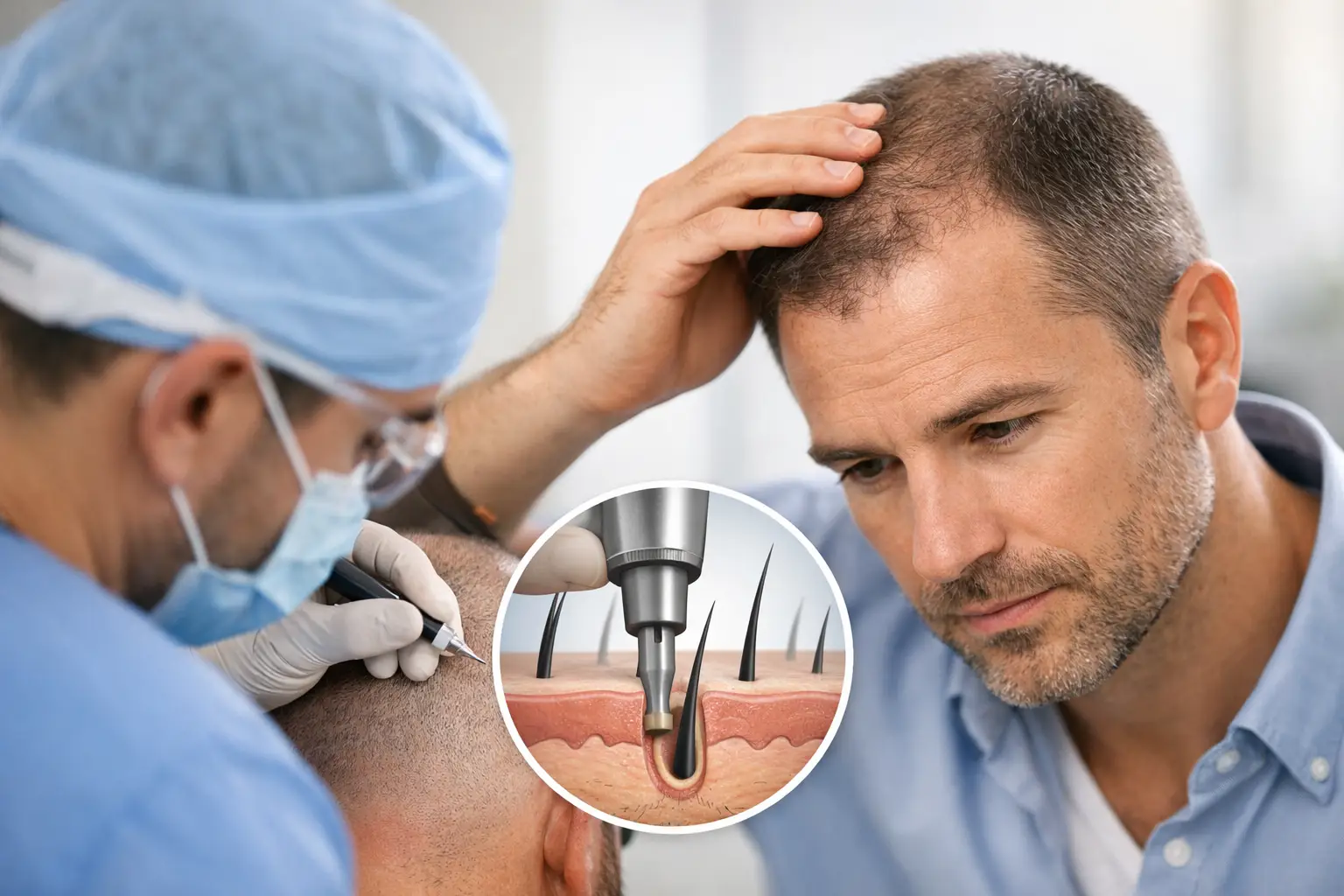
A hair transplant is not simply about moving hair from one area to another. It is a careful process of selecting healthy hair follicles, protecting them during handling and placing them at an angle that suits your existing growth pattern. Understanding how follicular unit extraction works can help you decide whether this modern hair transplant method may be appropriate for your hair loss concerns.
Follicular Unit Extraction, commonly called FUE, is a surgical technique used to restore hair in thinning or balding areas. It is carried out by removing naturally occurring hair follicles from a donor area, usually at the back or sides of the scalp, then implanting them into areas with reduced density. For many patients, FUE is appealing because it does not involve removing a strip of scalp tissue and typically leaves small, dot-like scars rather than a linear scar.
How Follicular Unit Extraction Works
Hair grows in small natural groupings known as follicular units. A single unit may contain one, two, three or sometimes four hairs. During an FUE hair transplant, these units are removed individually with a specialised circular instrument. The aim is to preserve each graft so it can continue growing after it is transplanted.
The donor area matters because transplanted hair generally retains the characteristics of where it came from. Hair at the back and sides of the scalp is often more resistant to the hormone-related thinning seen in male and female pattern hair loss. However, each person’s donor supply is different. A consultation with a qualified medical professional is needed to assess whether there is enough suitable donor hair for the desired result.
FUE can be used to improve a receding hairline, add density through the frontal scalp, address thinning at the crown or restore selected areas after previous hair loss. It is not a way to create unlimited density. The available donor hair needs to be used thoughtfully, particularly when hair loss may continue over time.
Assessment and treatment planning
A medically led consultation comes before any procedure. Your practitioner will look at the pattern, progression and likely cause of your hair loss, as well as your scalp health, medical history and expectations. Some forms of hair shedding are temporary or linked to an underlying health issue, so a transplant is not always the first or most suitable response.
Planning also involves designing the recipient area. A natural-looking hairline takes more than placing grafts at the front of the scalp. Its height, shape, density and irregularity should suit your facial proportions, age and likely future hair loss. A very low or overly dense hairline can use too much donor hair early, leaving fewer options later.
Your medical professional will discuss the expected graft numbers, the likely coverage that can be achieved and whether complementary options, such as PRP treatments or medical management of hair loss, could support the overall plan. Results vary between patients, and a responsible consultation should be clear about both the potential benefits and the limitations.
Preparing the donor and recipient areas
On the day of the procedure, the donor area is usually trimmed short so the follicular units can be seen and removed accurately. Local anaesthetic is used to numb the donor and recipient areas. You remain awake but should be comfortable throughout the procedure.
Small incisions are then created in the thinning area. These recipient sites determine the direction, angle and distribution of the transplanted hair. This is one of the most important technical stages. Hair implanted at an unnatural angle can look obvious even when the grafts grow successfully.
For example, the hair at the front of the scalp generally grows forward and slightly to the side, while crown hair often follows a circular pattern. The placement plan should work with your existing hair, not against it.
Extracting the follicular units
The practitioner uses a fine punch tool to separate each follicular unit from the surrounding scalp tissue. The graft is then gently removed and placed in a controlled holding solution until implantation. Depending on the size of the procedure, this process can take several hours.
Extraction is performed across a wider donor area rather than concentrating removals in one spot. This helps maintain a more even appearance in the donor zone once the hair grows back. Even so, donor management is a key consideration. Taking too many grafts can make the donor area look thinner, especially for people who prefer very short haircuts.
The extracted grafts are sorted according to the number of hairs they contain. Single-hair grafts are often useful at the leading edge of a hairline, where softness and natural variation are important. Multi-hair grafts can be placed behind this area to build density. The exact approach depends on the treatment goal and the quality of the available grafts.
Implanting the grafts
Once recipient sites have been prepared, the grafts are placed one by one. They are positioned carefully to avoid damaging the follicles and to create an even, natural distribution. This stage requires patience and close attention to detail, because graft survival and the appearance of the final result both depend on careful handling.
A transplant can improve the visual coverage of a thinning area, but it cannot match the density of youthful hair. The goal is usually to create a natural, age-appropriate result that looks balanced in normal day-to-day settings. The number of grafts required will depend on the size of the area, the calibre of your hair, the contrast between your hair and scalp colour, and the density you are hoping to achieve.
Recovery After an FUE Hair Transplant
Following FUE, it is normal to have some redness, mild swelling, tenderness and small scabs in both the donor and recipient areas. Your treating team will provide individual aftercare instructions, including guidance on washing, sleeping, exercise and when you can return to work or social activities.
Most patients can resume light daily activities relatively soon, but the scalp needs to be protected while the grafts settle. Avoiding rubbing, picking and pressure on the recipient area is particularly important in the early recovery period. Strenuous exercise, swimming and direct sun exposure may need to be avoided for a period advised by your practitioner.
The transplanted hairs often shed within the first few weeks. This can be alarming, but it is commonly part of the normal growth cycle after transplantation. The follicles remain beneath the skin and typically enter a resting phase before new hair begins to grow. Early regrowth may be visible after several months, while fuller changes commonly develop gradually over 9 to 12 months. Crown areas can take longer to mature.
Is FUE Suitable for Everyone?
FUE may suit people with stable pattern hair loss, adequate donor density and realistic expectations about coverage. It can also be considered by some patients who have had previous hair restoration surgery or who want to avoid a linear donor scar. However, suitability depends on far more than the size of a receding hairline.
People with active scalp conditions, certain medical concerns, diffuse donor thinning or rapidly progressing hair loss may need further assessment before proceeding. Those with limited donor supply may benefit from a more conservative plan, non-surgical treatments or a combination approach. Women experiencing diffuse thinning should also receive appropriate assessment, as the causes and treatment pathways can differ.
Cost is another practical consideration. FUE pricing is generally influenced by the number of grafts required, the complexity of the procedure and the level of clinical care involved. Affordable hair transplant options should still include proper consultation, clear treatment planning, qualified medical oversight and realistic aftercare support. Choosing solely on a low advertised price can overlook the factors that affect safety and long-term satisfaction.
Choosing a Medically Led FUE Provider
When comparing hair transplant providers, ask who will assess you, who is responsible for the surgical stages and what aftercare is included. You should receive a clear explanation of the proposed treatment, possible risks, expected recovery and what outcome is realistic for your individual hair characteristics.
At Luxe Medical Procedures, hair transplants are approached as medical procedures, with care carried out by medical professionals and treatment plans built around the patient rather than a one-size-fits-all promise. That clinical focus is particularly valuable when planning for future hair loss, protecting the donor area and deciding whether FUE is the right option.
The best next step is a personal assessment that considers your current hair loss, donor capacity and goals for the years ahead. A well-planned FUE procedure is not about chasing an unrealistic transformation. It is about making careful, medically guided use of the hair you have available to help you feel more confident in your appearance.