
How Hair Transplant Grafting Works in Practice
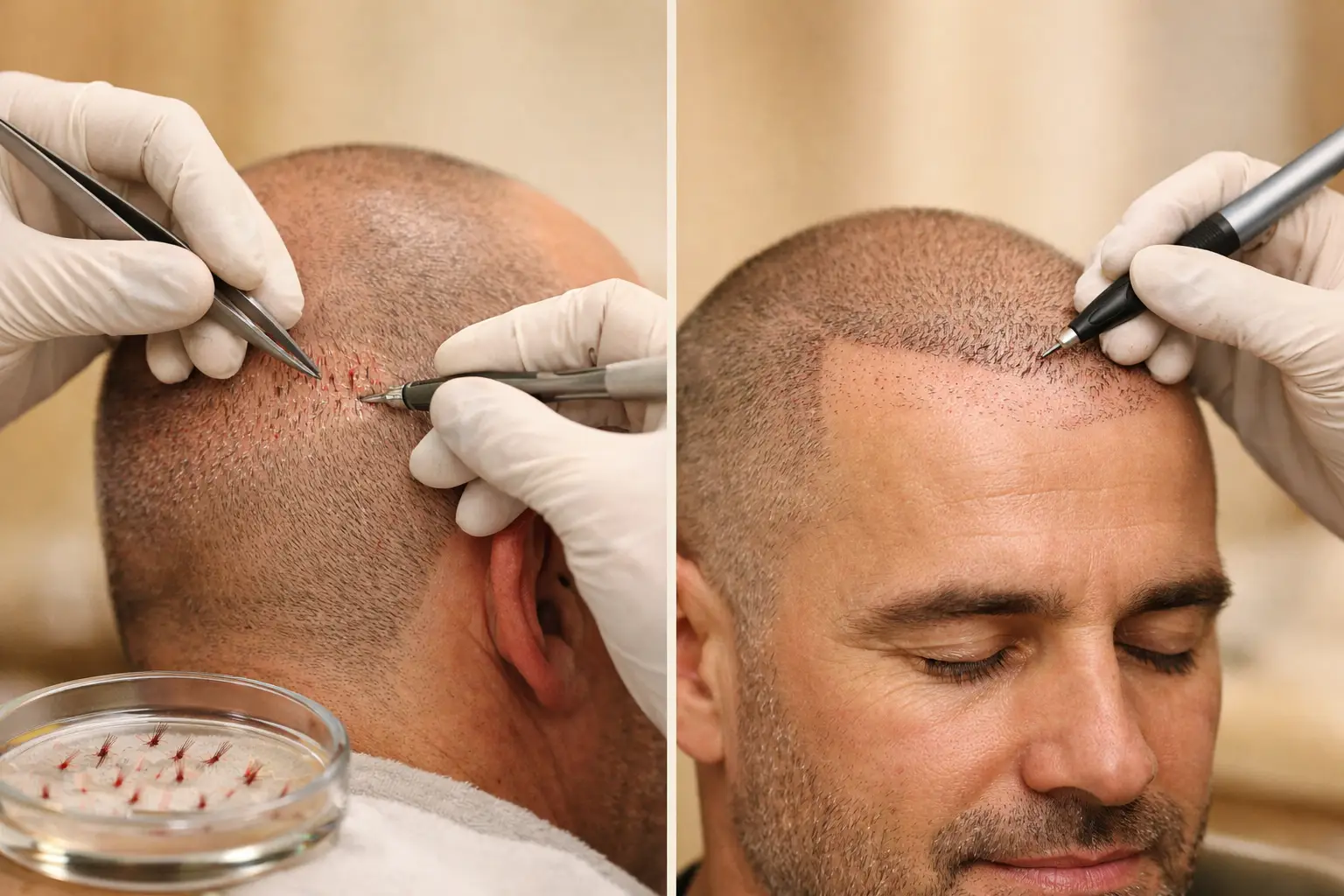
A hair transplant is not simply a matter of moving hair from one area to another. The result depends on preserving individual follicles, planning a natural-looking pattern and placing each graft at the correct angle and density. Understanding how hair transplant grafting works can make the process feel far more transparent when you are considering a clinically delivered solution for thinning hair, a receding hairline or reduced density.
What a hair transplant graft actually is
A graft is a small piece of tissue containing one or more healthy hair follicles. Hair follicles naturally grow in groupings known as follicular units. A single follicular unit may contain one hair, while others contain two, three or occasionally four hairs.
During a transplant, these units are carefully harvested from a donor area, most often the back and sides of the scalp. For many people with pattern hair loss, hair in these areas is more resistant to the hormonal process that causes thinning on the top of the head. Once transplanted, those follicles generally retain that resistance.
Grafts are not all identical, and that matters. Fine, single-hair grafts are often used along the hairline to create a soft, natural transition. Grafts containing more hairs can be placed behind the hairline or through the crown to build visible coverage. A medically guided treatment plan considers your existing hair, donor supply, scalp characteristics and the likely progression of hair loss, rather than simply aiming to place the highest possible number of grafts.
How hair transplant grafting works step by step
Hair transplantation is a detailed medical procedure carried out over several stages. The approach may vary between patients, but the underlying objective is consistent: safely relocate viable follicles and give them the best conditions to grow.
Planning the donor and recipient areas
The procedure begins with an assessment of the scalp and hair loss pattern. Your practitioner reviews the quality and density of donor hair, the area requiring restoration, your hairline shape and your long-term goals. This stage is essential because donor hair is finite. Using too much too early, or creating a hairline that is too low or dense for the available donor supply, can limit future options.
A treatment plan also needs to account for ongoing hair loss. A transplant can restore hair where grafts are placed, but it does not stop non-transplanted hair from thinning. In some cases, PRP treatments or other medically appropriate hair-loss management options may be discussed alongside transplantation to support existing hair.
Harvesting the grafts
In follicular unit extraction, commonly called FUE, individual follicular units are removed one at a time from the donor area using a very fine instrument. This leaves tiny, scattered extraction sites that heal over time and are generally less noticeable once the surrounding hair has grown.
Another established technique is follicular unit transplantation, or FUT. With FUT, a narrow strip of donor skin is removed from the back of the scalp and dissected into individual grafts under magnification. It can be appropriate for some patients, particularly when a larger number of grafts is required, but it leaves a linear scar. The best technique depends on your hair characteristics, hairstyle preferences, donor capacity and clinical assessment.
Whether FUE or FUT is used, careful handling is crucial. Follicles are delicate living structures. They must be kept hydrated, protected from trauma and prepared for placement without unnecessary delay.
Preparing the recipient sites
Before grafts are placed, the practitioner creates tiny recipient sites in the thinning or bald area. This is one of the most influential parts of the procedure. The angle, direction and spacing of these sites determine how the transplanted hair will sit and whether it blends naturally with surrounding hair.
Hair at the front of the scalp does not grow straight upwards, and crown hair follows a different pattern again. A natural-looking restoration reflects these differences. The goal is not simply to fill a space, but to recreate the visual flow of hair in a way that suits your facial proportions, age and existing density.
Placing the grafts
The harvested grafts are then inserted into the recipient sites. Single-hair grafts may be positioned at the leading edge of the hairline, while multi-hair grafts can add density further back. Placement is meticulous work: grafts cannot be packed so tightly that blood supply is compromised, yet they need sufficient density to create a meaningful cosmetic improvement.
This is why graft numbers alone do not tell the full story. Two people receiving the same number of grafts may have quite different results because the area being covered, hair thickness, curl pattern, scalp-to-hair colour contrast and remaining natural hair all affect the final appearance.
Who may be suitable for grafting?
Suitable candidates often have stable or reasonably predictable hair loss, healthy donor hair and realistic expectations about what a transplant can achieve. Men and women can both be candidates, although the cause and pattern of hair loss should be properly assessed first.
For example, diffuse thinning can require a different approach from a defined receding hairline. Hair loss caused by certain medical conditions, inflammation, nutritional factors or recent stress may need investigation and treatment before a transplant is considered. A professional consultation helps distinguish pattern hair loss from conditions where surgery may not be the right first step.
Age is also only one factor. A younger patient may have strong donor hair but a less predictable long-term pattern of loss. In that situation, conservative hairline planning can be a sensible way to protect future donor options. Conversely, a mature patient with stable loss may be well placed for a more defined restoration plan.
Healing after a hair transplant
After graft placement, small scabs commonly form around the transplanted hairs. Mild redness, tenderness and swelling can also occur in the early recovery period. Your clinical team will provide specific aftercare instructions, including how to wash the scalp, sleep comfortably and avoid activities that could disturb the grafts while they settle.
The transplanted hairs often shed within the first few weeks. This can be unsettling, but it is a normal part of the process. The follicle remains beneath the skin and enters a resting phase before new growth begins.
Visible growth is gradual. Some early regrowth may appear around three to four months, with more noticeable change often developing between six and nine months. Results can continue to mature for 12 months or longer, particularly in the crown area where growth can take more time. Hair grows in cycles, so patience is part of the treatment process.
What affects the final result?
A transplant can produce a lasting improvement, but no ethical clinic should promise a particular density or guarantee an identical result for every patient. Outcomes are influenced by the quality of the donor hair, the number of grafts available, healing, scalp health and the natural characteristics of your hair.
Thicker or curlier hair can create the appearance of greater coverage than very fine, straight hair. Strong contrast between dark hair and a light scalp can make thinning more visible, even after successful grafting. The size of the recipient area matters as well. Restoring a small hairline recession requires a different graft strategy from covering extensive crown loss.
There are also procedural risks to discuss, including infection, bleeding, swelling, temporary shedding of nearby existing hair and scarring. These risks are one reason hair transplantation should be approached as a medical procedure, with appropriate assessment, sterile technique, qualified practitioners and clear aftercare.
Choosing a considered treatment plan
When comparing hair transplant options, ask how the donor area will be assessed, who performs each stage of the procedure and how the plan accounts for future hair loss. It is also reasonable to ask what graft range may be suitable, what recovery involves and whether supportive treatments could help maintain non-transplanted hair.
Affordability matters, but it should sit alongside clinical oversight and a realistic plan. The most useful consultation is one that explains both what can be achieved now and what may be needed later if hair loss progresses.
A well-planned transplant is designed to look like your own hair, not an obvious intervention. Taking the time to understand your donor capacity and treatment options can help you make a decision that supports your confidence for years ahead.