
How PRP Supports Hair Regrowth and Who It May Suit
Seeing more scalp through your hairline or noticing extra hair in the shower can make hair loss feel suddenly very personal. Understanding how PRP supports hair regrowth gives you a clearer way to assess whether this clinically administered treatment could play a useful role in your plan.
PRP, or platelet-rich plasma, uses a concentrated portion of your own blood. It is not a cosmetic cover-up and it is not a replacement for a hair transplant when follicles are no longer viable. For the right person, however, PRP treatment may support thinning hair by creating a healthier environment around existing follicles.
How PRP Supports Hair Regrowth
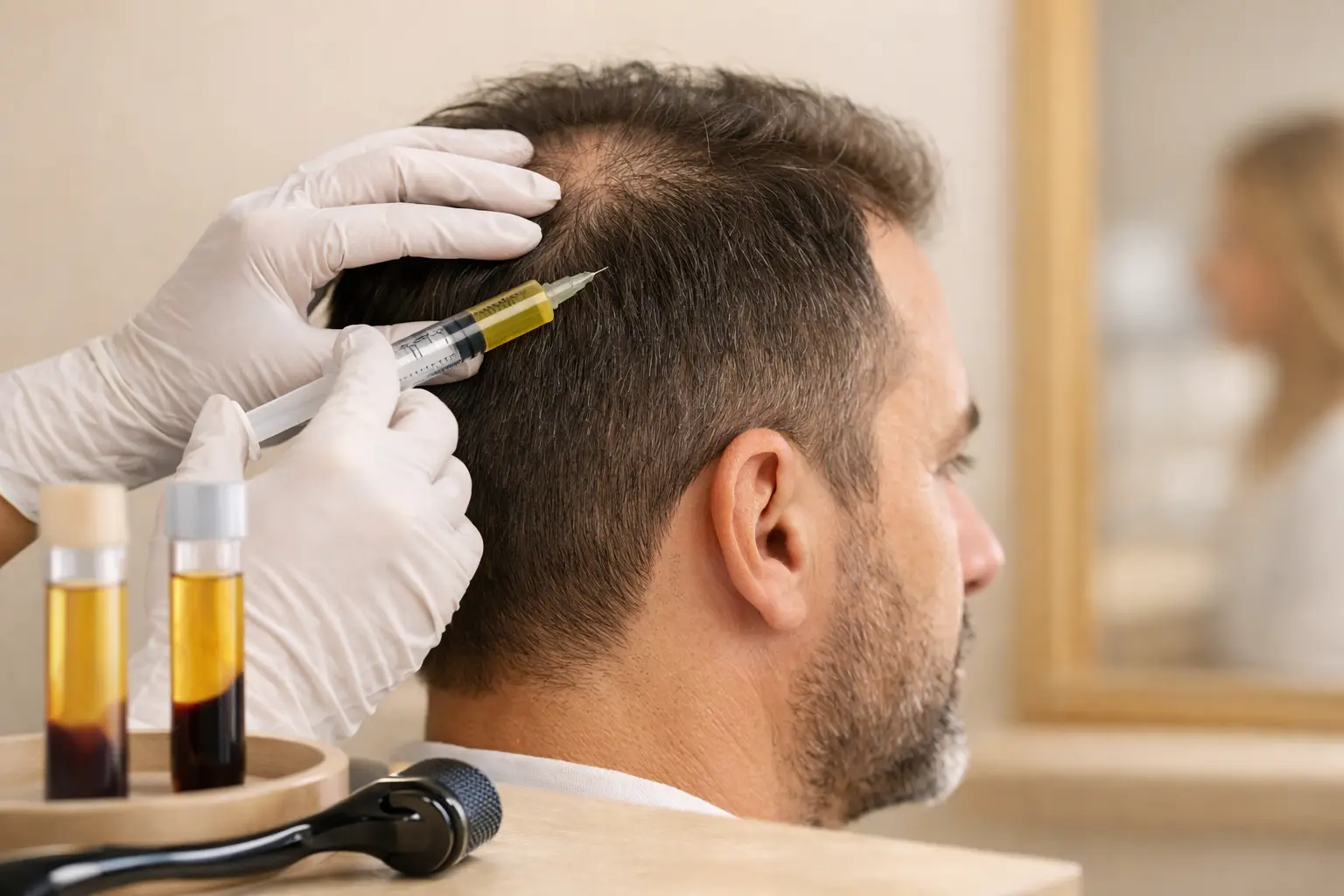
Platelets are small components in the blood that carry growth factors involved in tissue repair and cell signalling. During a PRP treatment, a small blood sample is collected and processed to concentrate the platelets within the plasma. That platelet-rich plasma is then carefully injected into targeted areas of the scalp by a trained medical professional.
The goal is to stimulate activity around weakened but still living hair follicles. In pattern hair loss, follicles often gradually shrink over time, producing finer and shorter hairs before they stop producing visible growth. PRP may help support follicle function, improve scalp tissue quality and encourage hairs to remain in the active growth phase for longer.
This is why PRP is most often considered for early to moderate thinning rather than a completely smooth bald area. It works with the follicles you have. Where follicles have been inactive for a long period, there may be little for PRP to stimulate.
Results vary because hair loss is not one condition with one cause. Genetics, hormonal changes, age, illness, stress, nutrition, medications and inflammatory scalp conditions can all affect density and shedding. A proper consultation helps determine whether PRP is appropriate and whether another treatment should be considered alongside it.
What Happens During a PRP Hair Treatment?
A medically delivered PRP appointment begins with an assessment of your hair concerns, medical history and scalp. The practitioner may look at the distribution of thinning, the calibre of the hairs and whether there are signs of an underlying scalp condition. This step matters because sudden shedding or patchy hair loss may need investigation before any cosmetic or restorative treatment begins.
If PRP is suitable, blood is taken from your arm, much like a routine blood test. The sample is placed in a centrifuge, which separates the blood components and allows the platelet-rich portion to be prepared for treatment. The practitioner then administers a series of small injections across the areas of thinning.
The procedure is generally completed within an appointment, although timing depends on the treatment area and your individual plan. You may feel brief pinching or pressure during the injections. Some redness, tenderness, swelling or a mild headache can occur afterwards, but these effects are usually temporary. Your clinician will provide individual aftercare advice, including when you can wash your hair, exercise or use scalp products.
Because PRP is prepared from your own blood, there is no donor material involved. That does not make it risk-free. Injection treatments still require sterile technique, careful patient screening and qualified clinical oversight to reduce avoidable risks such as infection, bruising or adverse reactions.
Who May Be a Good Candidate for PRP?
PRP can be an option for men and women experiencing diffuse thinning, early pattern hair loss or a widening part line. It may also suit people who want to take action before hair loss becomes more advanced, provided their assessment indicates follicles are still responsive.
It can be particularly useful where the aim is preservation as well as improvement. A person may not be seeking a dramatic change to their hairline. They may want to reduce visible scalp, improve the appearance of density or support finer hairs so they look stronger over time. Setting that goal clearly before treatment helps make results easier to assess fairly.
PRP may also be recommended as part of a broader hair-restoration plan. For example, medical treatment for pattern hair loss may be used to address the hormonal drivers of miniaturisation, while PRP supports scalp and follicle health. After a hair transplant, some patients may discuss PRP with their treating clinician as an adjunct, not as a substitute for the transplant procedure itself.
There are circumstances where PRP may be delayed or not recommended. Active scalp infections, certain blood or platelet disorders, some medications and particular health conditions can affect suitability. Pregnancy, breastfeeding and recent illness should also be discussed openly with the treating medical professional. A reputable provider will not treat every concern with the same protocol.
What Results Can You Realistically Expect?
Hair growth moves slowly. A treatment cannot produce a full result in a few weeks because the hair cycle itself takes months. Many patients are advised to complete an initial series of PRP sessions, commonly spaced several weeks apart, followed by maintenance treatments if clinically appropriate. The exact schedule should be based on your pattern of loss, response and practitioner guidance rather than a one-size-fits-all package.
Early changes can be subtle. Reduced shedding, stronger-feeling hair and improved hair calibre may be noticed before a visible increase in density. Photographs taken in consistent lighting and at consistent angles can be far more useful than checking the mirror every day. They provide a clearer reference point as treatment progresses.
PRP does not guarantee regrowth, and it cannot recreate a dense juvenile hairline where hair loss is advanced. Research into PRP for androgenetic alopecia, the most common form of pattern hair loss, has shown encouraging potential for some patients, but treatment methods and study outcomes vary. Concentration methods, injection techniques, session numbers and patient selection all influence results.
That uncertainty is exactly why professional guidance is valuable. Be cautious of providers promising guaranteed growth, a fixed number of graft-like results or permanent improvement from a single session. PRP is best viewed as a medical treatment that may support healthier hair growth, with outcomes that need to be reviewed over time.
PRP Versus a Hair Transplant
PRP and hair transplants address different stages and patterns of hair loss. PRP aims to support existing follicles that are thinning or underperforming. A hair transplant relocates healthy follicles, usually from the back or sides of the scalp, to areas where hair has been permanently lost.
For someone with a receding hairline and a stable donor area, a transplant may offer a more structural solution to bare areas. For someone whose hair is becoming finer across the crown but remains present, PRP may be a less invasive starting point. Some people benefit from combining approaches at different times, but only after a clinician has assessed the cause and progression of their loss.
Cost is also a practical consideration. PRP is generally less expensive upfront than surgical restoration, although maintenance can be needed. A hair transplant involves a larger initial investment and recovery period, but transplanted follicles can provide long-term growth. The right choice is not simply the cheapest procedure. It is the one that matches your current hair pattern, expectations, medical suitability and budget.
Choosing Clinically Delivered PRP Care
When considering PRP, ask who will assess you, who will carry out the injections and how your treatment plan will be reviewed. You should be given clear information about likely benefits, limitations, side effects, cost and alternatives. A consultation should feel like a discussion, not a sales pitch.
At Luxe Medical Procedures, PRP treatments are carried out by medical professionals as part of a considered approach to hair restoration. For patients in Newcastle, Brisbane or Perth, that clinical focus provides a credible pathway to discuss PRP, medical management and hair transplant options without treating hair loss as a purely cosmetic concern.
The most constructive next step is a consultation that looks beyond the immediate thinning you can see. Once you understand the cause, the stage of loss and the condition of your follicles, you can make a calmer, more informed decision about whether PRP deserves a place in your hair-regrowth plan.