
How to Choose a Hair Clinic With Confidence
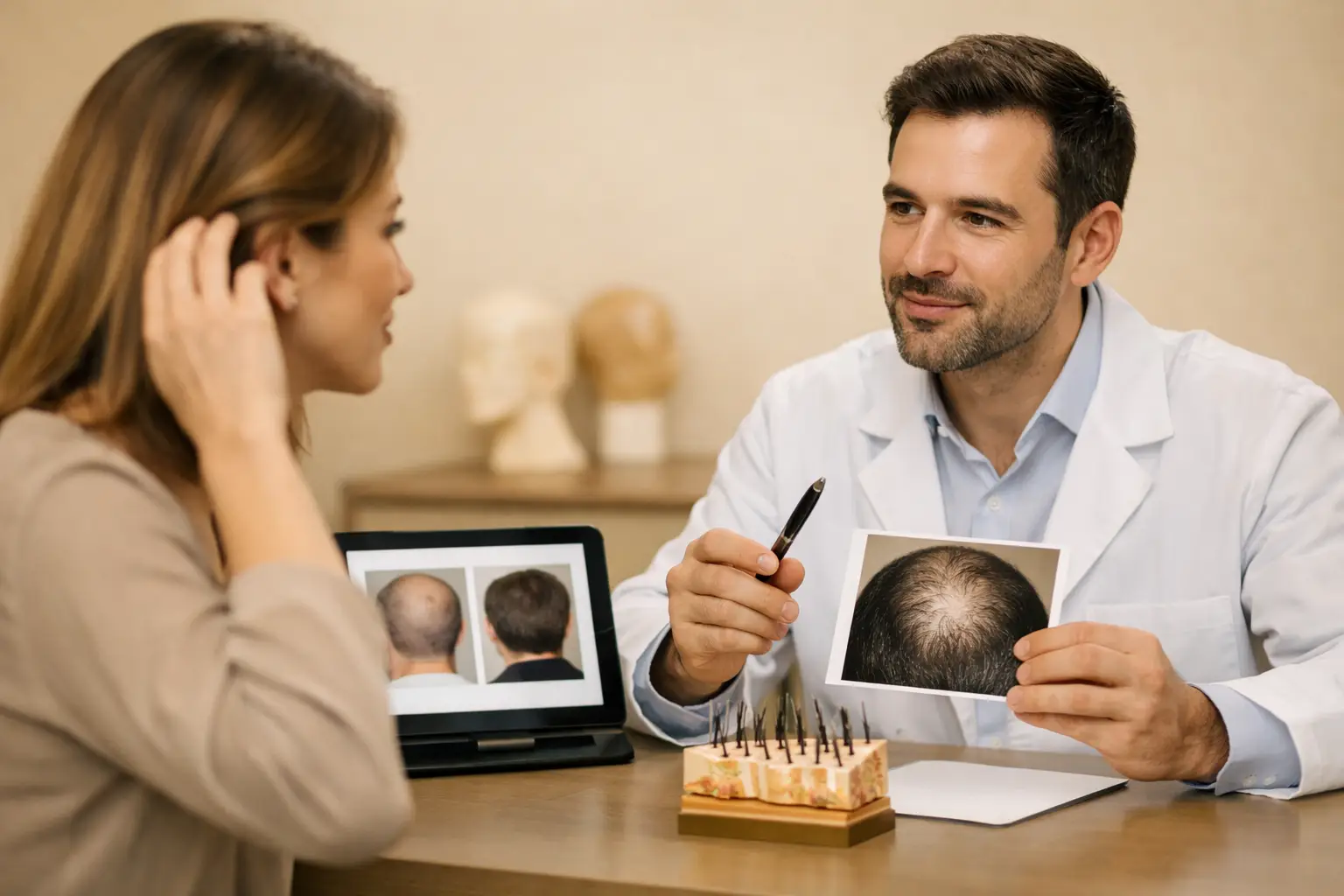
Hair loss is personal, and deciding to seek treatment can take time. When you are ready, knowing how to choose a hair clinic can help you move past glossy promises and focus on what genuinely matters: safe care, qualified medical professionals, realistic treatment advice and a plan that suits your needs and budget.
A good clinic should not make you feel pressured to book a procedure before you understand it. Whether you are considering a hair transplant, PRP treatment or simply want informed advice about thinning hair, the consultation should give you clarity rather than a sales pitch.
Choose a Hair Clinic With Medical Oversight
Hair restoration is a medical service, particularly when it involves surgical hair transplantation or injectable treatments such as platelet-rich plasma, known as PRP. This is why the first question is not simply whether a clinic has convincing before-and-after images. It is who is assessing you, who is carrying out the procedure and how medical care is managed throughout the process.
Ask whether your consultation is conducted by a qualified medical professional and whether a doctor is involved in your treatment plan. You should be able to understand the credentials of the practitioners involved, their role on the day of treatment and who is available if you have questions or concerns afterwards.
This matters because hair loss is not identical from person to person. Pattern hair loss, diffuse thinning, hairline recession and shedding linked to health or lifestyle factors can look similar at first glance. A clinically guided assessment helps identify whether a hair transplant, PRP treatment, another approach or no procedure at all is appropriate for your situation.
Be cautious if a provider guarantees a particular result without examining your hair, scalp, donor area and medical history. Ethical providers can explain likely outcomes, but they cannot promise that every graft will grow in exactly the same way or that a non-surgical treatment will stop all future hair loss.
Look for a Proper Consultation, Not a Quick Quote
Cost matters, especially because hair restoration has often been presented as out of reach for many Australians. However, a low starting price does not tell you whether the proposed treatment is suitable or what is included.
A useful consultation should cover your hair-loss history, your current concerns, family history where relevant, medical conditions, medications and previous treatments. For a hair transplant, the clinic should assess the quality and availability of your donor hair, usually from the back and sides of the scalp. Donor hair is limited, so it needs to be planned carefully rather than used aggressively to create a short-term cosmetic result.
The practitioner should also ask what you are hoping to achieve. A person wanting to soften a mildly receding hairline may need a different plan from someone seeking more coverage through the crown. Your age and the likelihood of ongoing hair loss can affect the recommended design too. A lower hairline may sound appealing now, but it may not remain appropriate if loss progresses over time.
PRP treatments also deserve an individual discussion. PRP may be considered for some people with thinning or early-stage hair loss, but results vary. It is not a replacement for a transplant when significant baldness is present, and it should not be marketed as a guaranteed cure.
Understand the Treatment Being Recommended
You do not need to become an expert in every hair-restoration technique. You do need a clinic that explains your options in plain language and answers questions directly.
For surgical restoration, ask which hair transplant method is recommended and why. Clinics may offer follicular unit extraction, often called FUE, or other approaches depending on their clinical model and your needs. The important point is not choosing a method because it is fashionable. It is understanding how it affects scarring, recovery, donor management, the number of grafts required and the outcome you can realistically expect.
Ask how graft numbers are estimated. A meaningful answer should connect the estimate to the size of the area being treated, your existing density, hair characteristics and donor supply. Be wary of clinics that quote a large graft number immediately without a detailed assessment. More grafts are not automatically better if they compromise the donor area or are not needed for a natural-looking result.
For PRP, ask how many sessions may be recommended, the likely timing between appointments and how progress will be assessed. Ongoing maintenance may be discussed, depending on your presentation and response. Clear expectations are far more useful than a vague promise of thicker hair.
Check Safety Standards and Aftercare
A hair transplant is more than the procedure itself. Good aftercare supports healing, helps you understand what is normal and gives you a clear pathway if something does not feel right.
Before booking, ask what happens after your appointment. You should receive practical written guidance about washing your hair, protecting the treated area, returning to exercise and managing the recovery period. The clinic should explain when to contact them and how follow-up is organised.
It is also reasonable to ask about infection-control procedures, clinical facilities and the support available during treatment. A professional clinic will welcome sensible questions about safety. If you feel dismissed for asking, that is useful information in itself.
Temporary shedding can occur after a hair transplant, and visible growth takes time. Early changes may not reflect the final result. A reputable provider will prepare you for the recovery timeline instead of presenting the process as instant. Hair restoration generally requires patience, and honest guidance can prevent unnecessary worry during the first few months.
Compare Costs Properly
Affordability should mean clear, accessible pricing, not hidden exclusions. When comparing clinics, make sure you are comparing like with like. One quote may include consultation, medical assessment, procedure fees, post-treatment products and follow-up appointments, while another may list only a base procedure price.
Ask for a written breakdown of what is included. For a hair transplant, confirm whether the quoted cost covers the planned graft range, clinical team, medications where applicable and aftercare. For PRP treatments, clarify whether the price is per session or part of a recommended course.
The cheapest option is not always the most affordable in the long term if it leaves you with poor communication, inadequate follow-up or a plan that does not protect your donor hair. Equally, the highest price does not automatically mean superior clinical care. Look for transparent pricing paired with professional oversight and a treatment recommendation that makes sense for you.
If payment options are available, make sure you understand the full commitment before proceeding. Finance can make treatment more manageable, but it should not rush a decision that deserves careful thought.
Assess Results With a Critical Eye
Before-and-after photos can be useful, but they are only one part of the picture. Look for results that appear natural, not simply dense. The hairline should suit the person’s face and age, while the overall coverage should reflect what their donor hair could reasonably support.
Ask whether the clinic can show examples similar to your own hair type, degree of loss or treatment area. Someone with fine hair and diffuse thinning may have a different outcome from someone with thicker hair and a defined receding hairline.
Photos should be consistent in lighting, angle and styling where possible. Dramatically different lighting or wet-versus-dry hair can make density appear very different. A trustworthy clinic will discuss the limits of photographs and focus on the treatment plan behind the result.
Consider Convenience, Privacy and Ongoing Support
Hair restoration can involve more than one appointment, particularly for PRP or post-procedure reviews. A clinic location that is practical for you can make follow-up easier. For patients in Newcastle, Brisbane or Perth, access to clinically administered care close to home may be an important part of choosing a provider.
Privacy also matters. You should feel comfortable discussing a concern that may affect your confidence, work life or relationships. The right clinic will treat hair loss as a health and wellbeing concern, not as something to trivialise or exploit.
Pay attention to how the team communicates from your first enquiry. Are your questions answered clearly? Are risks and limitations acknowledged? Do you have time to consider your options? Professional care should feel supportive and informed, never hurried.
Choosing a hair clinic is ultimately about trusting the process as well as the provider. Take the time to speak with a medical team, compare the detail behind each recommendation and choose a plan that protects both your wellbeing and your long-term hair-restoration goals.