
Inexpensive Hair Transplant Surgery in Australia
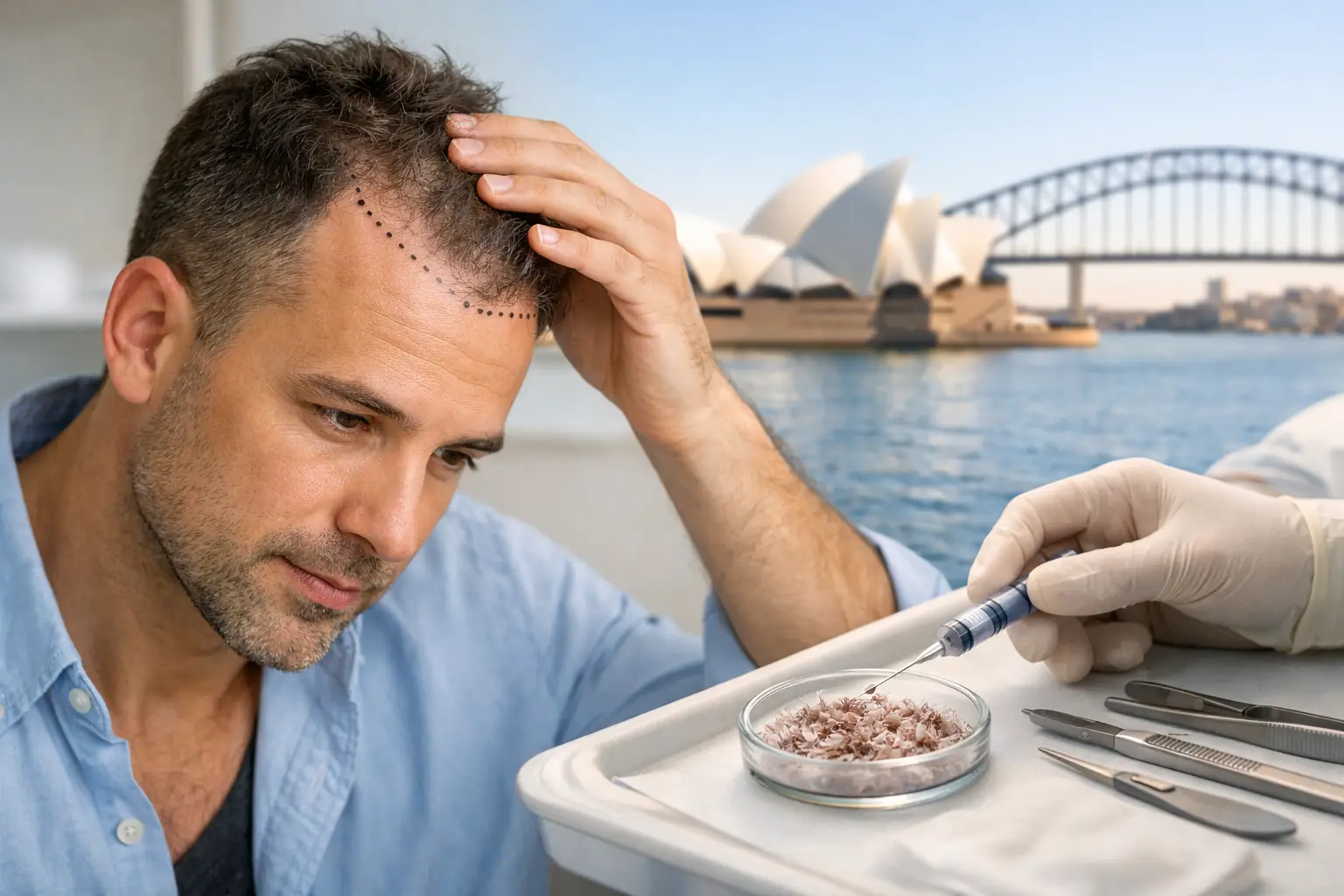
A receding hairline or thinning crown can affect how you feel in photographs, at work and in everyday social situations. For many Australians, the concern is not whether hair restoration works, but whether inexpensive hair transplant surgery can still be carried out with the clinical care and professional oversight they expect.
The short answer is that affordability and quality do not have to be opposites. However, a lower quoted price should never be the only reason to choose a provider. A hair transplant is a medical procedure, and the best value comes from a treatment plan that is appropriate for your pattern of hair loss, performed by qualified medical professionals and designed with realistic long-term outcomes in mind.
What makes hair transplant surgery expensive?
Hair transplant pricing varies because no two patients have the same degree of hair loss, donor hair availability or treatment goals. The number of grafts required is usually one of the largest cost factors. A person seeking a modest hairline refinement may require far fewer grafts than someone restoring density across the hairline, temples and crown.
The procedure type also matters. Follicular Unit Extraction, commonly called FUE, involves taking individual follicular units from the donor area, usually at the back or sides of the scalp, and placing them in thinning areas. It is a detailed process that requires careful planning, extraction and placement. The time required, clinical team involved and number of grafts can all influence the overall fee.
Clinical standards are another important part of the cost. A properly managed procedure includes consultation, assessment of your medical suitability, surgical planning, sterile clinical processes, professional oversight and aftercare guidance. These are not optional extras. They are central to a safe, credible hair-restoration experience.
What inexpensive hair transplant surgery should mean
Inexpensive does not need to mean rushed, generic or performed without appropriate medical involvement. It should mean transparent pricing, an efficient treatment model and access to a clinically delivered procedure without unnecessary mark-ups.
A responsible provider should explain what is included in your quote. Ask whether the fee covers the consultation, procedure, local anaesthetic, post-procedure products or instructions, review appointments and any recommended follow-up care. A low starting price can be misleading if key parts of the treatment are added later.
It is also worth asking how the graft estimate was reached. Grafts are not simply a sales figure. The number should reflect the size of the treatment area, the quality and density of the donor area, your current and likely future hair loss, and the result you are hoping to achieve. Overly ambitious plans can place unnecessary pressure on the donor area, while too few grafts may not deliver meaningful visual improvement.
Affordability is most valuable when it is paired with clarity. You should understand what you are paying for, why it has been recommended and what outcome is realistically possible before committing to treatment.
The clinical factors worth checking before you compare prices
Hair transplantation is a permanent redistribution of your existing hair follicles. That makes the assessment stage particularly important. A reputable consultation should consider more than the area you would like covered.
Your practitioner should examine the pattern and progression of your hair loss, the condition of your scalp, the strength of your donor supply and relevant medical history. They should also discuss whether you are likely to continue losing hair. A transplant can restore hair to selected areas, but it does not stop underlying pattern hair loss from progressing.
For this reason, a treatment plan may include non-surgical options alongside, before or after a transplant. PRP treatments, for example, use platelet-rich plasma prepared from a small sample of your own blood and injected into targeted areas of the scalp. PRP may be considered for suitable patients experiencing thinning or early hair loss, and can form part of a broader clinician-led approach. It is not a replacement for a transplant where substantial coverage is required, but it may be a useful option depending on your presentation and goals.
Be cautious of providers who promise a perfect density, guarantee a specific result or recommend surgery without discussing your longer-term hair-loss pattern. Results vary between individuals, and honest clinical guidance should include both the potential benefits and the limitations of treatment.
Questions to take to your consultation
You do not need to be an expert to make an informed choice. Ask who will assess you, who will carry out each stage of the procedure and what medical supervision is involved. It is reasonable to ask about the expected graft range, the design of your hairline, recovery requirements and the likely timeline for visible growth.
You should also ask to have costs explained in writing. This makes it easier to compare like for like, rather than comparing an all-inclusive clinical procedure with a headline figure that excludes essential care.
Why the cheapest option is not always the most affordable
A bargain can become expensive if it leads to poor graft survival, an unnatural hairline, scarring, infection or a result that requires corrective work. Revision procedures can be more complex than an initial transplant because the donor area may already have been reduced or scar tissue may need to be managed.
Travelling overseas solely for a lower price can add further considerations. Flights, accommodation, recovery away from home and limited access to follow-up care all need to be factored in. If you have concerns after returning to Australia, the original clinic may be difficult to contact or unable to assess you in person.
Choosing a local provider gives you the opportunity for direct consultation, clear pre-procedure planning and accessible aftercare. It also allows you to make decisions without feeling pressured to commit while travelling or within a short consultation window.
At Luxe Medical Procedures, hair transplants and PRP treatments are approached as medical procedures, carried out with professional clinical oversight. The focus is on making modern hair-restoration options more attainable while maintaining the careful assessment and patient support the procedure requires.
Setting realistic expectations for results and recovery
A hair transplant does not create new follicles. It moves healthy follicles from one part of the scalp to another, so the available donor hair sets a natural limit on what can be achieved. The aim is generally to create an appearance of improved coverage and natural-looking density, not necessarily to recreate the density you had as a teenager.
Following an FUE procedure, temporary redness, tenderness and small scabs in the treated areas are common. Your clinical team will provide instructions about washing, exercise, sun exposure and when to return to your usual routine. Following these instructions carefully supports healing and protects newly placed grafts.
It also takes patience to assess results. Transplanted hairs commonly shed in the early weeks before new growth begins. Visible growth tends to develop gradually over several months, with final maturation taking longer. Your individual timeline will depend on your hair characteristics, healing and treatment area.
For men and women with diffuse thinning, early-stage hair loss or a changing pattern of loss, surgery may not always be the first or only recommendation. A clinician may suggest monitoring, PRP treatments or other medical approaches before deciding whether transplantation is suitable. This is not a delay tactic. It is part of selecting treatment that protects your future options.
Finding value in a hair-restoration plan
The right hair transplant is not automatically the largest procedure, nor is it necessarily the lowest quote. It is the procedure that matches your current hair loss, preserves your donor area and fits your goals and budget with no surprises around clinical care.
Start with a proper assessment and be open about what you can spend. A good provider can explain whether a staged approach, a more focused treatment area or a non-surgical option may be appropriate. That conversation can turn hair restoration from a costly unknown into a considered, clinically supported decision.
If hair loss is affecting your confidence, the most helpful next step is a consultation that gives you clear answers - not pressure, vague promises or a price that leaves out the care you need.