
Is It OK to Wear a Hat After Hair Transplant?
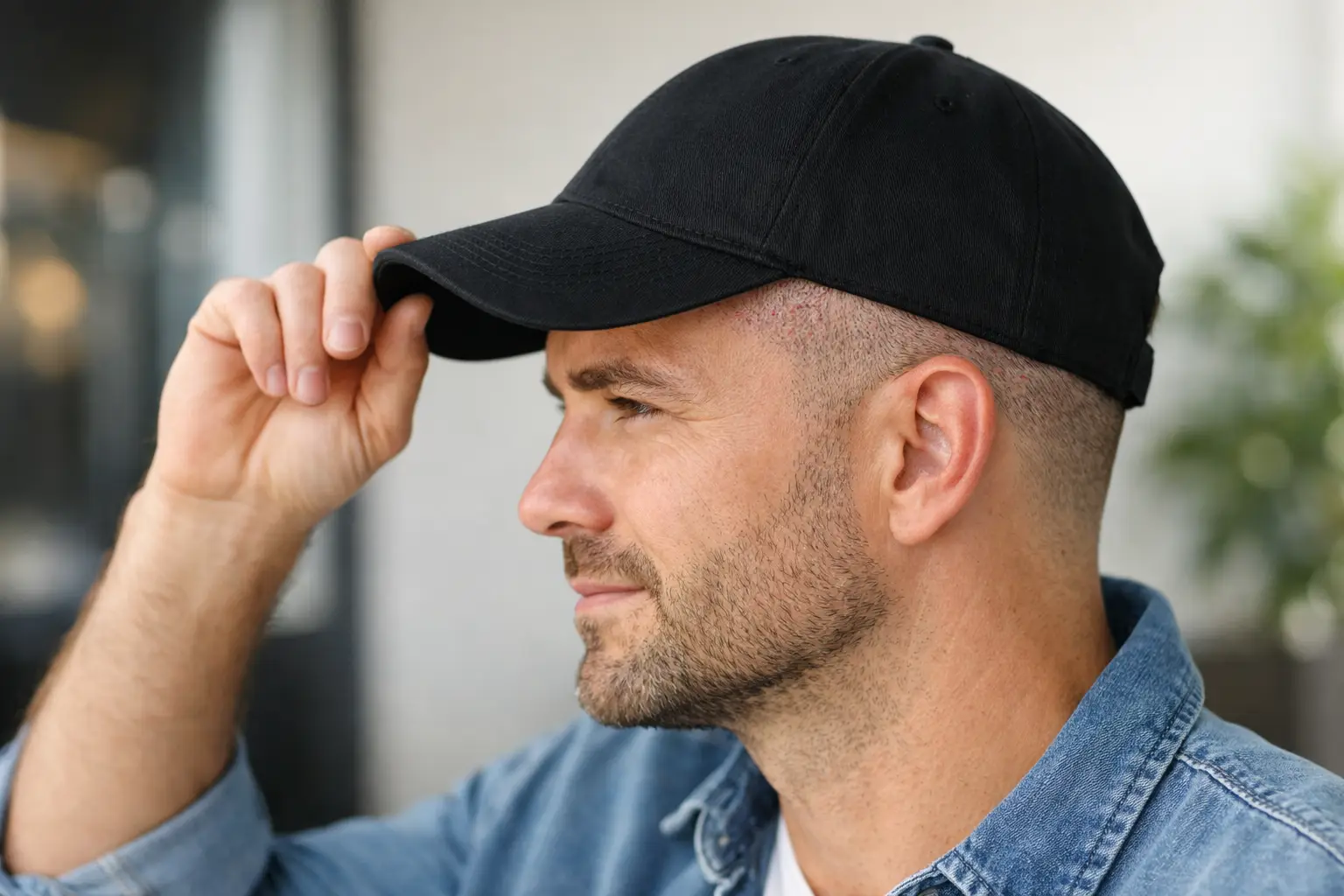
The question of is it ok to wear a hat after hair transplant usually comes up before patients have even left the clinic. It is a practical concern. You may want privacy on the trip home, need to commute to work, or simply want to keep the Australian sun off your scalp. The short answer is that a hat can be appropriate later in recovery, but wearing one too soon or choosing the wrong fit can put pressure on newly placed grafts.
Your treating medical professional should always give the final advice. Aftercare timelines vary according to the procedure performed, the number and placement of grafts, how your scalp is healing and whether there are any individual risk factors to manage.
Is It OK to Wear a Hat After Hair Transplant Surgery?
In the first few days after a hair transplant, it is generally best to avoid hats unless your treating clinician has specifically approved one. Fresh grafts need time to settle and establish their blood supply. A close-fitting cap, beanie or hat that rubs the recipient area may dislodge grafts or irritate the scalp.
Many post-operative protocols allow a very loose, clean hat after roughly 7 to 10 days, but this is not a universal rule. Some patients may be cleared earlier with a carefully selected loose-fitting option, while others should wait longer. If you have had extensive work at the hairline, crown or across a larger area, your clinician may take a more cautious approach.
The key issue is not just whether you wear a hat. It is how it sits on your scalp, how you put it on and take it off, and whether it creates friction or pressure over healing grafts. A hat that feels comfortable can still catch on scabs when removed carelessly.
Why the Early Recovery Period Matters
A hair transplant involves relocating hair follicles from a donor area, often at the back and sides of the scalp, into areas affected by thinning or recession. Whether your procedure uses follicular unit extraction (FUE) or another technique, the recipient sites need gentle care in the initial healing phase.
During the first week, small scabs, redness and tenderness are common. These are normal parts of recovery, but they make the scalp more vulnerable to rubbing. Pressure from headwear can also cause discomfort, particularly if there is post-procedure swelling around the forehead or upper scalp.
Patients sometimes assume a hat is safer than direct sun exposure, which is understandable. However, protecting the grafts from pressure comes first in the earliest days. Your clinic may recommend other forms of protection while you are waiting for approval to wear a hat, such as staying in the shade, limiting time outdoors and using an umbrella when practical.
Recipient Area Versus Donor Area
The recipient area requires the most protection because it contains the transplanted follicles. Avoid anything that compresses, scrapes or drags across this area. The donor area also needs care, especially after FUE, where small extraction sites can feel tender, or after strip surgery, where there may be a linear incision to protect.
This is why one person's advice may not be right for another. A friend who had a small FUE procedure and wore a loose cap within a week may have received different instructions to someone who has had a larger transplant or a different surgical technique.
When Can You Wear a Hat After a Hair Transplant?
Your individual aftercare plan is the most reliable guide. As a broad principle, wait until your medical professional confirms that the grafts are secure enough for loose headwear. For many patients, this falls around the one-week mark or slightly later.
Once you have been cleared, choose a hat that does not grip the scalp. A loose bucket hat or a soft, adjustable cap may be more suitable than a structured, fitted cap. The hat should rest lightly rather than press into the front hairline, crown or transplant zone.
Take it on and off slowly. Rather than pulling a cap down over the top of your head, loosen the adjustment first and lift it away carefully. This small step reduces the chance of catching healing skin or scabs.
If wearing a hat causes throbbing, rubbing, increased redness or tenderness, take it off and speak with your clinic. Comfort is useful feedback during recovery, but it should not replace professional advice.
Choosing the Right Hat During Recovery
The best post-transplant hat is clean, loose and breathable. Natural or lightweight fabrics can feel more comfortable in warm weather, particularly if your scalp is still sensitive. A hat with a soft inner band is preferable to one with hard seams, tight elastic or a stiff internal structure.
Avoid borrowing hats during recovery. Your scalp has small healing sites, and using a shared hat can introduce bacteria or irritants. Wash or clean your chosen headwear before use, and keep it dry. A sweaty cap left in the car or gym bag is not a good option for a healing scalp.
For the first few weeks, it is wise to avoid tight beanies, fitted baseball caps, helmets and hard hats unless your treating clinician has given specific clearance. This can be inconvenient for work, cycling or sport, but protecting the result of your procedure is worth planning for. If your role requires safety headwear, discuss your return-to-work timing before treatment so you can make suitable arrangements.
Sun Protection Without Risking Your Grafts
Australian sunlight can be harsh, and recently transplanted skin is more sensitive to UV exposure. Direct sun can worsen redness, discomfort and pigmentation changes while the scalp heals. It may also make scabbing more noticeable.
In the first stage of recovery, use practical sun avoidance rather than forcing a hat on too early. Schedule outdoor errands outside peak UV periods where possible, choose shaded routes and keep outdoor exposure brief. Once approved by your clinician, a loose hat becomes a useful layer of protection.
Do not apply sunscreen directly to the recipient area until your clinic says it is appropriate. Early on, products can irritate healing skin or interfere with aftercare instructions. Once the scalp has healed sufficiently, your medical professional can advise when sunscreen and normal grooming products can return to your routine.
Common Hat Mistakes to Avoid
Most problems are avoidable. Patients are usually trying to be discreet or protect themselves from the weather, but a few habits can create unnecessary risk:
- Wearing a tight cap before the clinic-approved timeframe.
- Pulling a hat on or off quickly over the transplant area.
- Using a dirty, sweaty or shared hat.
- Wearing helmets or firm work headwear before healing is sufficiently advanced.
It is also worth avoiding the temptation to check your grafts repeatedly under a hat or adjust the brim throughout the day. The less touching and rubbing in the early recovery period, the better.
When to Contact Your Clinic
Mild redness, scabbing and sensitivity are expected after a hair transplant. However, contact your treating clinic promptly if you notice increasing pain, spreading redness, warmth, significant swelling, discharge, a fever, bleeding that does not settle, or grafts that appear to have been knocked out.
If you accidentally wear a hat too early, do not panic. Remove it carefully, avoid further contact with the area and call the clinic for advice. A brief, gentle contact does not automatically mean the transplant has been affected, but early guidance can provide reassurance and help you protect the area from that point onward.
Hair restoration is a medical procedure, and clear aftercare is part of protecting your investment. At Luxe Medical Procedures, hair transplant care is carried out by medical professionals who can provide guidance based on your procedure and recovery progress.
A hat will soon return to being a simple part of getting dressed. Until your clinician gives the go-ahead, give your scalp the space, cleanliness and sun protection it needs to heal well.