
How to Manage Hair Transplant Swelling Safely
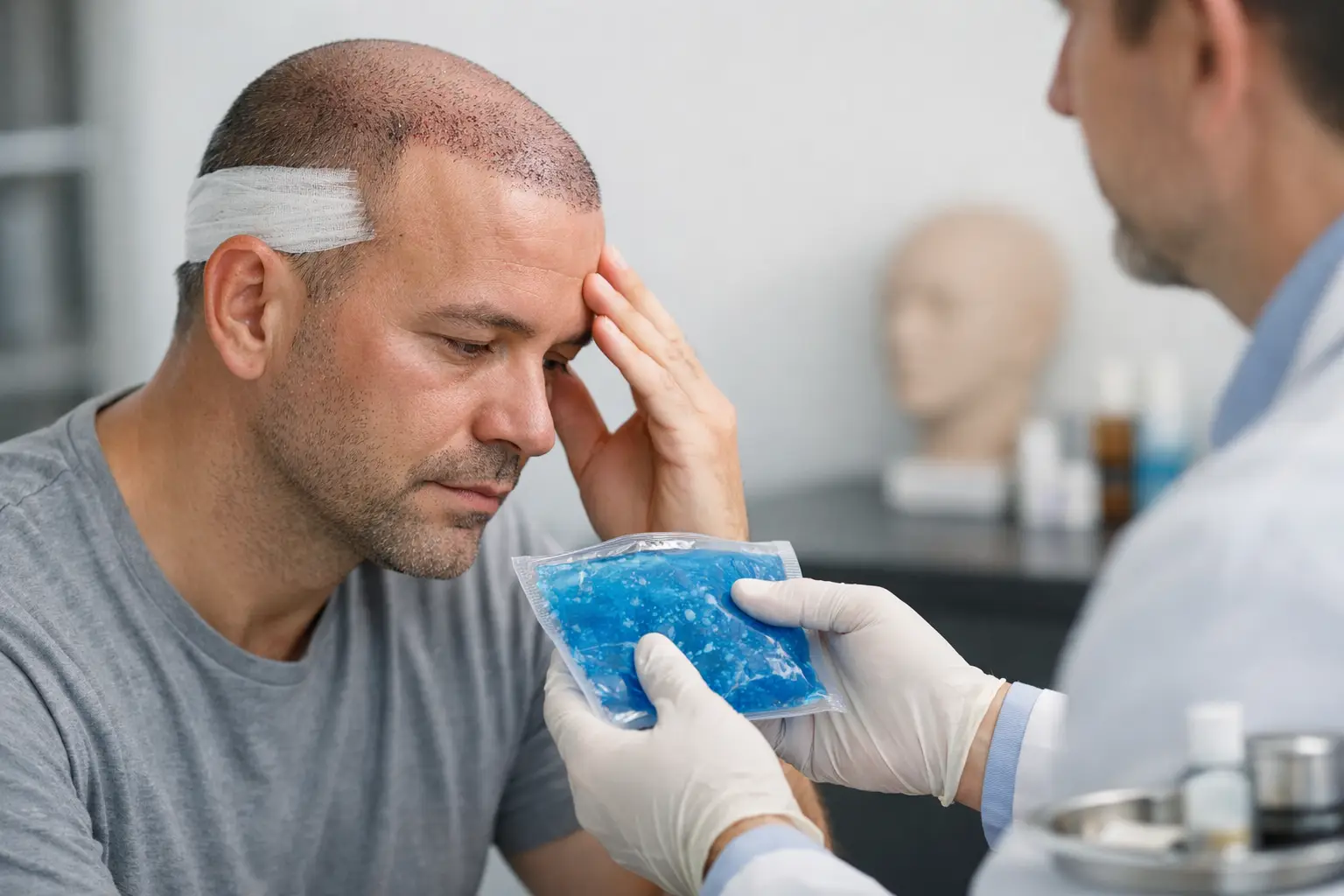
Swelling around the forehead, upper face and eyes can look more alarming than it feels after a hair transplant. It is a common part of early healing, but knowing how to manage hair transplant swelling can make recovery more comfortable and help you recognise when clinical advice is needed.
For most patients, swelling is temporary and settles without affecting the transplanted grafts. Your treating medical professional’s aftercare instructions should always take priority, as the right approach can vary according to the procedure performed, your medical history and any prescribed medicines.
Why swelling happens after a hair transplant
A hair transplant involves making tiny incisions in the recipient area and, depending on the technique, collecting grafts from a donor area at the back or sides of the scalp. Your body responds to this controlled trauma with inflammation, which is a normal healing process. Fluid can then move downwards from the scalp towards the forehead and eyelids due to gravity.
Swelling usually begins within the first couple of days after treatment. It may be most noticeable between days two and four, particularly around the forehead or eyes, before gradually improving over the following days. Some people experience very little swelling, while others notice a more obvious puffiness. This does not necessarily indicate a problem or predict the final hair growth result.
The amount of swelling can depend on the number of grafts placed, the area treated, the fluid used during the procedure, individual healing tendencies and whether aftercare guidance is followed closely. Larger sessions can sometimes produce more noticeable swelling, but this should be discussed during your consultation so you know what to expect.
How to manage hair transplant swelling at home
The most useful aftercare measures are generally simple. They are designed to reduce fluid movement, protect the newly placed grafts and give your scalp time to heal.
Sleep with your head elevated
For the first few nights, sleep on your back with your head elevated. Your clinic may recommend using extra pillows or a travel pillow to help prevent rolling onto the treated area. Elevation can reduce the amount of fluid settling around the forehead and eyes overnight.
Avoid sleeping face-down or placing pressure directly on the transplanted area. This is not only uncomfortable when you are swollen, but may also disturb delicate grafts during the early recovery period.
Use cold compresses carefully
A cold compress may help reduce discomfort and swelling around the forehead or eyes. However, it must never be placed directly on the grafted recipient area or donor area unless your medical professional has specifically instructed you to do so.
Wrap the compress in a clean cloth and apply it gently to the forehead, above the eyebrows, for short intervals. Do not use excessive pressure, and keep it away from the grafts. The goal is to cool the surrounding facial area, not the treated scalp.
Take medicines exactly as prescribed
Your treating clinician may prescribe medication to support recovery, such as pain relief, antibiotics or anti-inflammatory medication where appropriate. Take these exactly as directed and do not add over-the-counter medicines, herbal products or supplements without checking first.
Some products can increase bleeding risk or interact with prescribed medication. Aspirin and certain anti-inflammatory medicines, for example, may not be suitable immediately after a procedure unless your clinician has advised otherwise.
Follow washing and activity instructions
Gentle washing is usually introduced according to a set schedule. Keeping to the recommended technique protects grafts and helps keep the scalp clean without unnecessary rubbing. Avoid directing high-pressure water onto the transplant area or using fingernails to remove crusting.
For the first stage of recovery, avoid strenuous exercise, heavy lifting, saunas, steam rooms and activities that cause significant sweating. These can increase blood flow and discomfort, and may worsen swelling for some patients. A quiet walk is often more suitable than a gym session in the first few days, but follow the timeframe given by your clinic.
Stay hydrated and limit salt and alcohol
Drink water regularly and eat normally, with an emphasis on balanced meals. Very salty foods may contribute to fluid retention in some people, so it can be sensible to keep salt intake moderate while swelling is present.
Alcohol should be avoided for the period advised by your treating professional. It can contribute to dehydration, affect blood vessels and interact with medication. Smoking and nicotine products should also be avoided where advised, as they can interfere with circulation and wound healing.
What not to do during early recovery
It can be tempting to check the hairline constantly, press on a puffy forehead or try to speed up healing with products found online. Early recovery is the time to be cautious. Do not massage the transplanted area, pick at scabs or attempt to drain any swelling yourself.
Avoid hats, helmets or tight headwear until your clinician confirms they are safe to wear. Likewise, postpone haircuts, colouring products and styling products until you have been given clearance. A professional aftercare plan is more reliable than social media advice, particularly because no two procedures and recovery plans are exactly alike.
When swelling needs medical advice
Typical post-procedure swelling should be mild to moderate, should improve over time and should not be accompanied by severe symptoms. Contact your treating clinic promptly if swelling becomes rapidly worse, lasts longer than expected or concerns you at any stage.
Seek urgent medical advice if you develop severe or increasing pain, spreading redness, warmth, pus or unusual discharge, fever, shortness of breath, a rash, facial swelling beyond the expected treatment area, or changes to vision. These symptoms may indicate infection, an allergic reaction or another issue that needs assessment.
It is also worth calling your clinic if you are unsure whether a symptom is normal. Good hair transplant care does not end when the procedure is complete. Access to trained medical professionals during recovery provides reassurance and allows concerns to be addressed early.
Plan for a comfortable recovery window
Many patients find it helpful to schedule their procedure before several quieter days at home. If your work involves meetings, travel, physical labour or public-facing duties, allowing time for visible swelling to settle can reduce stress. Some people are comfortable returning to desk-based work quickly, while others prefer up to a week away from social commitments.
Prepare your recovery space before the appointment. Have clean pillows available, arrange easy meals, keep your prescribed aftercare supplies nearby and limit commitments that may tempt you to exercise, drink alcohol or stay up late. Small practical choices can make the first few days feel far more manageable.
A hair transplant is a medical procedure, and recovery deserves the same care and attention as the treatment itself. At Luxe Medical Procedures, hair-restoration treatments are carried out by medical professionals, with clear aftercare guidance designed to support a safe and confident recovery.
Swelling is usually a short chapter in the longer process of hair restoration. Give your body time, protect the grafts and stay in contact with your treating team so you can focus on the progress ahead rather than a temporary change in the mirror.