
How to Protect Donor Area After Transplant
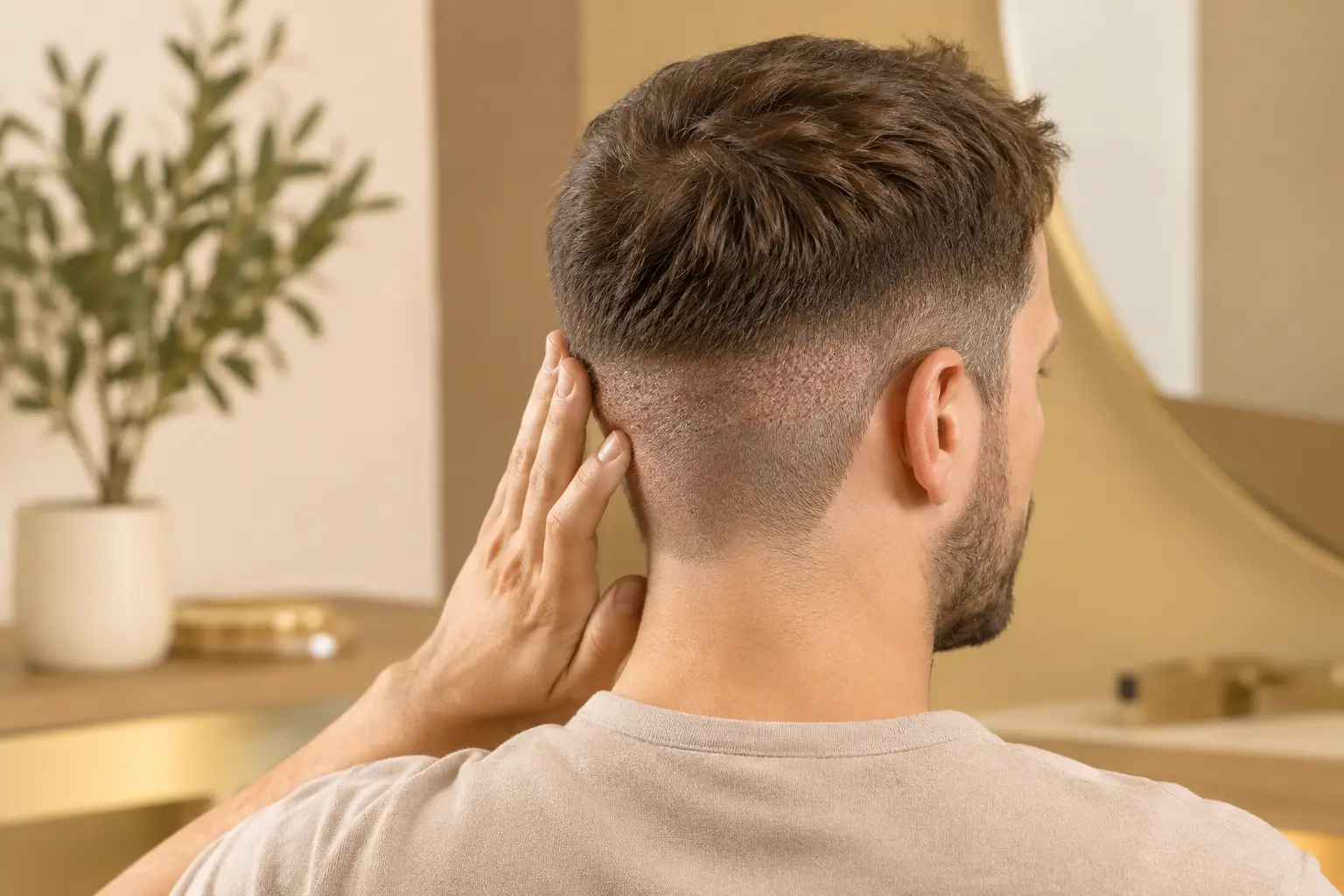
The donor area is where healthy follicles are taken from during a hair transplant, usually from the back or sides of the scalp. Knowing how to protect donor area after transplant helps reduce avoidable irritation, supports normal wound healing and gives your transplanted hair the best conditions to settle in. Your own aftercare plan from the medical professional who carried out your procedure should always take priority, as instructions can vary according to the technique used and your individual health.
Why donor-area care matters
Whether follicles were removed using follicular unit extraction (FUE) or follicular unit transplantation (FUT), the donor area needs time to heal. With FUE, there are many small extraction sites that form tiny scabs. With FUT, a narrow strip of scalp is removed and the area is closed with sutures or staples. Both methods can leave temporary tenderness, numbness, tightness or mild swelling.
The donor area often feels less delicate than the recipient area, where follicles have been implanted. That can lead people to overlook it. However, scratching, friction, excess sweating or ignoring signs of infection can delay healing and affect the appearance of the donor zone. Careful aftercare is not complicated, but it does require patience for the first few weeks.
Protect the donor area after transplant: the first 48 hours
The first two days are about minimising contact and avoiding pressure. Follow the dressing and cleaning instructions provided by your clinic. If a bandage has been applied, do not remove it early unless you have been specifically told to do so.
Sleep with your head elevated on extra pillows for the first few nights if advised. This can help manage swelling and makes it less likely that you will rub the back of your scalp against bedding. A soft, clean pillowcase is a sensible choice, and some patients find a travel pillow useful for staying in position.
Avoid touching the donor area except when cleaning or applying a product prescribed or approved by your clinician. Even clean hands can catch scabs or transfer bacteria. If you need to check the area, use a mirror rather than repeatedly feeling it with your fingertips.
You should also avoid driving if you have taken sedating medication, and arrange a quiet recovery period where possible. This is not the time for gym sessions, house moves, long days in the sun or physically demanding work.
Gentle washing supports healing
Your clinic will tell you when and how to wash your hair. In many cases, gentle washing begins after a short initial period, but the timing differs between FUE and FUT procedures and may be adjusted for your scalp.
When you are cleared to wash, use lukewarm water and the recommended shampoo. Let water flow gently over the area rather than directing a high-pressure shower stream at it. Apply shampoo with a light dabbing motion if instructed, then rinse carefully. Do not scrub with your nails, rub with a towel or try to lift scabs before they are ready to come away naturally.
Pat the area dry using a clean, soft towel, or follow your clinic's advice about air drying. Hair dryers should generally be avoided early on, particularly hot settings, as heat and airflow can irritate a sensitive scalp.
Itching commonly occurs as healing progresses. Although it can be frustrating, scratching is one of the easiest ways to disturb healing skin. Ask your clinician what is suitable if itching becomes difficult to manage. They may recommend a particular saline spray, moisturising approach or medication based on your circumstances.
Avoid friction, sun and sweat while the skin recovers
A practical way to protect the donor area is to think about what comes into contact with it throughout the day. Tight caps, helmets, beanies and clothing that catches on the scalp can create friction. Wait until your medical professional says it is safe before wearing headwear, especially anything snug or rough.
Sun exposure is another consideration. Freshly healed donor skin may be more sensitive and can darken or become irritated if exposed to ultraviolet light. Stay in the shade where practical and ask your clinic when you can safely use a loose-fitting hat or sunscreen on the area. Do not apply sunscreen, hair fibres, styling products or concealers to healing sites without clinical guidance.
Exercise increases blood flow, sweat and the chance of bumping or rubbing the scalp. Gentle walking may be appropriate after a short period, but strenuous exercise, swimming, contact sport, saunas and spas typically need to wait. The right timeframe depends on your procedure and recovery, so do not rely on a generic online schedule.
Alcohol and smoking can also work against healing. Alcohol may worsen swelling or interact with medications, while smoking reduces blood flow and can impair tissue repair. If you smoke, your clinician can advise on the safest approach before and after your procedure.
What is normal during donor-area recovery?
Most people experience some combination of redness, small scabs, tenderness, itching and temporary numbness. With FUE, the small extraction points usually become less noticeable as the scalp heals. With FUT, there may be tightness around the linear incision while it settles.
The pace of recovery is individual. Skin type, the number of grafts taken, existing scalp conditions and adherence to aftercare all play a part. Hair around the donor area can sometimes shed temporarily after surgery, known as shock loss. This can be concerning, but it is often temporary. Your treating clinician is best placed to assess whether what you are seeing fits your expected recovery.
Scars are a normal possibility with any surgical hair restoration procedure. FUE generally leaves small dot-like scars, while FUT leaves a linear scar. Skilled technique, appropriate graft planning and careful aftercare all matter, but no reputable provider should promise a completely scar-free procedure.
When to contact your clinic
Mild discomfort and redness are common, but symptoms that worsen rather than gradually improve deserve prompt advice. Contact your clinic if you notice increasing pain, spreading redness, warmth, significant swelling, pus-like discharge, a bad smell, fever or bleeding that does not settle with the instructions you were given.
You should also get in touch if sutures or staples appear to be pulling, if a wound opens, or if you are unsure whether a product or activity is safe. It is far better to ask early than to continue with an aftercare routine that is not right for your scalp.
Do not self-treat a suspected infection with leftover antibiotics, harsh antiseptics or home remedies. Your medical professional can determine whether you need an assessment and the appropriate treatment.
A realistic recovery routine
For many patients, the key to donor-area recovery is consistency rather than doing more. Keep your scalp clean according to instructions, take prescribed medication as directed, protect the area from rubbing and sun, and attend follow-up appointments. Photos taken at agreed intervals can also help your clinic monitor healing and answer questions accurately.
It can be tempting to inspect every scab or compare your scalp to someone else's recovery photos. Try to focus instead on your personalised plan. Hair transplant outcomes develop over months, while early healing changes can look more dramatic than they are.
At Luxe Medical Procedures, hair transplants are carried out by medical professionals who can guide you through preparation, recovery and realistic expectations. A clear aftercare plan should be part of the procedure, not an afterthought.
Give the donor area the same care you give the newly transplanted follicles: keep it clean, leave it alone when possible and speak with your clinic whenever something does not feel right. That steady approach gives your scalp the calm conditions it needs to heal.