
PRP Hair Results: What You Can Realistically Expect
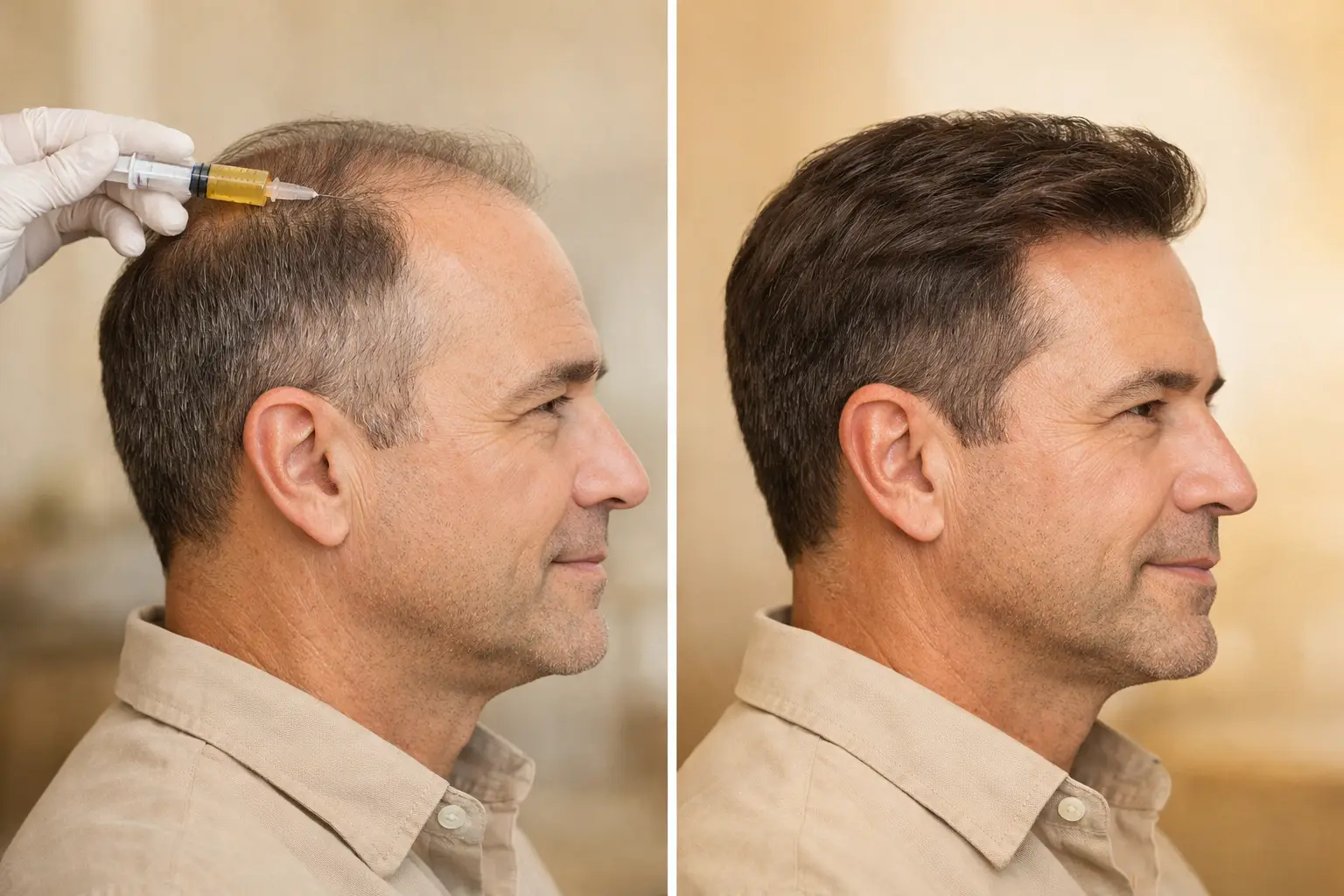
Hair thinning rarely feels like a small change when you see it in the mirror each morning. People researching PRP hair results usually want a clear answer: will it make my hair grow back? The honest answer is that PRP can support hair growth and improve the appearance of density for suitable candidates, but outcomes depend on the cause and stage of hair loss, the treatment plan and individual response.
PRP, or platelet-rich plasma, is a clinically administered treatment that uses a concentrated portion of your own blood. It is commonly considered by people with early to moderate thinning who want a non-surgical option, or who wish to support existing hair alongside a broader hair-restoration plan.
What PRP hair results can look like
PRP treatment is designed to support weakened hair follicles using growth factors found in platelets. After blood is collected, it is processed to concentrate the platelet-rich plasma before being carefully injected into areas of thinning scalp by a qualified medical professional.
When treatment is suitable and responds well, PRP hair results may include less shedding, stronger-feeling hair and improved thickness in existing hairs. Some patients notice that their scalp is less visible under bright light, or that styling becomes easier as fine hairs gain more substance. These changes can be meaningful, particularly at the crown or through diffuse thinning, but PRP does not create unlimited new follicles.
That distinction matters. PRP generally works best where follicles are still present but becoming finer and less productive. A smooth, long-standing bald area may have few viable follicles left to stimulate. In that situation, a hair transplant may be the more appropriate way to restore coverage, with PRP potentially used as a complementary treatment where clinically advised.
When will you see results from PRP for hair?
Hair follows a slow growth cycle, so PRP is not an overnight treatment. Some people first notice reduced shedding or a change in hair texture within the first few months. More visible changes in density commonly take several months, as hairs move through their natural growth phases.
A course of initial sessions is often recommended rather than a single appointment. The exact number and spacing should be determined during a medical consultation, based on your pattern of hair loss, scalp condition and treatment goals. Maintenance sessions may also be recommended to help preserve results over time.
It helps to take consistent progress photographs before treatment and at planned intervals afterwards. Use similar lighting, angles and hair length where possible. Hair can look dramatically different after a cut, in direct sun or when wet, so comparison photographs give a more reliable view than day-to-day mirror checks.
Why results vary between patients
The cause of hair loss is one of the biggest factors. Pattern hair loss, also called androgenetic alopecia, may respond differently from shedding linked to illness, nutritional deficiency, medication changes, hormonal shifts or scalp inflammation. PRP is not a substitute for investigating a sudden or unexplained change in hair loss.
Results can also vary according to how early treatment begins. Someone with recent thinning and a good supply of miniaturised hairs may have more scope for improvement than someone with advanced loss over many years. Genetics, age, general health, smoking status and adherence to the recommended treatment schedule can all influence the outcome.
For this reason, credible PRP care starts with assessment rather than a promise. A medical professional should review your history, examine the pattern of thinning and discuss whether PRP is suitable on its own or better used alongside another treatment.
PRP is about improvement, not a guaranteed hairline
Marketing images can create the impression that every patient will achieve a dramatic transformation. Realistic expectations are more useful. PRP may improve the calibre, quality and apparent density of existing hair. It may slow further thinning for some people. It cannot guarantee a particular number of new hairs, permanently stop hereditary hair loss or reproduce the result of a surgical transplant in an area without functioning follicles.
The most satisfying outcomes are often subtle enough that others notice you look well, rather than immediately identifying a treatment. For many patients, that is exactly the goal: hair that looks fuller and healthier without a surgical procedure or a lengthy recovery period.
If a more defined hairline or major restoration of a bald area is the priority, a hair transplant consultation may be worthwhile. Transplant surgery redistributes healthy follicles from a donor area to areas of loss, while PRP aims to support the scalp and existing follicles. They are different procedures with different roles, costs and recovery considerations.
Is PRP right for your type of hair loss?
PRP may be considered for men and women experiencing early pattern thinning, widening parts, diffuse loss or reduced density around the crown. It can be appealing if you are not ready for surgery, have enough existing hair to support, or want a treatment plan that is based on your individual presentation.
It may be less suitable when hair loss is caused by an untreated medical issue, active scalp infection or a condition requiring specialist management. Certain medical conditions and medications can also affect eligibility. This is why treatment should be carried out by medical professionals who can consider your health history, not offered as a generic cosmetic add-on.
During consultation, be prepared to discuss when the thinning began, whether it runs in your family, any recent health changes and treatments you have already tried. Clear information helps build a plan that is appropriate, safe and financially sensible.
How to make a fair assessment of PRP hair results
Give treatment enough time before deciding whether it is working. Judging results after one session, or comparing your hair with an edited online image, can lead to disappointment. Agree on a review point with your clinician and use consistent photographs to assess changes in density, shedding and coverage.
It is also worth considering the full plan rather than focusing only on the per-session price. A lower-priced treatment without proper assessment, sterile clinical processes or trained administration can be a false economy. PRP involves blood collection, processing and injections into the scalp, so professional oversight is central to both safety and the quality of care.
At Luxe Medical Procedures, PRP treatments are carried out by medical professionals, with consultations focused on whether the procedure suits your hair-loss pattern and goals. For patients in Newcastle, Brisbane or Perth, an in-person assessment can clarify whether PRP, hair transplantation or another pathway is likely to offer the most realistic value.
What happens after treatment?
Most people can return to normal daily activities soon after PRP, although the scalp may feel tender or look mildly red for a short period. Your clinician will provide aftercare instructions tailored to your treatment. Follow these closely, particularly regarding hair washing, exercise, scalp products and pain relief.
Temporary tenderness, swelling, bruising or a headache can occur after scalp injections. As with any medical procedure, there are risks, and these should be explained before you consent to treatment. Seek advice promptly if you experience symptoms that concern you.
The value of PRP is not in a dramatic promise. It is in having a clinically guided option that may help protect and improve the hair you still have - and a clear assessment when another treatment would serve you better.