
Do PRP Injections for Hair Restoration Work?
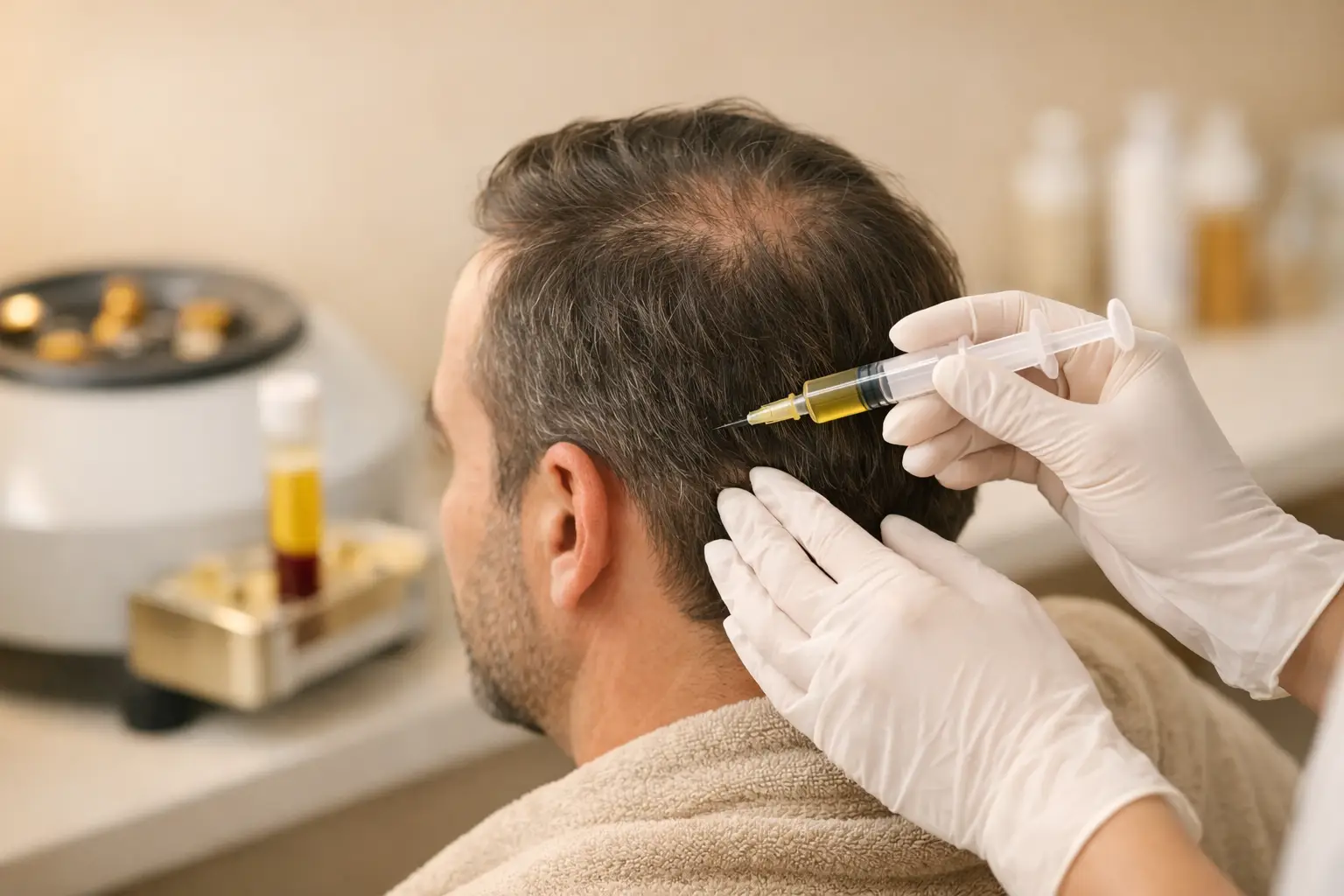
A widening part, a more visible scalp under bright lights or a receding hairline can change how people feel about their appearance long before hair loss becomes obvious to anyone else. PRP injections for hair restoration offer a clinically administered, non-surgical option for people who want to support thinning hair using their own blood components - but the right expectations matter as much as the treatment itself.
PRP is not a replacement for every hair-loss treatment, and it cannot create new follicles where none remain. For suitable patients, however, it may help improve the condition of weakened follicles and support thicker-looking, healthier existing hair. A consultation with a qualified medical professional is the starting point for deciding whether it fits your pattern of hair loss, medical history and goals.
How PRP injections for hair restoration work
PRP stands for platelet-rich plasma. Platelets are naturally present in blood and contain growth factors involved in tissue repair and cell signalling. During a PRP treatment, a small blood sample is taken and placed in a centrifuge. This separates and concentrates the platelet-rich portion of the blood, which is then carefully injected into areas of the scalp affected by thinning.
The aim is to deliver concentrated platelets around hair follicles that are still active but may be producing finer, shorter hairs. In androgenetic alopecia, commonly called male or female pattern hair loss, follicles can gradually shrink over time. PRP may help support the follicle environment and encourage stronger growth from hairs that are still capable of responding.
This is why PRP is generally more relevant for early to moderate thinning than for completely smooth areas of scalp where follicles have been absent for years. It is a medical procedure, not a salon service, and should be carried out by trained medical professionals using appropriate clinical protocols.
Who may be suitable for PRP treatment?
PRP is often considered by men and women with diffuse thinning, early crown thinning, a widening part or gradual recession. It can also be used as part of a broader hair-restoration plan for patients who want a non-surgical treatment, or who are considering a future hair transplant and want to protect existing hair.
Suitability depends on the cause of the hair loss. Pattern hair loss is common, but sudden shedding may be linked to illness, stress, nutritional deficiency, thyroid concerns, hormonal changes, medication or scalp conditions. Treating the wrong cause can waste time and money, which is why a proper assessment is valuable before committing to a course of injections.
A clinician will also consider factors such as your scalp health, blood conditions, current medications and whether you have an active infection. PRP may not be appropriate for everyone, including some people with platelet disorders or certain medical conditions. Being open about your health history helps your practitioner recommend the safest pathway.
What happens during a PRP appointment?
Most appointments begin with a discussion of your hair-loss history, treatment goals and any relevant health information. Your clinician may examine the pattern and density of your hair, assess the scalp and, where appropriate, take photographs so changes can be reviewed over time.
The blood collection itself is similar to a standard blood test. After the sample is processed, the prepared PRP is injected into targeted areas of the scalp using fine needles. Some patients describe brief pressure, pinching or stinging. A topical numbing option may be discussed depending on the treatment plan and clinic protocol.
There is usually little downtime. Mild redness, tenderness, swelling or a tight feeling in the scalp can occur for a short period afterwards. Your practitioner will provide individual aftercare guidance, including when to wash your hair, exercise and use hair products. Following those directions gives the treated area time to settle.
When will you see results?
Hair growth is slow, so PRP is not an overnight solution. Some people notice reduced shedding or an improvement in hair quality first. Visible changes in thickness or density, when they occur, usually take several months because the hair growth cycle needs time to respond.
A treatment series is commonly recommended rather than a single appointment. The number and spacing of sessions varies according to the person, their degree of thinning and their response to treatment. Maintenance sessions may also be advised to help sustain results, particularly where pattern hair loss is ongoing.
Results can vary significantly. Age, genetics, the stage of hair loss, scalp health and consistency with the treatment plan all play a part. PRP can be a worthwhile option for the right candidate, but no ethical provider should promise a particular amount of regrowth or guarantee that it will prevent future loss.
Safety, side effects and the value of clinical care
Because PRP uses a component of your own blood, the likelihood of an allergic reaction to the injected product is low. That does not mean the procedure is risk-free. Temporary discomfort, bruising, swelling, headache and scalp sensitivity can occur. As with any injection-based treatment, there is also a small risk of infection or injury if the procedure is not performed carefully in an appropriate clinical setting.
Choosing a provider based on the cheapest advertised price alone can overlook important differences in consultation quality, practitioner training, sterility standards and follow-up care. Affordable treatment should still involve clear clinical oversight, realistic discussion of outcomes and a plan tailored to your needs.
At Luxe Medical Procedures, PRP treatments are positioned as medical hair-restoration procedures carried out by medical professionals. That distinction matters when you are placing your care - and your confidence - in someone else's hands.
PRP, hair transplants and other treatments
PRP is often one part of a broader approach rather than a stand-alone answer. For people with active but thinning follicles, it may be used alongside medically appropriate hair-loss management strategies. A clinician can explain whether prescription treatment may be relevant and suitable for you, including potential benefits and side effects.
A hair transplant is different. It redistributes healthy follicles from a donor area, usually at the back or sides of the scalp, into areas where hair has thinned or been lost. Transplant surgery may be more appropriate when hair loss is advanced, the affected area has few viable follicles or a patient is seeking to restore a receded hairline.
PRP may be considered before or after a transplant in some treatment plans, but it does not substitute for donor hair in an area that no longer has functioning follicles. Conversely, surgery may be unnecessary for someone whose hair loss is early and stable. The most cost-effective option is not always the procedure with the lowest initial price - it is the one that matches the condition being treated.
Questions worth asking before treatment
Before proceeding, ask who will assess you and perform the injections, what the recommended schedule is and why it suits your hair-loss pattern. It is also reasonable to ask what results are realistic in your case, what the total expected cost may be including maintenance, and how progress will be monitored.
You should leave a consultation understanding both the potential value and the limits of PRP. Clear answers are particularly important if you have seen dramatic before-and-after images online. Individual photographs do not predict your outcome, and lighting, hair length and styling can affect how density appears.
Hair loss can feel personal, but seeking professional advice does not mean you need to rush into treatment. A considered clinical assessment can clarify whether PRP is appropriate now, whether another option is likely to offer better value, or whether monitoring your hair over time is the sensible next step.