
PRP Versus Microneedling for Thinning Hair
Hair thinning rarely feels like a minor change when you are the person seeing more scalp in the mirror or a widening part in photos. When comparing PRP versus microneedling, the key question is not which treatment is more popular. It is which approach suits the cause, pattern and stage of your hair loss, and whether it is being carried out with appropriate medical oversight.
Both treatments may be considered for people concerned about reduced density, early pattern hair loss or gradual thinning. They are not interchangeable, however. PRP is a medical treatment using a concentrated component of your own blood, while microneedling uses controlled, fine needles to create tiny channels in the scalp. They can sometimes be used as part of the same treatment plan, but they work differently and have different practical considerations.
PRP versus microneedling: the practical difference
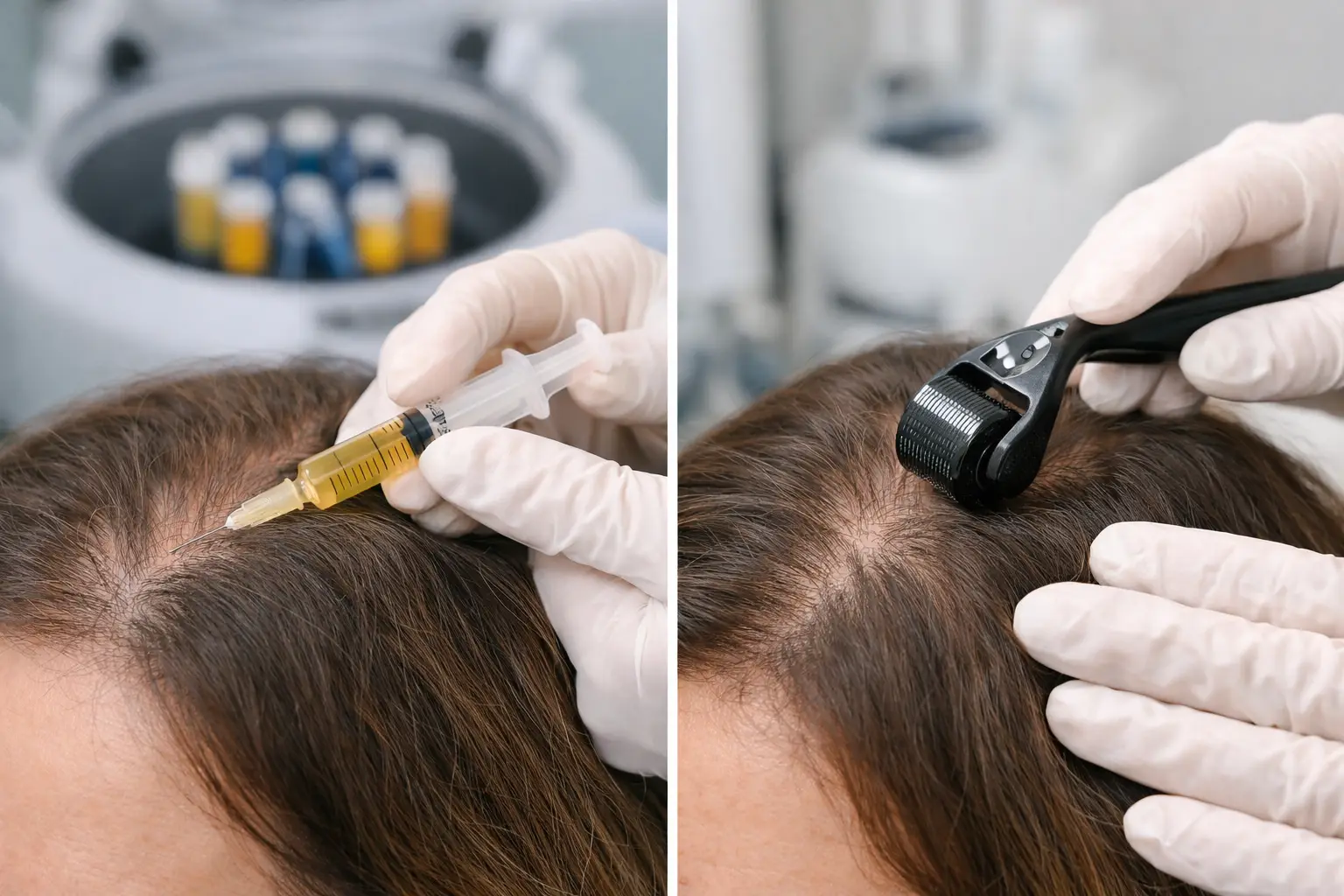
PRP stands for platelet-rich plasma. A clinician takes a small blood sample, processes it in a centrifuge and prepares the platelet-rich portion for treatment. This plasma is then usually administered through a series of small injections into areas of thinning hair.
Platelets contain growth factors involved in the body's normal repair processes. In hair-restoration settings, PRP is used with the aim of supporting the hair follicles and scalp environment. It is commonly discussed for androgenetic alopecia, also called male or female pattern hair loss, particularly where follicles are still present but producing finer, shorter hairs.
Microneedling does not involve drawing blood or preparing plasma. A trained practitioner uses a medical microneedling device to make controlled micro-injuries in the scalp. This triggers a wound-healing response and may support scalp regeneration processes. Depending on the treatment plan, it may also be used to assist the topical application of clinician-recommended products.
The distinction matters. PRP delivers a prepared biological material directly into the scalp through injections. Microneedling relies on controlled skin stimulation. Neither treatment creates new follicles where follicles have been permanently lost, and neither should be presented as a guaranteed replacement for a hair transplant when surgical restoration is the more appropriate option.
What each treatment may suit
PRP is often considered by people with early-to-moderate thinning who want a non-surgical treatment delivered by medical professionals. It may also be considered before or after a hair transplant as part of a broader plan, depending on the clinician's assessment. Results vary because hair loss has many causes, including genetics, hormonal changes, nutritional issues, medication effects, illness and inflammatory scalp conditions.
Microneedling may appeal to someone seeking a less injection-focused procedure or as an adjunct to another hair-loss strategy. It is generally more relevant when the scalp is healthy and the person is suitable for controlled needling. The depth, device and treatment schedule should not be treated as one-size-fits-all matters. The scalp is different from facial skin, and a treatment intended for hair concerns should be planned accordingly.
For established bald areas, a severely receded hairline or significant follicle loss, it is sensible to discuss whether a hair transplant offers a more direct way to restore visible coverage. PRP and microneedling may help support existing, thinning hair, but they cannot reliably reproduce the density achieved by transplanting healthy follicles into an area where growth is no longer active.
Can PRP and microneedling be used together?
Sometimes, yes. A clinician may recommend a combined approach where appropriate, but combining treatments is not automatically better. The decision should take account of your diagnosis, scalp health, current medications, treatment tolerance and budget.
Some practices apply PRP after microneedling, while others favour PRP injections as a separate procedure. There is no reason to pursue multiple treatments simply because they are available. A credible recommendation explains what each component is intended to do, how it fits your goals and what evidence or clinical reasoning supports the plan in your circumstances.
For many patients, consistency matters more than chasing the most intensive option. Hair grows slowly. Any plan designed to support thinning hair needs time for changes in shedding, hair calibre and density to become assessable. Progress photos taken in the same lighting and from the same angles can be more useful than day-to-day mirror checks.
Treatment experience and recovery
A PRP appointment usually begins with the blood draw and preparation of the plasma, followed by injections across the treatment area. The injection portion can cause brief discomfort, tenderness or a feeling of pressure. Some people experience mild scalp soreness, swelling, bruising or a headache afterwards. These effects are commonly temporary, but your clinician should explain what to expect and when to seek advice.
Microneedling can leave the scalp red, sensitive or mildly swollen for a short period. Pinpoint bleeding may occur during treatment, depending on the depth used. Aftercare commonly involves avoiding unnecessary scalp irritation, intense exercise, sun exposure, swimming and unapproved hair products for the period advised by your practitioner.
The safety of either procedure depends on proper screening, sterile technique and suitable treatment settings. Active scalp infection, significant inflammation, certain skin conditions, a tendency to poor wound healing, blood or platelet disorders, and some medications may affect suitability. Pregnancy, breastfeeding or recent medical changes should also be raised during consultation rather than assumed to be irrelevant.
At-home dermarollers are not a like-for-like alternative to professionally administered scalp microneedling. Device quality, needle depth, hygiene and technique all affect risk. Repeatedly needling an irritated scalp, or using a device incorrectly, can create avoidable inflammation, infection risk or damage.
Cost, timing and realistic expectations
Cost is often a deciding factor, especially because hair-restoration treatment usually involves more than one session. PRP can cost more per appointment than microneedling because it involves blood collection, processing equipment and clinical administration. Microneedling may have a lower individual treatment cost, but the overall expense depends on how many sessions are recommended and whether it is paired with other treatments.
The most useful comparison is not the starting price. Ask about the proposed number of sessions, review appointments, expected maintenance, products or medicines that may be recommended alongside treatment, and whether the provider has accounted for your longer-term hair-loss pattern. An affordable plan should still include appropriate assessment and professional care.
Neither treatment offers an overnight change. Hair cycles operate over months, and a realistic clinician will avoid promising a particular density increase or a fixed timeline. Some people notice reduced shedding or improved hair quality before they see a meaningful cosmetic difference. Others may see little response, particularly if the underlying cause has not been identified or the follicles are no longer viable.
Start with the cause of your hair loss
Before selecting PRP, microneedling or a hair transplant, establish what is driving the thinning. Pattern hair loss is common, but sudden shedding, patchy loss, scalp pain, scaling or rapid changes deserve timely medical assessment. These signs can point to conditions that require a different approach.
A thorough consultation should cover your medical history, family history of hair loss, medications, the pattern and duration of thinning, and examination of the scalp. It should also make room for an honest conversation about what bothers you most: slowing further loss, improving density through the top, rebuilding a hairline, or finding a manageable option within your budget.
PRP and microneedling can both have a place in clinically guided hair-restoration care, but the right choice is personal. A clear consultation with medical professionals gives you a safer basis for deciding whether to support existing follicles, consider transplant surgery, or take a different path altogether.