
Is PRP Versus Minoxidil Treatment Right for You?
Hair loss rarely feels like a minor cosmetic change. A widening part, more scalp showing under bright light or a receding hairline can affect confidence long before it becomes obvious to others. When weighing up PRP versus minoxidil treatment, the most useful question is not which option is universally better. It is which treatment suits the type, stage and cause of your hair loss, as well as your willingness to maintain treatment over time.
Both options can have a role in a medically guided hair-restoration plan. They work differently, involve different levels of commitment and produce different experiences in day-to-day life. A consultation with a qualified practitioner can help establish whether either treatment is appropriate, or whether a combined approach may offer a more suitable path.
PRP versus minoxidil treatment: the key difference
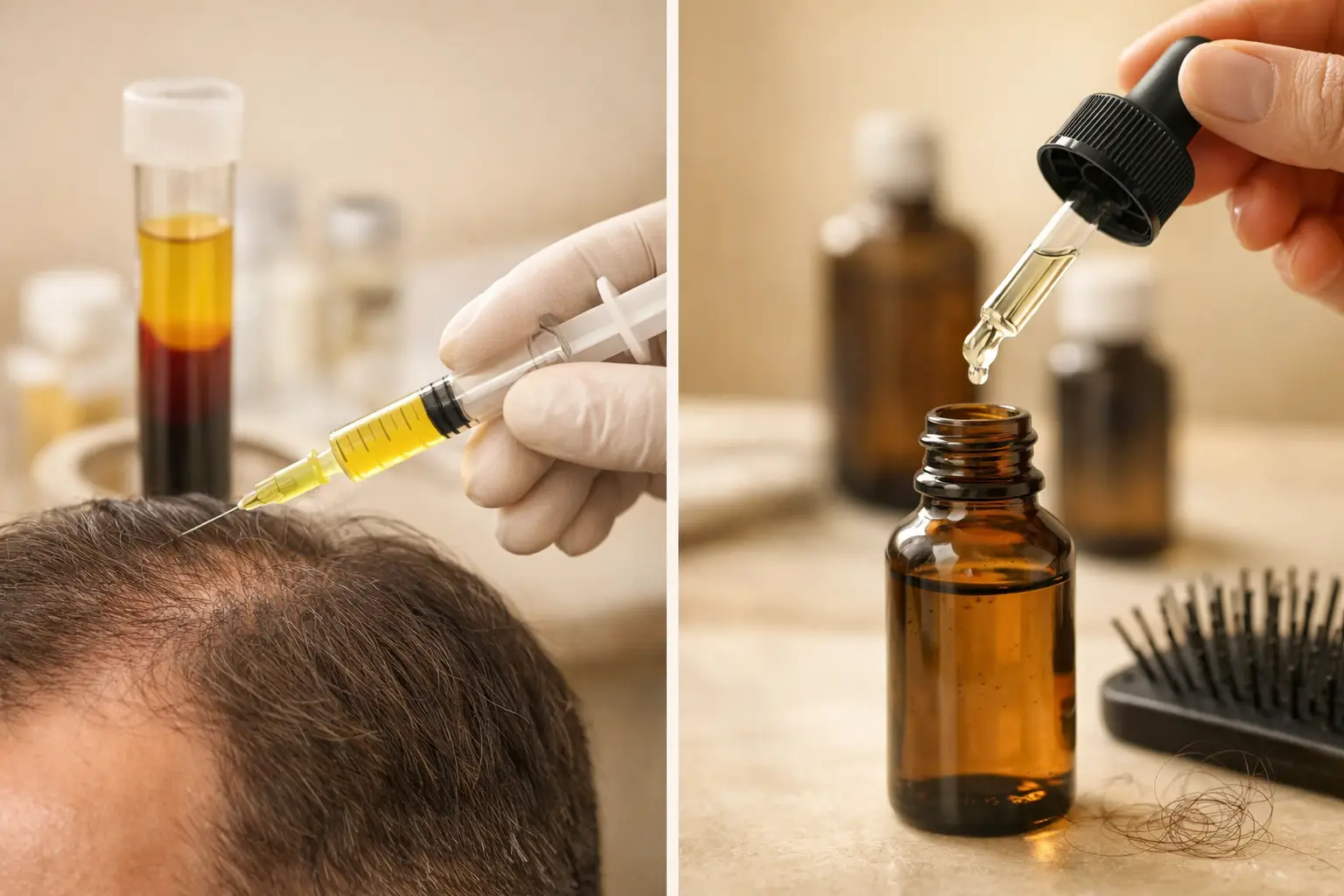
Minoxidil is a medication used to support hair growth in some people with thinning hair. It is most commonly applied to the scalp as a topical solution or foam. It needs regular, ongoing use to maintain its potential benefit. In selected cases, a doctor may discuss oral minoxidil, which is a prescription medicine and requires proper medical assessment and monitoring.
Platelet-rich plasma, or PRP, is a clinical procedure carried out using a small sample of your own blood. The blood is processed to concentrate platelets, then the platelet-rich plasma is injected into areas of scalp thinning by a trained medical professional. Platelets contain growth factors that may support the hair follicle environment and encourage healthier growth activity.
Put simply, minoxidil is generally a self-managed medication used at home, while PRP is an in-clinic treatment delivered by medical professionals. This difference shapes cost, convenience, treatment frequency and the level of professional involvement.
How minoxidil may help with hair thinning
Minoxidil is commonly considered for early or moderate pattern hair loss. It may help prolong the growth phase of the hair cycle and support thicker-looking, fuller hair over time. Results vary considerably, and it does not restore every inactive follicle or create a new hairline where follicles are no longer viable.
Consistency is central to minoxidil treatment. Topical products are often used once or twice daily, depending on the formulation and clinical advice. Missing applications regularly can reduce the chance of a meaningful result. If treatment is stopped, hairs supported by minoxidil may gradually shed and the underlying pattern of hair loss can continue.
Some people find topical minoxidil straightforward and affordable, particularly when they are comfortable building it into their routine. Others dislike the residue, scalp irritation or the need for ongoing daily application. An initial shedding phase can also occur when starting treatment, which can be unsettling without clear guidance from a clinician.
Oral minoxidil is not appropriate for everyone. Because it can have systemic effects, a prescribing doctor needs to consider your medical history, current medications, blood pressure and potential side effects. It should never be started casually or sourced without medical oversight.
What to expect from PRP treatments
A PRP appointment usually involves collecting a blood sample, processing it in a centrifuge and administering the prepared plasma to targeted areas of the scalp. The procedure is relatively efficient, though patients should allow time for the consultation, preparation and aftercare instructions.
PRP is often delivered as a course of treatments, followed by maintenance sessions where clinically appropriate. The recommended schedule depends on your presentation, response and practitioner’s assessment. Hair growth is gradual, so it is reasonable to assess progress over months rather than expecting a visible change after a single appointment.
The appeal of PRP is that it is clinically administered and uses material from your own blood. It can suit people who prefer an in-practice procedure rather than a daily topical product, or those looking to support existing hair alongside other medical or surgical hair-restoration options.
That said, PRP is not a guaranteed regrowth treatment. Research into PRP for hair loss is promising, but protocols, platelet concentrations and patient responses differ. The quality of assessment and procedure delivery matters, which is why treatment should be carried out by appropriately trained medical professionals in a proper clinical setting.
Choosing based on your hair-loss pattern
The earlier hair thinning is addressed, the more opportunity there may be to support existing follicles. Minoxidil or PRP may be considered for diffuse thinning, early pattern hair loss and reduced density around the crown or part line. Neither option can reliably replace the density of hair follicles that have been permanently lost.
For more advanced recession or clearly defined areas of permanent loss, a hair transplant may be the more direct way to restore coverage. PRP and minoxidil can still be discussed as supportive measures for surrounding native hair, depending on your circumstances. This is one reason an individual assessment is more useful than choosing a treatment solely from before-and-after images or online recommendations.
The underlying cause also matters. Pattern hair loss is only one cause of shedding. Stress, illness, nutritional deficiencies, hormonal changes, inflammatory scalp conditions and some medications can all contribute. A clinician can help identify when further medical investigation is needed before proceeding with a hair-restoration treatment.
Cost, commitment and convenience
For many Australians, minoxidil is the more accessible starting point because the ongoing product cost is generally lower than in-clinic procedures. The trade-off is the daily commitment. It only works while it is being used, and the routine must be realistic enough to continue over the long term.
PRP requires a larger upfront investment because it is a medical procedure performed in a clinic. It may feel more convenient for people who prefer scheduled appointments over daily applications, but it still requires follow-up sessions to support an ongoing result. The right option is not necessarily the least expensive one - it is the one you can safely sustain and that aligns with your clinical needs.
During a consultation, ask for a clear treatment plan that outlines the likely number of sessions, expected review points, ongoing maintenance and total anticipated costs. Affordable care should still include proper assessment, informed consent and realistic expectations.
Can PRP and minoxidil be used together?
In some cases, yes. A practitioner may recommend PRP alongside minoxidil because the treatments target hair support through different mechanisms. Combining them may be considered when a person has active thinning and is willing to commit to both a home routine and clinic-based care.
A combination is not automatically necessary, however. More treatment is not always better treatment. If topical minoxidil irritates your scalp, if oral medication is unsuitable, or if clinic visits are difficult to maintain, the plan should be adjusted accordingly. A good treatment plan is practical as well as clinically appropriate.
Safety and professional oversight matter
With any hair-loss intervention, safety begins before treatment. Your practitioner should ask about your health history, medications, allergies, scalp concerns and hair-loss timeline. They should also explain likely benefits, limitations, possible side effects and what to do if you experience a concerning reaction.
Topical minoxidil may cause dryness, irritation or unwanted hair growth beyond the scalp if it transfers to other areas. PRP can involve temporary tenderness, swelling, bruising or headache after injections. While complications are uncommon when procedures are performed appropriately, no medical treatment is entirely without risk.
Be cautious of providers who promise a fixed outcome, recommend treatment without examining your scalp or present PRP as a substitute for every form of hair loss. At Luxe Medical Procedures, PRP treatments and hair-restoration procedures are approached as medical care, with the treatment pathway guided by professional assessment rather than a one-size-fits-all sales pitch.
The best next step is a private consultation while your concerns are still manageable. Whether PRP, minoxidil, a combined plan or a hair transplant is suitable, clear medical advice can replace guesswork with a realistic plan for protecting the hair you have.