
Scalp Micropigmentation Versus Transplant
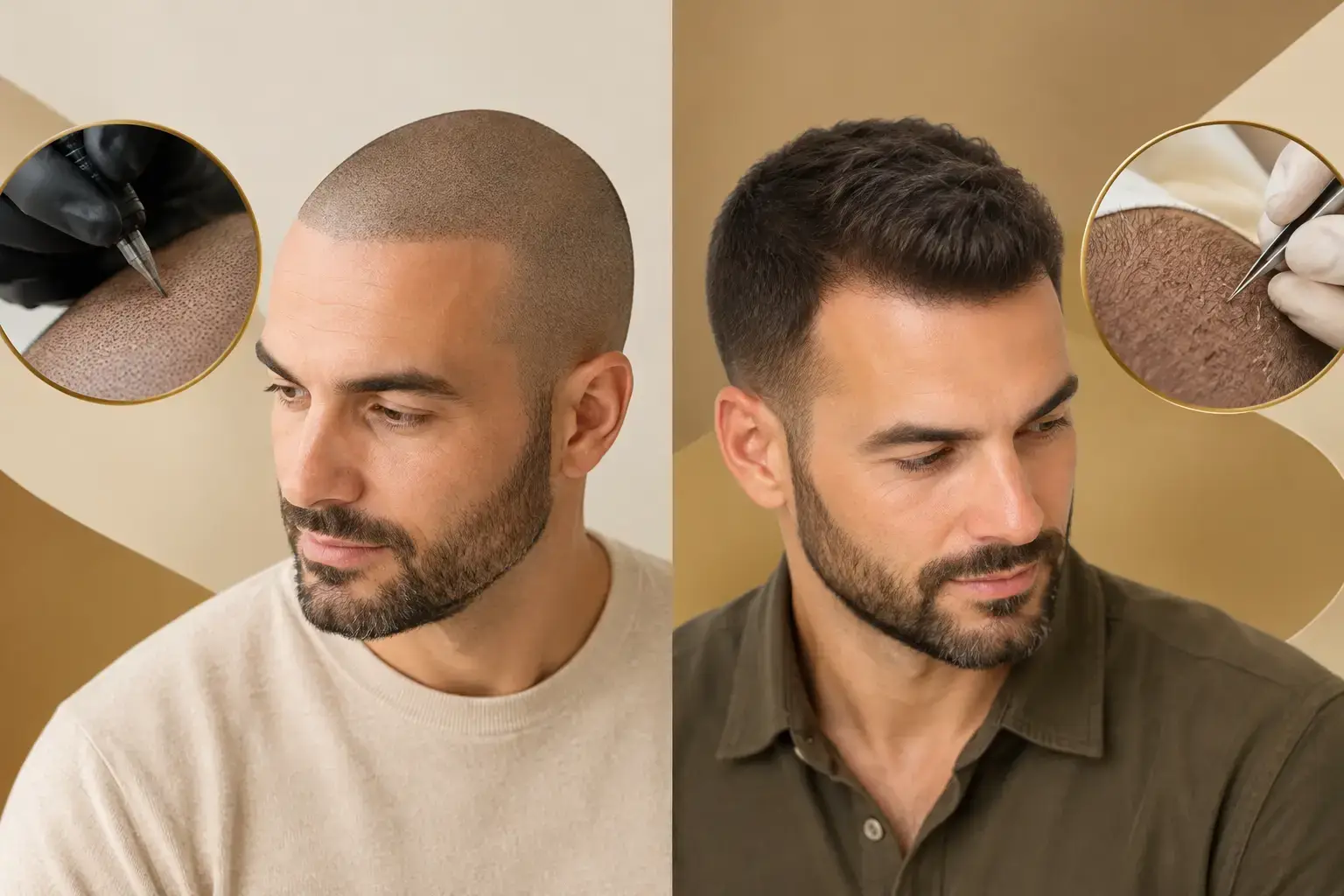
A receding hairline, widening part or visible thinning can make everyday styling feel harder than it should. When comparing scalp micropigmentation versus transplant, the central question is not which treatment is universally better. It is which option suits your pattern of hair loss, available donor hair, expectations and willingness to undergo a medical procedure.
Scalp micropigmentation (SMP) and hair transplantation can both improve the appearance of hair loss, but they do so in very different ways. One creates the visual effect of fuller hair through pigment placement. The other redistributes your own growing follicles to areas of thinning. A clinical consultation is the right place to assess the difference in the context of your individual hair and scalp.
Scalp micropigmentation versus transplant: the key difference
Scalp micropigmentation is a non-surgical cosmetic tattoo technique that places small deposits of pigment in the scalp. When performed well, these impressions can resemble closely shaved hair follicles. It is often used to create the look of a fuller buzz cut, soften the contrast between scalp and hair, camouflage certain scars, or add the appearance of density beneath existing hair.
A hair transplant is a medical procedure carried out by trained medical professionals. Healthy follicles are harvested from a donor area, usually the back or sides of the scalp, then implanted into thinning areas. Once the transplanted follicles establish themselves, they can grow hair in their new location.
That distinction shapes almost every decision that follows. SMP changes the appearance of the scalp. A transplant aims to restore growing hair using your own follicles. Neither approach stops the underlying progression of pattern hair loss, which is why a proper assessment and longer-term plan matter.
When scalp micropigmentation may be suitable
SMP can appeal to people who prefer a non-surgical option, want relatively little downtime, or do not have enough donor hair for a transplant. It is particularly suited to people comfortable maintaining a closely clipped hairstyle, as the pigment effect is designed to complement that look.
It may also be considered by people with diffuse thinning who want to reduce scalp show-through without dramatically changing their current hairstyle. For some transplant patients, SMP can be used later as a complementary treatment to make existing hair appear denser or to reduce the visibility of a donor-area scar.
The results are immediate once the treatment sessions are complete, although colour settles as the skin heals. SMP is not permanent in the same way transplanted follicles may be. Pigment can fade over time and may require touch-ups, depending on skin type, sun exposure, lifestyle and the pigment used.
A realistic expectation is essential. SMP cannot create physical hair length, movement or texture. If your goal is to run your fingers through a fuller head of growing hair or wear a longer hairstyle, a transplant may be the more appropriate avenue if you are clinically suitable.
When a hair transplant may be the better fit
A hair transplant may suit people seeking genuine hair growth in areas affected by pattern hair loss, such as a receding hairline, thinning crown or reduced density through the top of the scalp. It can provide a natural-looking improvement when designed around the patient’s current hair, facial proportions, donor capacity and likely future hair loss.
However, transplantation is not a one-size-fits-all procedure. The donor area has a finite supply of usable follicles. A careful plan protects this resource rather than concentrating solely on achieving the lowest possible hairline or maximum density in one session.
The best candidates generally have stable enough hair-loss patterns, healthy donor hair and realistic expectations about coverage. Younger patients or those with rapidly progressing hair loss may need a conservative approach. A medical professional may discuss treatment options intended to support existing hair, including PRP treatments where clinically appropriate, alongside a transplant plan.
Transplanted hair does not appear overnight. The newly implanted follicles usually shed in the weeks after the procedure, which is a normal part of the process. New growth commonly begins gradually over the following months, with final maturation taking time. For patients who value long-term growing hair and can accommodate the recovery period, that patience can be worthwhile.
Recovery, maintenance and visibility
Recovery is often a major deciding factor. SMP generally involves multiple sessions and temporary aftercare instructions, including avoiding certain activities while the scalp settles. There is usually no surgical wound care, though the scalp may look red for a short period and should be protected from sun exposure during healing.
Hair transplantation involves a more involved recovery. Small crusts and redness are expected after the procedure, and patients need to follow detailed aftercare instructions to protect the grafts. Time away from strenuous exercise, swimming and direct sun may be advised during the early healing stage. The donor area also needs time to recover.
Both treatments demand a practical view of maintenance. SMP may need occasional refreshing to preserve a natural shade. A transplant can be long-lasting, but native hair around the transplanted area may continue to thin. Ongoing medical management may be recommended to help maintain the overall result, depending on the cause of hair loss and your suitability for treatment.
Cost: look beyond the upfront figure
Affordability matters, especially when hair restoration has often been presented as out of reach. The price of SMP usually reflects the size of the area, degree of hair loss, number of sessions and practitioner expertise. Hair transplant pricing is influenced by the number of grafts needed, the complexity of the procedure and the level of medical care involved.
It is tempting to compare the lowest advertised prices, but this can overlook the factors that most affect safety and outcomes. A transplant should be planned and carried out with appropriate medical oversight, clear discussion of risks and a realistic graft strategy. With SMP, pigment choice, hairline design and practitioner skill can determine whether the result looks convincing over time.
Ask what is included in the quoted cost, what follow-up care is provided, and whether any future sessions or maintenance should be anticipated. The most useful comparison is not simply surgical versus non-surgical. It is the value of a treatment plan that fits your goals without compromising on professional standards.
Can you combine SMP and a transplant?
In selected cases, yes. The treatments can address different concerns. A transplant may establish a hairline and add growing coverage, while SMP can reduce the contrast of the scalp in areas where density remains limited. It may also be considered to camouflage suitable transplant scars.
Timing is important. Pigment should not be placed over a recently transplanted area until healing is complete and your treating team advises it is appropriate. Combining treatments should be planned carefully so the overall result remains natural, rather than creating a hairline or density level that cannot be supported by your existing hair.
How to choose with confidence
Start by defining the outcome you actually want. If you prefer the appearance of a neat shaved style and want a non-surgical way to reduce scalp visibility, SMP may be a practical option. If growing hair, styling flexibility and restoring a thinning hairline are priorities, a professionally planned hair transplant may offer more suitable long-term potential.
A thorough consultation should examine your scalp, donor hair, family history of hair loss, health considerations and expectations. It should also cover what each procedure cannot achieve. At Luxe Medical Procedures, hair restoration is approached as a medical decision, with procedures carried out by medical professionals and treatment recommendations based on individual suitability.
The right choice is the one that still makes sense after the initial emotion of hair loss has settled: a plan that respects your budget, protects your future options and gives you a result you can comfortably maintain.