
Scalp PRP Packages: What Should Be Included?
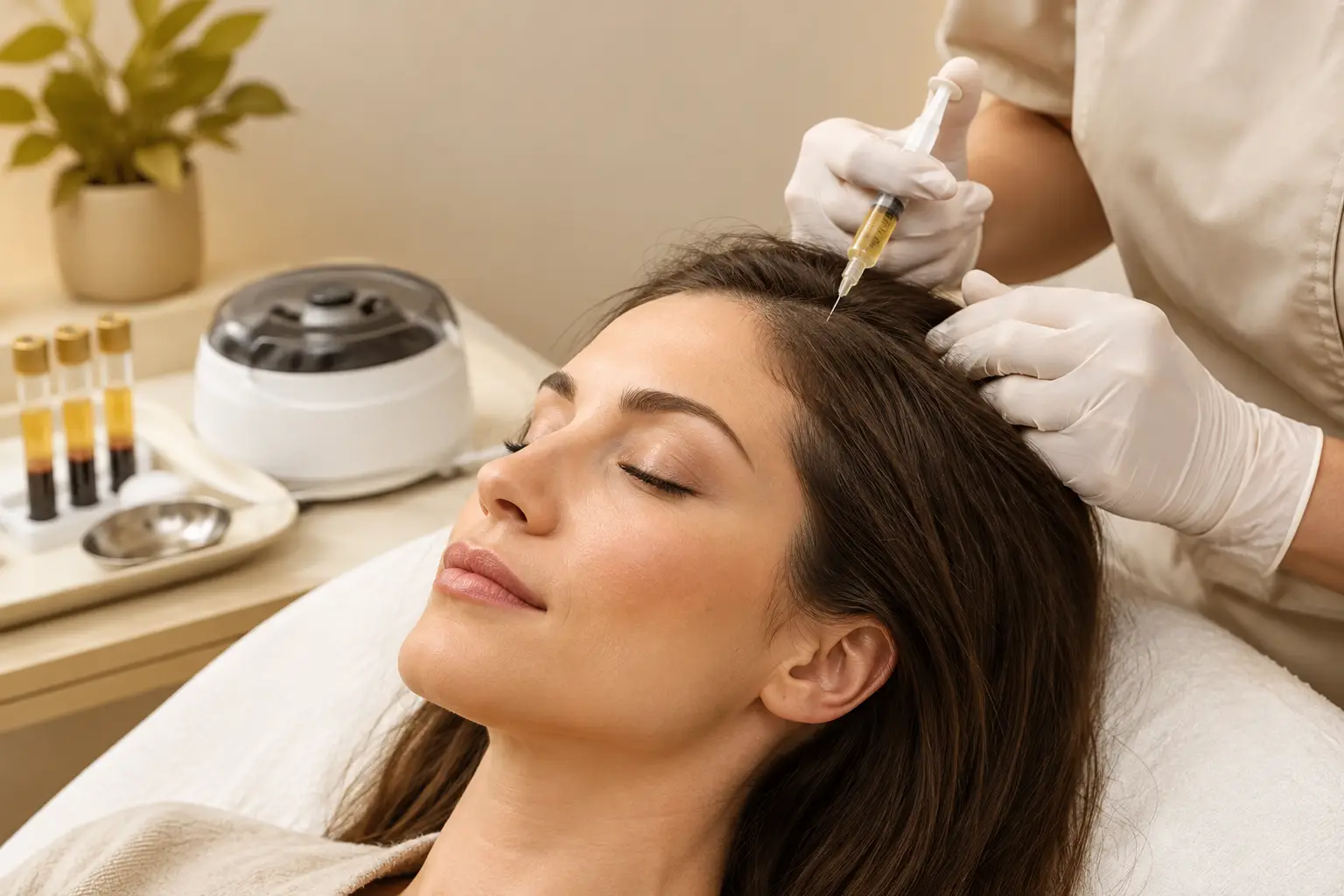
Hair thinning rarely follows a convenient timetable. You may notice more scalp showing under bright light, a widening part, a receding hairline or less density in photos, then find that single-session pricing does not tell you much about the actual treatment journey. Scalp PRP packages are designed to make that journey clearer by grouping a clinically planned course of platelet-rich plasma treatments rather than treating every appointment as an isolated decision.
For many people, PRP is considered when they want a non-surgical option for hair thinning or wish to support existing hair. The right package is not simply the one with the lowest advertised price. It should reflect your pattern of hair loss, the likely number and timing of appointments, the quality of medical oversight and what happens after the initial course is completed.
What scalp PRP packages are designed to cover
PRP treatment uses a small sample of your own blood. The sample is processed to concentrate platelets, and the platelet-rich component is then carefully administered into areas of the scalp identified during your assessment. Platelets contain growth factors that may support the hair follicle environment. For suitable patients, PRP can form part of a broader plan for managing thinning hair.
Because changes in hair growth occur gradually, PRP is commonly planned as a course rather than a one-off treatment. A package may include several initial sessions scheduled across a defined period, followed by a review and, where appropriate, maintenance sessions at longer intervals. The precise schedule varies. Hair loss type, degree of thinning, medical history and treatment response all matter.
This structure can be more practical than paying for appointments one at a time. It gives you a clear view of the proposed commitment and allows the clinician to assess progress consistently. It should never mean being placed on a fixed programme without a proper assessment first.
What to look for in a PRP package
A transparent PRP package makes it easy to understand what is included before treatment begins. Ask whether the quoted amount covers the consultation, blood collection, PRP preparation, administration, planned review appointments and any follow-up advice. If before-and-after photographs are used to monitor change, find out whether these are included and when they will be taken.
It is also useful to clarify the number of treatment sessions. A package described as a course should state whether it includes three appointments, four appointments or another number, as well as the recommended spacing between them. A lower figure may appear more affordable, but it is not a like-for-like comparison if another provider includes more clinician-led treatments or a follow-up review.
Professional delivery is equally important. PRP for hair loss is a medical treatment, not a salon service. Ask who conducts your consultation, who performs the procedure and how suitability is determined. At Luxe Medical Procedures, hair-restoration treatments are carried out by medical professionals, with treatment recommendations based on an individual consultation.
Questions worth asking before you commit
You do not need to become an expert in PRP to make an informed choice. A provider should be comfortable answering clear, practical questions about the treatment plan. In particular, ask about the proposed number of sessions, total package price, any additional costs, expected appointment duration and the review process.
You should also ask what result would be considered realistic for your starting point. PRP may be more appropriate for some patterns and stages of thinning than others. It does not create an unlimited supply of new hair, and it cannot promise the same outcome for every person. Honest guidance is more valuable than an impressive-looking package name or a heavily discounted offer.
Why a consultation comes before a package
Hair loss has more than one cause. Genetic pattern hair loss is common, but shedding can also be associated with illness, hormonal changes, nutritional issues, certain medicines, scalp conditions or periods of physical and emotional stress. The best next step depends on what is happening and how long it has been occurring.
A clinical consultation helps distinguish between these possibilities and identify whether PRP may be appropriate. Your practitioner may ask about your health history, current medicines, family history of hair loss and previous treatments. They will assess the areas of concern and discuss whether other options should be considered alongside PRP or instead of it.
This assessment matters for safety as well as treatment planning. PRP may not suit everyone, particularly where there are relevant medical conditions, active scalp concerns or factors affecting blood health. Your clinician can explain any precautions and whether another approach is more suitable. This is why a package should follow clinical advice, not replace it.
Understanding package value beyond the advertised price
Affordability matters, especially when hair restoration has often been presented as out of reach. However, the cheapest price is not automatically the best value if important elements of care are missing. Compare the complete plan rather than the cost of a single appointment.
A well-structured package can offer value through a planned treatment course, clear pricing and regular clinical review. It can also reduce uncertainty: you know what appointments are proposed, when progress will be assessed and what maintenance may involve if you respond well. Conversely, be cautious of packages that are vague about session numbers, practitioner involvement or ongoing costs.
It is reasonable to discuss your budget at consultation. A credible provider will explain the likely costs clearly and help you understand the difference between an initial PRP course and any future maintenance. They should not pressure you to purchase more treatment than is clinically appropriate.
Setting realistic expectations for PRP treatment
Hair grows slowly, so PRP results are not judged in days or weeks. Any change is usually assessed over months, with the clinician considering factors such as shedding, hair calibre, density and the appearance of areas that were thinning. Standardised photographs can be helpful because day-to-day mirror checks are often unreliable and can make subtle progress difficult to see.
Some patients may notice that their hair feels healthier or that shedding settles before visible density changes occur. Others may see limited response. Individual biology, the cause and extent of hair loss, adherence to the planned schedule and any complementary treatment all influence the outcome.
PRP may be used as a standalone non-surgical treatment for suitable people, but it may also be considered alongside other medically appropriate hair-loss options. For people considering a hair transplant, PRP can sometimes be discussed as part of an overall hair-restoration plan. That does not mean every transplant patient needs PRP, or that PRP replaces surgery where transplantation is the more suitable route.
Choosing a package that feels right for you
The best scalp PRP packages make the process simpler without making broad promises. Look for a provider that explains the treatment in plain language, sets out the full cost, offers qualified medical care and gives you room to consider your options. Your concerns may be a receding hairline, diffuse thinning, reduced density after a change in health or the wish to protect the hair you still have. Each deserves individual attention.
If you are unsure whether PRP is the right starting point, a consultation can give you something more useful than a generic price list: a medically guided plan that reflects your hair, your health and your goals. Taking that first informed step can replace guesswork with a clearer path forward.