
Which Hair Loss Needs Surgery? A Clear Guide
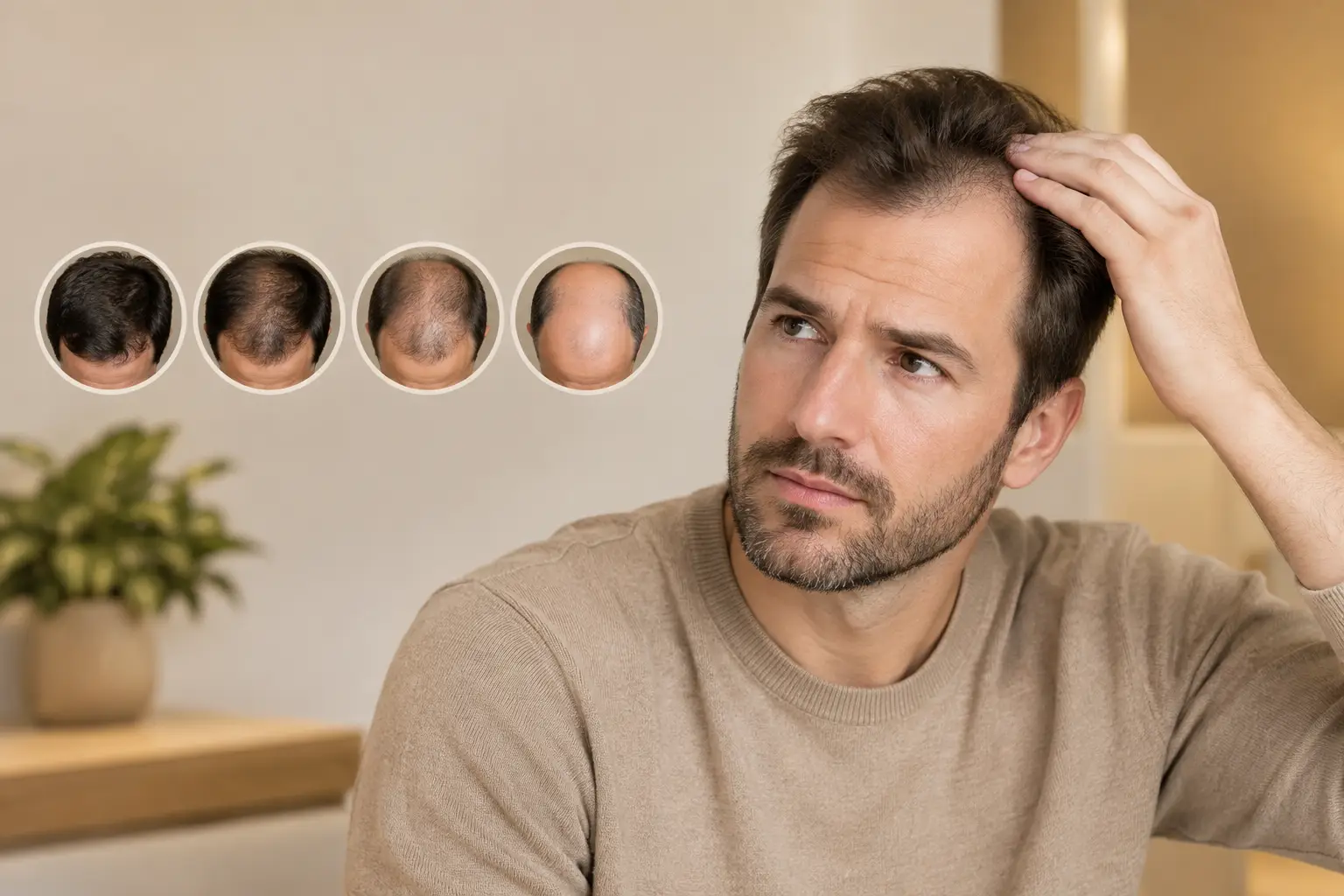
A receding hairline, widening part or thinning crown can make surgery feel like the obvious next step. But the answer to which hair loss needs surgery is rarely based on how noticeable the loss appears alone. A hair transplant may be a suitable option for certain permanent patterns of hair loss, provided there is enough healthy donor hair and the condition is stable enough to plan for the long term.
Hair restoration is not one-size-fits-all. Some people may benefit from a transplant, while others are better suited to medical management, PRP treatments, monitoring or investigation into an underlying health concern. A clinical assessment carried out by medical professionals helps separate these paths safely.
When a hair transplant may be appropriate
Hair transplant surgery is generally considered for hair loss where follicles have permanently stopped producing visible hair in a particular area, but healthy follicles remain elsewhere on the scalp. During a transplant, these permanent donor hairs are moved to thinning or bald areas, most commonly around the hairline, temples, frontal scalp or crown.
The most common reason people seek a transplant is androgenetic alopecia, also known as male or female pattern hair loss. In men, this often appears as recession at the temples, a thinning crown or progressive loss through the front and top of the scalp. In women, it more often presents as diffuse thinning and a broader part line, though some women can also experience more localised recession.
A transplant may be appropriate when the pattern is reasonably established and donor density is adequate. It is particularly useful for restoring areas where hair is unlikely to return without relocating follicles, such as a mature receding hairline or a long-standing bald patch caused by pattern hair loss.
That does not mean every person with pattern hair loss needs surgery. A transplant improves coverage in selected areas, but it does not stop future thinning in the surrounding native hair. For this reason, timing and a realistic treatment plan matter as much as the procedure itself.
Stable hair loss offers a clearer surgical plan
Hair loss that is still changing rapidly can be difficult to treat surgically. If a hairline is continuing to recede or density is reducing quickly across the scalp, transplanting too early may leave an unnatural-looking gap behind the newly placed grafts later on.
Medical professionals will look at the current pattern, family history, age, rate of change and quality of the donor area. In some cases, it is sensible to first stabilise hair loss with clinically appropriate treatment or use PRP treatments to support existing hair before deciding whether surgery is the right next step.
A good result is not simply about filling the area that looks thin today. It is about designing a result that can continue to look natural if hair loss progresses over time.
Which hair loss needs surgery, and which does not?
Surgery is not usually the first response to sudden, patchy or unexplained hair loss. These patterns can have different causes, and transplanting without understanding the cause may be ineffective or inappropriate.
For example, telogen effluvium is a form of temporary shedding that may occur after illness, significant stress, rapid weight change, surgery, hormonal changes or nutritional deficiency. It often causes diffuse shedding rather than a defined bald area. Because follicles are usually still present, the focus is generally on identifying and addressing the trigger rather than performing a transplant.
Alopecia areata can cause round or irregular patches of loss when the immune system affects hair follicles. This condition can fluctuate, and a transplant is generally not the first option while the disease is active. Clinical assessment is particularly important because management may require a different medical approach.
Hair loss related to medications, thyroid conditions, iron deficiency, scalp inflammation or other health factors should also be investigated before considering surgery. A transplant cannot correct an untreated underlying cause.
Scarring alopecia is more complex. In some forms, inflammation damages follicles and leaves scar tissue behind. Once the condition is inactive and stable, transplant surgery may sometimes be considered, but only after careful medical evaluation. Active scarring conditions may continue to destroy follicles, including transplanted hair, so this is never a decision to rush.
Hair loss from burns, injuries, traction or previous surgery can also be candidates for transplantation in selected cases. These procedures may require more careful planning because blood supply, tissue quality and graft survival can differ in scarred skin.
The role of donor hair in deciding on surgery
A person can have visible hair loss and still not be an ideal transplant candidate. The limiting factor is often donor hair, usually taken from the back and sides of the scalp. These follicles are selected because they are generally more resistant to pattern hair loss.
Donor supply is finite. Every graft used to rebuild a frontal hairline or add density to the crown is part of a limited resource. An ethical treatment plan protects the donor area and avoids using more grafts than can be harvested safely.
This is especially relevant for people with extensive thinning, diffuse loss across the donor zone, very fine hair or a strong family history of advanced baldness. In these situations, surgery may still be possible, but the goal may need to be modest coverage rather than the density of a teenage hairline.
Hair characteristics also influence planning. Curly or wavy hair can create more visual coverage than very straight, fine hair. Contrast between hair colour and scalp colour, the size of the thinning area and styling preferences all affect what is realistically achievable.
When PRP treatments may be the better starting point
Platelet-rich plasma, or PRP, is a non-surgical treatment that uses a concentrated portion of your own blood, prepared and administered by trained medical professionals. It is often considered for people with early thinning, reduced density or hair that is becoming finer but has not been permanently lost.
PRP treatments are not a replacement for a transplant where an area is fully bald and follicles are no longer active. However, they may be a useful option for supporting existing follicles, particularly when hair loss is in its earlier stages. They can also form part of a broader plan before or after a transplant, depending on individual needs.
The key distinction is simple: PRP aims to support the hair you still have, while a hair transplant redistributes permanent follicles to areas with insufficient growth. Some patients benefit from one approach, and some from a combination planned around the stage and pattern of their hair loss.
What a proper hair loss assessment should cover
Before choosing surgery, a consultation should examine more than the visible thinning. A medically led assessment considers the pattern and duration of hair loss, scalp health, family history, medications, general health and previous treatments. It should also include an assessment of donor density and hair calibre.
You should be able to discuss what surgery can achieve, what it cannot achieve and whether ongoing treatment may be advisable to preserve existing hair. It is reasonable to ask how many grafts may be needed, how the hairline will be designed, what recovery involves and how future hair loss could affect the result.
Be cautious of anyone who promises a fixed outcome before examining your scalp or who treats every type of hair loss as a transplant problem. Hair restoration should be planned around your individual diagnosis, donor supply and long-term goals, not a standard package.
At Luxe Medical Procedures, hair transplants and PRP treatments are carried out by medical professionals, with treatment recommendations based on the clinical factors that matter for each patient. This approach helps keep hair restoration accessible without treating it as a purely cosmetic decision.
Surgery is a decision about the future, not just the mirror today
A hair transplant can be a highly effective option for permanent, established hair loss when the donor area is strong and expectations are realistic. It is less suitable for sudden shedding, active inflammatory conditions or hair loss that may recover once an underlying issue is addressed.
If thinning is affecting your confidence, the most helpful next step is not to assume you need surgery or rule it out yourself. Seek a clinical assessment that identifies the type of hair loss first, then builds a treatment plan that protects both your current hair and your future options.